



The OECD-FAO Agricultural Outlook 2026-2035 released earlier this week forecasts that production and consumption of all agricultural commodities will increase over the next decade.
Much of the increase in production and consumption will take place in Asian developing economies. China, India, Pakistan and Indonesia are the countries in which dairy, cereals and sheep meat output will increase significantly with increase in beef production coming mainly from South America. Production in Europe, North America and Oceania will increase more slowly.
Beef
Figure 1 shows that beef production has been on an upward trend, rising from 66.9m tonnes in 2010 to 77m tonnes in 2025 and a steady increase year on year is expected with global output expected to reach 81.3m tonnes by 2034.
Much of this growth is expected to come from China, India (buffalo) and Pakistan while herd rebuilding is forecast for, Brazil, Canada and the United States in the earlier years of the outlook period.
Beef consumption is forecast to increase moderately by 8% over the period with average per capita consumption remaining at around 6kg retail weight equivalent per year.
In what the report refers to as mature markets in Europe, North America and Oceania, per capita consumption is projected to decline. However, this is expected to be offset by growth in parts of Asia and the Middle East, supported by increased disposable income and diversification in protein consumption.
The amount of beef traded globally had increased from 5.8m tonnes in 2001 to 10.25m tonnes by 2014.
Since then, while growth has continued, it has slowed down and in 2025 13.8m tonnes were traded and in the outlook period only a marginal further increase to 14m tonnes is predicted.
Sheepmeat
Sheepmeat production is projected to increase by 17% over the outlook period to almost 22m tonnes with 15% of this growth expected to come from increased output in China. Global sheep meat production has also been on an upward trend.
As Figure 2 shows, it has increased from 13.5m tonnes in 2010 to 18.8m tonnes last year, an increase of over 5m tonnes. This is attributed to “gradual flock rebuilding and improvements in lambing rates supported by favourable price conditions”.
While China will increase production, output is expected to decline in the European Union with it concentrated in a limited number of member states. Australia and New Zealand dominate the global trade in sheep meat but they too face changing conditions. In New Zealand the report identifies “competition for land use, forestry expansion and evolving climate policy settings” as constraints on flock expansion, and placing a greater emphasis on productivity gains to sustain output. In Australia the flock is forecast to continue moving towards more meat orientated breeds with higher carcase weights.
Tight global red meat supplies and rising incomes in parts of the Middle East and Indonesia are expected to sustain import demand for lamb, supporting trade prospects despite limited scope for rapid flock expansion in Australia and New Zealand.
Dairy
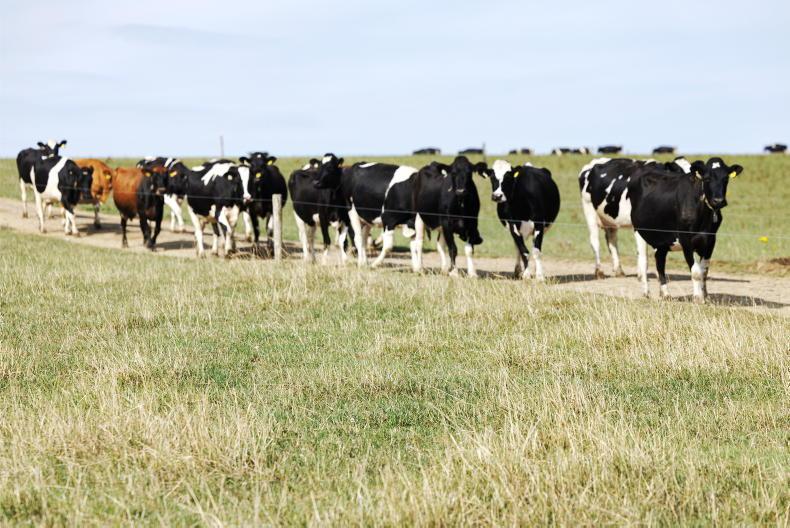
As we can see from figure 3, global milk production has also been on an upward curve, rising from 667bn litres in 2010 to 947bn by 2025. Further increase is expected over the decade with the OECD-FAO report estimating that by the end of the period output will surpass 1.1 trillion litres.
As with other agricultural products, much of the increased demand for dairy is expected to come from Asian countries. The report identifies growing demand from India and Pakistan in particular with India expected to account for more than half the increased milk production over the next decade.
Demand is also expected to increase from Europe and North America where appetite for cheese and butter is strong. Overall world per capita dairy consumption is estimated to grow by 1.9% over the coming decade, driven by income growth.
Milk yields
A striking feature of global dairy production is the relative milk yields per cow obtained in different areas of the world. These are shown in Figure 3a with the yield per cow lowest in Africa at just 652 litres on average between 2023-25 rising to over 10,000 litres in the US and Canada.
This reflects a combination of factors with breeding, feeding and herd management being particularly important.
These are notably challenging in many African countries and other areas of the developing world, whereas the most intensive dairy production occurs in North America where intensive feeding is combined with hormones to maximise output.
Ireland and New Zealand have a grass-based dairy system which strikes a balance between maximising output while keeping input cost low.
Less than 7% of global milk production is traded with most consumed domestically.
Half of WMP and SMP production is traded and overall trade is forecast to grow by 11% over the outlook period with most of the growth taking place in the European Union, New Zealand and the United States.
Cereals
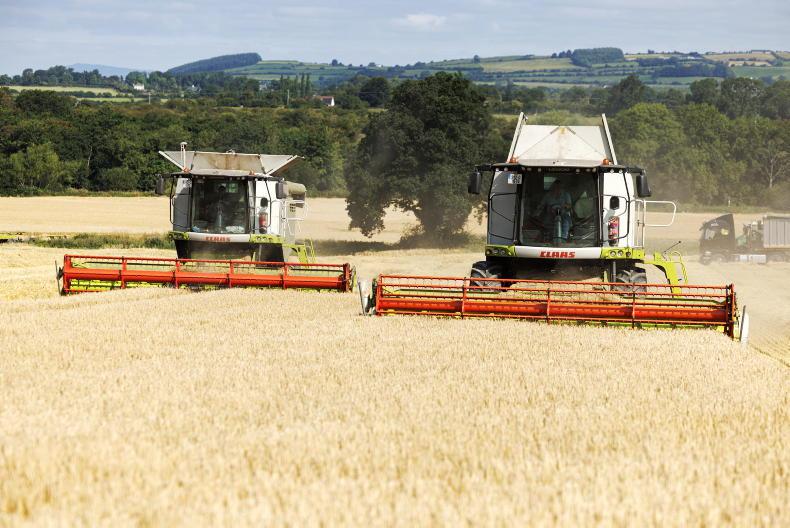
The report forecasts growth for all cereals in the next decade. Wheat production (fig 4) is forecast to grow from 817m tonnes in 2025 to 877m tonnes by 2035 with 29% of this in India.
Maize production is expected to grow by 171m tonnes to 1.43bn tonnes over the period, rice production is expected to increase by 50m tonnes to 601m tonnes and other coarse grains by 35m tonnes to 331m tonnes by 2035. Total grain production is forecast to reach 3.22bn tonnes in 2035.
Production growth of cereals is expected to expand twice as fast in low and lower middle income countries compared with upper middle and high income countries over the period. This reflects “lower initial yield levels, which allow greater potential for catch-up, and increasing investment in agricultural development aimed at strengthening domestic food supplies”.
Also in higher income countries productivity levels are already high and availability of additional land for production is limited.
Overall analysis
The OECD-FAO report projects a 9% increase in agricultural income per worker by 2035, driven by productivity gains and broadly stable agricultural prices. However they quickly add that “this outlook remains vulnerable to market volatility caused by crises and conflicts”.
The report estimates that “if the frequency of shocks observed in recent years continues, there is a 25 percent probability that agricultural incomes in 2035 will be lower than current levels”.
They also flag significant short term risks referring to recent energy cost increases and likelihood of less fertiliser being used next year.
Meat consumption growth is expected to slow in high income countries with an increasing switch from beef to poultry meat due to high prices and environmental pressures.
However, consumers in lower income countries are expected to increase consumption of livestock products as incomes rise.
Comment
Any forecast for a decade ahead has to carry a large number of qualifications and it is subject to unforeseeable events. A decade ago in the aftermath of the Brexit vote, who could have predicted a global pandemic and major wars in Ukraine and the Middle East.
That said taking a longer term view of these outlook reports, while the actual numbers may have varied from predictions, they tend to identify the direction of travel.
The bottom line is that more of all types of agricultural produce will be produced and consumed a decade from now than is being produced and consumed today.



SHARING OPTIONS