
It has been widely reported this week that the EU and UK have wrapped up a sanitary and phytosanitary (SPS) deal that will free up movement of goods from an animal or plant origin.
It is scheduled to be announced at an EU-UK summit later this month, though it is not expected to come into operation until early in 2028.
While details are not yet available, it is likely that the deal will remove a layer of bureaucracy reintroduced when the UK left the EU single market in 2021.
Negotiations on the SPS deal began in the middle of last year and when it is in place, it will mean that the need for veterinary or plant certification to accompany movement of these products is removed.
While they were a manageable bureaucracy for large meat and dairy processors, they made exports unviable for small and micro exporters. This is because the same process and procedure is required for exporting a single kilogramme of meat or dairy product as it is for a 20-tonne container.
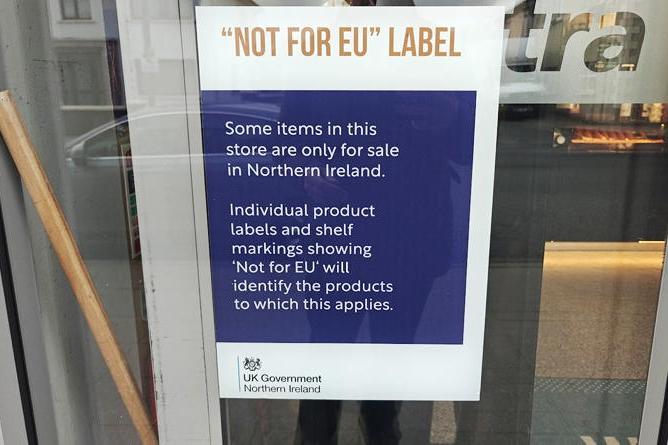
An SPS deal will also simplify trade between Britain and Northern Ireland, which has been politically sensitive, and the 'Not for EU' label widely on display in supermarkets north of the border will no longer be required as all goods will again be free to move between the UK and EU.
Brexit deal was basic
The EU-UK trade and co-operation agreement, announced on Christmas Eve 2020, meant that a no-deal Brexit was avoided. It provided for a no-tariff, no-quota arrangement on goods moving both ways, but very little else.
That meant that everything that moved either way between the two were subject to full border controls in relation to customs and health, while major investments were made at ports to accommodate the return to checks and inspections that were removed by the EU single market in 1992.
This new agreement, when it comes into operation in 2028, will rewind the animal and plant certification and inspection requirement. However, the customs paperwork and border controls will remain, as the UK will remain outside the customs union.
Will make a difference
This deal will require the UK to align its food safety, animal health and plant health standards with current and future EU regulations.
For business involved in this trade, that was a commercial requirement, so, in practical terms, it won’t make much operational difference.
Most noticeable will be the disappearance of the 'Not for EU' labels that are familiar to shoppers in Northern Ireland, as all foods will be again clear to move across the border.
It will also enable trade to resume for UK exporters for products that were banned, such as sausages, and, for the island of Ireland, import of seed potatoes from Scotland will be able to resume.
Large businesses dealing with big consignments of product that were also trading beyond the EU were able to adapt to the post-Brexit controls, though any reduction of bureaucracy will be welcome.
For small traders, removal of veterinary and plant certification is a win, but the customs controls will continue to be a barrier to trade.
Since Andy Burnham became prime minister in the UK, the question of a return to the EU has moved back on to the Westminster political agenda.
He has emphasised the financial benefit to the UK of this deal, saying it is worth 0.4% of GDP and politically it marks a move closer to the EU.
That said, there is still some way to travel for the UK to rejoin and a logical next step would be an alignment on customs or even return to the customs union.
That would bring a further reduction in bureaucracy for traders and, more importantly, for farmers, it would remove the UK's ability to enter trade deals on its own with countries outside the EU.
Of course, it would also mean that the deals already done would have to be absorbed into the EU or unwound by the UK, neither of which will be an easy negotiation!