



Recently the Financial Times (FT) reported that the European Union would “significantly limit” Ukraine’s access to the Common Agricultural Policy (CAP) farm supports as well as access to EU markets. This is a report on an internal EU document that the FT has had sight of and there is currently no official EU comment on the matter.
However, given the tension that has been caused in eastern European member states, Poland in particular, over Ukraine’s temporary access following the Russian invasion, it is clear that giving Ukraine full membership trading rights and access to EU funds would not secure the necessary political support for admission. At the moment, the EU is effectively turning a blind eye to Poland severely restricting access to imports from Ukraine.
There are other issues that cause discomfort in Brussels around granting Ukraine fast-track EU membership notwithstanding the political desire to do so since the Russian invasion. Problems with corruption have been widely reported and law enforcement is also frequently an issue for member states looking to join. The article also reported that Ukraine, Moldova, Montenegro and Albania are the countries that are next in line for membership and will be given “roadmaps” to membership though no timeline. That all means that further enlargement remains an EU objective but it is unlikely to happen in the near future for any of these countries.
UK could rejoin
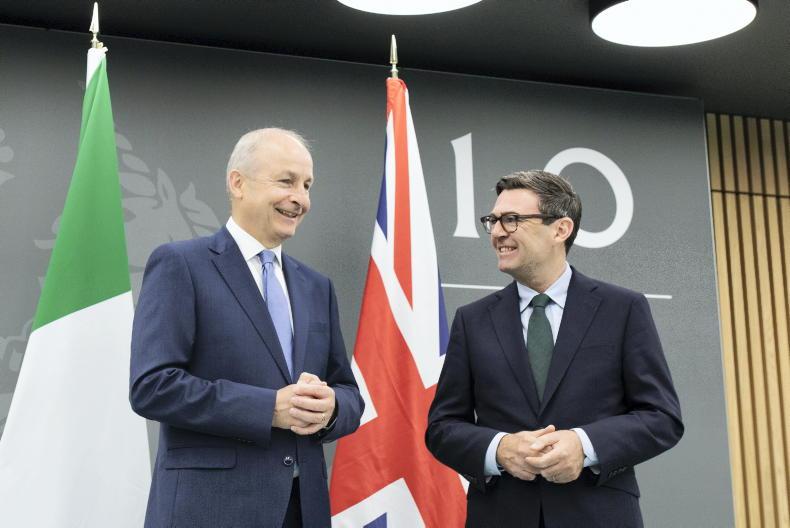
Ahead of new member states joining, there is a growing possibility of a former member returning to the EU. With more than a decade having passed since the UK voted by a narrow margin to leave, the issue of membership is back on the political agenda following prime minister Andy Burnham’s recent speech to the Labour Party conference. In a wide-ranging policy address, rejoining was one of the ideas that he is open to but it will be no overnight decision.
While there has been Brexit fatigue in the UK, the populist Reform Party, led by Brexit campaigner Nigel Farage, has dipped sharply in the polls since Andy Burnham took over as prime minister
He made clear that while it could be part of a Labour Party manifesto for the next election in the UK, it won’t happen before then. The election is not due until 2029 if the government serves its full term but the prime minister has the discretion to call an election at any time so it could well happen sooner.
While there has been Brexit fatigue in the UK, the populist Reform Party, led by Brexit campaigner Nigel Farage, has dipped sharply in the polls since Andy Burnham took over as prime minister. As for the Conservatives, who called the referendum and oversaw the UK's withdrawal from the EU, its current leader was anxious to avoid the topic in interviews around her party conference during this past week.
No automatic re-entry
Even if the UK decides it wants to rejoin, there will be elements of the Ukraine position where EU members in theory would welcome them back but the terms and conditions could be tricky. For example, when the UK was a member, it had a generous EU budget contribution rebate – this will be difficult for the UK to negotiate and the EU to concede in future given the EU needs to raise money.
There is also the currency issue – the UK previously had an exemption from joining the euro but all new EU members are committed to working towards joining the common currency.
All of these obstacles can be negotiated if the political will is there but they take time. This is highlighted by the ongoing EU-UK negotiation on a Sanitary and Phytosanitary (SPS) agreement. This negotiation, when concluded, removes the need for veterinary certifications for goods of animal and plant origin, significantly reducing bureaucracy for trade, and given that the UK had been part of EU rules up to 2020 and hasn’t diverged significantly since then, it might have been expected that it would be straightforward.
However, the negotiation has been ongoing for over a year already and it is expected that it will be the middle of next year before it is concluded. Even then, veterinary medicines, which is an issue for Northern Ireland, won’t have been fully addressed. On this experience alone we can therefore anticipate that any discussions on full EU membership for the UK will be complex.
What this all means for Irish farmers
For Irish farmers, the worst potential consequences of Brexit were avoided when the basic EU-UK trade deal was agreed. However, the UK is now a more open market following their trade deals with Australia and New Zealand.
If the UK became a member of the EU again, it would resolve the Northern Ireland veterinary medicines issue completely
Negotiations with Canada to replicate the EU deal have broken down and other UK trade deals have minimal impact for agriculture, but that could change should a future deal with the Mercosur countries be made.
The interests of Irish farmers would be better served with the UK rejoining the EU, though the quotas Australia and New Zealand have with the UK would be a substantial hurdle. Also, if the UK became a member of the EU again, it would resolve the Northern Ireland veterinary medicines issue completely.
As for Ukraine, it is a major grain and chicken exporter, less so on beef and dairy. Its impact will be felt more in eastern Europe, and as for access to the CAP, while the reality is that for Irish farmers its value has been diminished over several years, anything that prevented further erosion would be welcome.



SHARING OPTIONS