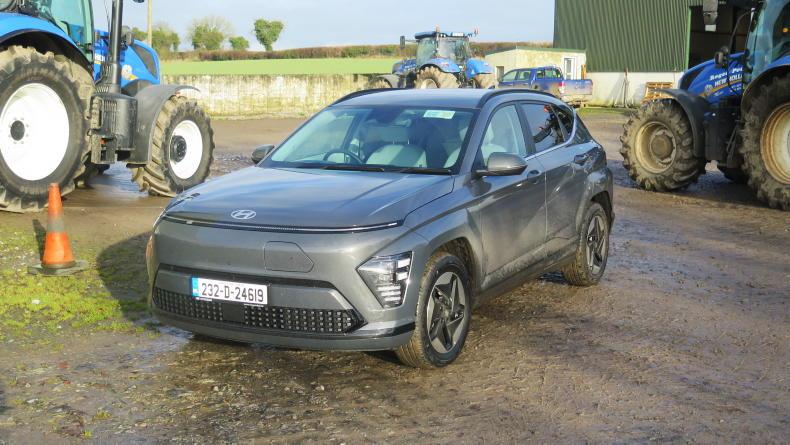

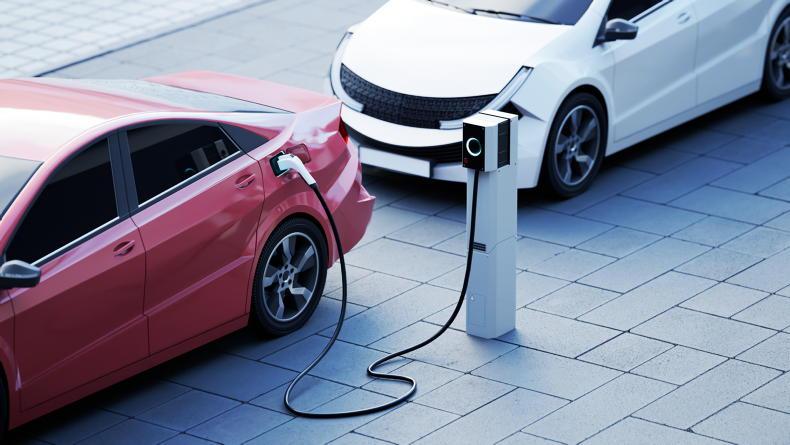
Volkswagen has caused quite a stir in the auto world over the past week, with its announcement that it is considering the import of an electric vehicle (EV) range manufactured in China.
It has had a manufacturing partnership in China for the past four decades.
It was originally a means for the German auto giant to get established in the country, which, over that time, has transformed into a high-value market for consumer goods, including cars.
Over the past decade, a partnership with an EV manufacturer gave Volkswagen a headstart in that segment of the auto market.
However, since then, a proliferation of Chinese manufacturers in the EV business – plus Elon Musk’s Tesla – have made the Chinese market for EVs very crowded and companies have aggressively pursued export strategies to regions of the world that are less well supplied.
Traditional brands under pressure
Motor manufacture has been the cornerstone of European industry for much of the past century.
Legendary brands have been national champions, such as Volkswagen, Audi and BMW in Germany; Peugeot, Renault and Citroen in France; while Italy had Fiat and Alfa Romeo, plus other high-powered sports brands.
The indigenous UK industry has largely disappeared, though heritage brands such as Rolls Royce, Mini and MG are still around and foreign-owned, while Jaguar is a UK subsidiary of an Indian-owned company.
Toyota and Nissan, which are primarily seen as Japanese companies, also have production plants in the UK.
Anyway, what has European motor manufacture got to do with Irish beef production?
While obviously there is no direct link, there is the experience of relatively expensive domestic production being confronted by a high-quality, cheaper imported alternative.
Industrial manufacture in Europe is bound by levels of legislation and employee terms and conditions that simply don’t exist in Asia or indeed many South American countries.
Tariff spat with China
The European Union has been at the forefront of reducing trade barriers, but is now facing a conundrum in relation to autos.
Since October 2024, the EU has imposed additional tariffs in addition to the basic 10% ranging between an additional 7.8% and 35% for a period of five years on imports from China.
Interestingly, China chose to retaliate with additional tariffs on dairy and pigmeat imports from the EU, initially at penal levels, though subsequently reduced to 12% in relation to dairy and lower still for some companies, while pigmeat tariffs settled between 4% and 19%.
Even with tariffs, Chinese-made EVs are making huge inroads into the EU market and this is predicted to increase further in the years ahead, squeezing traditional manufacturers.
The latest Volkswagen announcement to introduce one of its Chinese-made products to the EU market is an attempt to bolster its EU market, with assistance from outside.
Irish and EU beef producers watch this trade develop and wonder if in future a scenario could arise where and Irish or EU processors form a partnership with a South American company to develop the UK and EU market for a South American beef product?
Of course, many might point to Dawn Meat’s decision to buy into the Alliance business in New Zealand as an example of this already in action.
However, while that partnership will enhance Alliance’s access to the UK and the EU, the fact is that New Zealand lamb has been coming to Europe for over a century at this stage and Alliance has had decades of trading in its own right with Europe ahead of the Dawn acquisition of a majority shareholding in the business.
It will be a case of building on and developing something that was already there, rather than starting something new.
Tariff barrier remains high on beef
Earlier this year, farmers protested against the decision to proceed with the Mercosur trade deal provisionally.
It grants access to the EU market for an additional 99,000 tonnes of South American beef.
While this is the most generous level of access for beef ever granted by the EU in a trade deal, it should be pointed out that it is below the levels of beef that was imported historically from South America prior to any trade deal.
The quota, along with a safeguard mechanism, means that there is some level of control on beef imports, even if it is not as great as farmers would want.
European car manufacturers are major winners in the Mercosur deal, but their experience with Chinese imports will now mean they will better understand why farmers opposed it.