

Recent national surveys reported income volatility as the single-biggest obstacle to getting new entrants into farming, with it frequently cited as a key concern for all farmers.
The agricultural sector in Ireland operates in an environment which must be considered high risk.
This sector faces a wide range of risks – livestock contact diseases such as TB and bluetongue.
The regulatory environment continues to change. As with most enterprises, there is financial risk associated with investment and changing interest rates.
Assets are subject to theft, fire and other losses. Brands are subject to competition and changing customer demands and taste.
Dairy and beef are traded and consumed globally, so currency risk needs to be considered. Export markets appear and disappear, while policy changes over time.
It is sometimes difficult to source and maintain the skilled labour the sector requires. With many farms owned and operated by individuals and their families, health problems pose a serious risk at farm level, while changes in weather and climate pose serious challenges for the entire sector.
Cycles
It is important to note that these risks can interact to increase or decrease overall risk. For example, higher prices and poor weather might cancel each other. Or sometimes we get poor weather, poor prices and high insurance cost. Or we might have good weather, good prices and high input costs.
For some farmers, these risks are considered part and parcel of the cycles associated with farming. For example, these farmers may be well established with relatively lower levels of borrowing or may have access to an alternative income stream or able to rely on past earnings and profits.
However, for others, they pose a serious challenge as evidence by the above-mentioned survey.
For these farmers, any opportunity to manage some of these risks would be welcome.
There are examples of countries where risk management tools have been developed to manage some of the risks outlined above.
The United States provides a good example. Farmers in the US can avail themselves of a number of insurance-type products which have evolved to meet their specific demands.
These farmers also have the ability to use well-established derivative markets to manage some of their financial risks. The EU’s provision of a crisis fund looks weak in comparison.
In essence, farmers face many and varied risks on a daily basis. So having access to a suite of voluntary risk management tool is most desirable from both an industry and farmer perspective.
Leadership is required to ensure that those farmers who wish to manage some of the risk they face have access to these tools and the information required to make decisions regarding their suitability.
Now is the time to assume this leadership role as a matter of urgency. We owe this to our current farmers who risk so much providing us with our food. We also owe it to our future farmers.
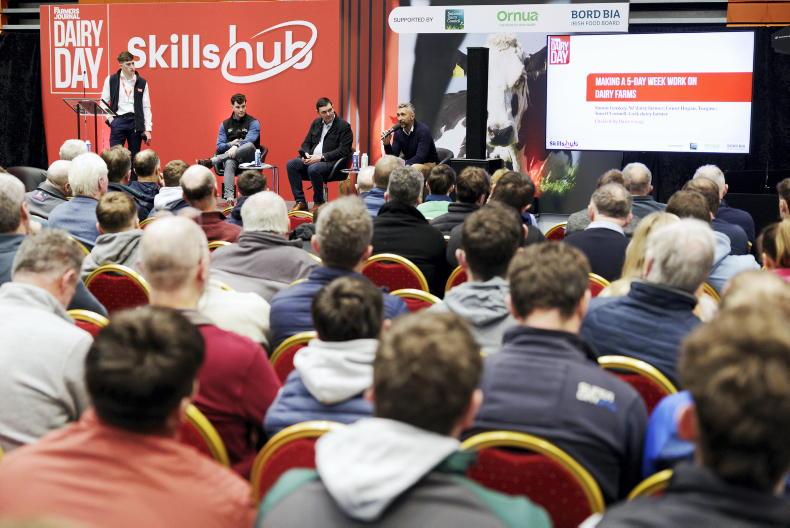
Declan O'Connor will be speaking on how to beat income volatility at Dairy Day in Limerick on Saturday 14 November. Get your tickets for the event here.