
Ireland exported no dairy infant powder to mainland China in the three months to the end of September this year.
Exports of infant powder to China was one of the huge successes of the post-quota period for Irish dairy processors. In 2017, Irish exports to the Chinese infant formula market were valued at €525m, accounting for more than 12% of total Irish dairy exports.
While that total has trended lower since the 2017 peak (see Figure 1), the revelation in data from Bord Bia that those exports have completely stopped in recent months may come as a surprise to many.
In order to explain how this market has disappeared, there are several factors worth looking at, both on the demand and on the supply side.
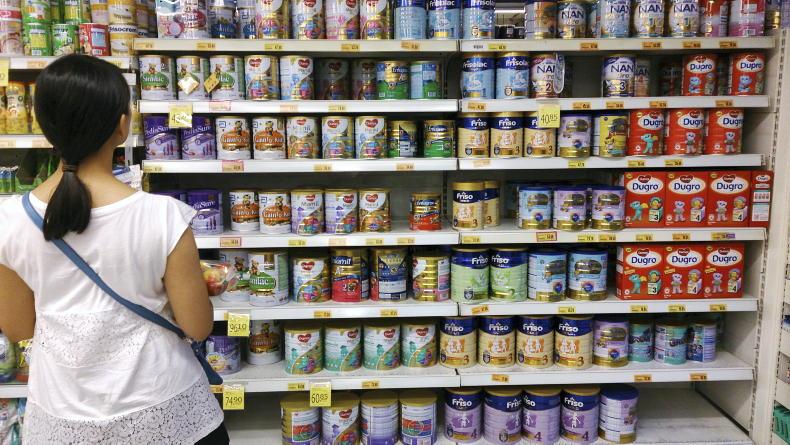
The Chinese market initially opened up to Irish exports following the melamine scandal there, which meant parents lost confidence in domestically produced baby formula. This coincided with an increase in China’s birthrate between 2010 to 2016 which further increased demand for imported infant formula.
Both of those factors which drove demand have disappeared. Authorities in China have undertaken significant measures to improve public trust in the country’s dairy products, with massive improvements in quality control and traceability. The country has also tightened the rules around licensing products for sale. Only this week, producers of baby food were told they have to conduct on-site inspections and audits of their suppliers in order to maintain their license. Domestic dairy production in China has also increased by around 20% since 2017.
The biggest factor affecting Chinese demand for baby formula, however, has been the collapse in the country’s birthrate. In 2017 there were approximately 17 million births in the country.
That number fell to 7.9 million in 2025, the lowest ever in modern statistical records. Cutting the number of births in half will naturally have cut overall demand by a similar level.
This, taken with the added trust in, and increased production of, high-quality local infant powder means that the market for exports to China has essentially vanished.
On the Irish production side, there have also been some notable developments. The closure of the Wyeth plant in Askeaton, Co Limerick, led to a decrease in the overall amount of infant formula available for export.
In the first nine months of 2017 global Irish dairy infant food exports, at €961m, accounted for 27% of total Irish dairy exports. In 2026, dairy infant food exports, at €474m, accounted for just over 9% of dairy exports until the end of September.
Comment
One of the interesting things about Irish dairy losing the Chinese infant formula market is that it has hardly been noticed by people outside of the dairy-processing sector. The evaporation of what was seen as the driving force behind Irish dairy expansion and processor profitability a decade ago, has been replaced by other markets and other products.
Irish dairy exports in the year to the end of September are, according to Bord Bia data, at €5.2bn. The same period in 2017 saw dairy exports of €3.5bn. That growth has not been on price alone, with the volume of exports growing by 40% between the two periods. What has happened is that processors, and dairy export bodies, have found new markets and new products for Irish dairy exports. The success of the Kerrygold brand in the US and the increase in global demand for whey have both been significant factors in this increase in sales.
The changes in products and destinations over the past ten years also clearly illustrates that no market or success is forever.
Everyone with a stake in the future of Irish dairy has to keep looking out for the next opportunity, wherever it is in the world, and then finding ways that Irish dairy exporters can take advantage of that.