




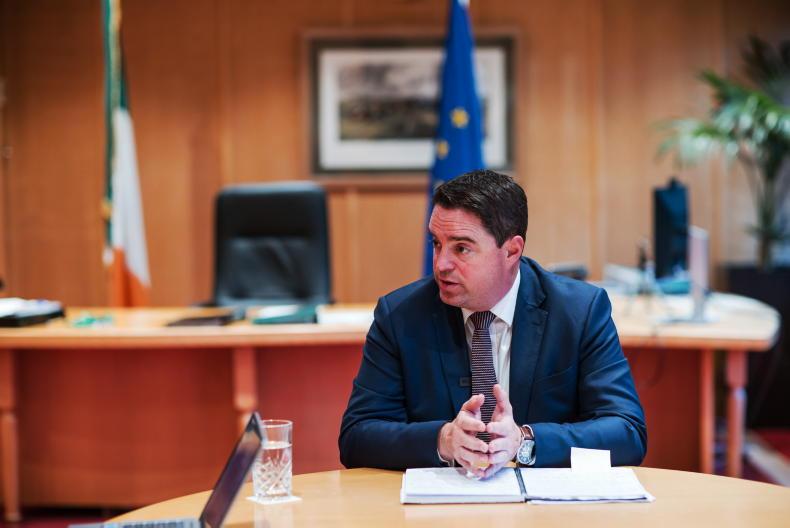
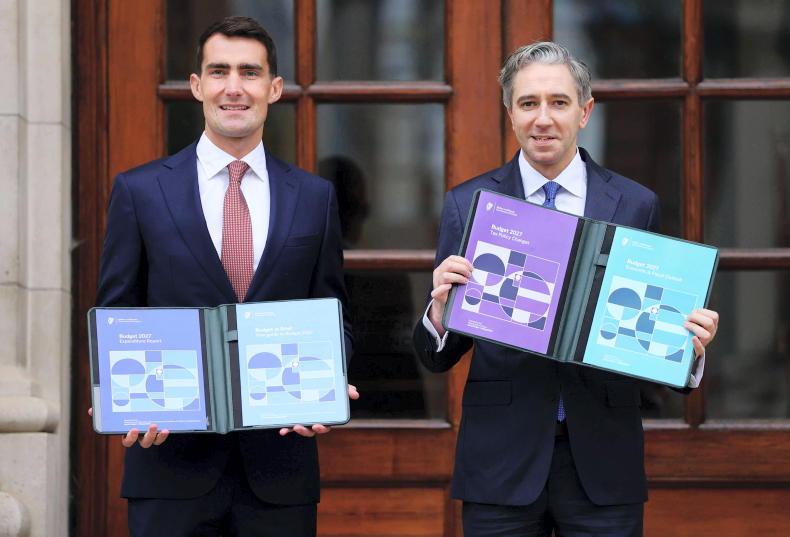
Tánaiste and Minister for Finance Simon Harris revealed details of the new savings and investment accounts during his Budget 2027 speech this week.
The first thing to know about these new accounts is that they are not a repeat of Charlie McCreevy’s Special Savings Incentive Accounts (SSIA), which were introduced back in 2001 and included a 25% government top-up on any money saved for five years.
The new Savings and Investment Account (SIAs) do, however, share a common goal with the previous SSIA, and that is to change behaviour towards more saving and investment.
Minister Harris has previously bemoaned the approximately €170bn sitting on deposit in the Irish banking system. The vast majority of that money is earning no interest at all, and those accounts that do pay interest pay rates significantly below the rate of inflation.
Screwed over
Harris previously said that Irish people are being “screwed over” as savers by punitive tax, interest rates that are too low and a system that’s too complex.
He said that he would introduce a savings product which would give people the opportunity to set aside some money in an investment account, which would give a better yield in a tax-efficient manner.
The details announced in the budget seem to stack up against what has been promised. The SIAs are aimed at middle-income earners rather than richer people, with the maximum annual contribution set at €12,000.
There is no minimum contribution.
The account will also be tax-free up to €50,000, with a 1% rate of tax applied to the balance of the account above that limit. The existing tax regime, including the much-maligned deemed-disposal rule, will not apply to the accounts.
To make things even easier for savers, the tax liabilities will be reported and paid on behalf of the saver or investor by the service provider they use for the account. Harris said that, considering the annual investment limits, it is extremely unlikely that anyone will reach the taxable threshold within the first few years of the SIA accounts.
Financial products
The accounts will not be for holding savings in cash. Instead, they are aimed at getting people to invest in financial products. Eligible investments include stock-market shares; bonds; funds including exchange traded funds (ETFs) and other regulated financial instruments.
Highly speculative or risky investments such as cryptocurrencies and derivatives are not included in the eligibility list.
Unlike the previous SSIAs, which had a five-year lock-in period, there will be no minimum or maximum amount of time an investment has to be held for.
The legislative process, and the facilities to provide the accounts to people, have yet to be finalised, which is why the accounts will not be available until 1 July 2027.
Swedish example
The Irish SIA scheme has been inspired by the hugely successful Swedish model, which was introduced in 2012. Many of the features of the Swedish scheme, called the Investeringssparkonto (ISK), are similar to the Irish proposal.
The ISK massively simplified tax reporting for retail investors, with no capital-gains tax on growth and no income tax on dividends received.
Instead, there is a tax applied of around 1% to the balance on the investment account above a certain tax-free limit. That tax is applied regardless of whether the investment account has made or lost money.
More than a decade after the introduction of the ISK in Sweden, there are approximately 4 million account holders with total assets of around €145bn, equivalent to 25% of the country’s gross domestic product.
Criticism
The Irish scheme has come under some criticism as there are fears that small-scale investors will favour spending their money on investments in large companies they are familiar with. That generally means the Apples, Googles and Metas of this world.
If this were to be the case, then that would mean the money would leave Irish bank accounts and go to fund large US multi-nationals rather than companies here in Ireland, or even in the EU.
Harris did have another rabbit to pull out of the hat for Irish companies seeking investment on budget day.
He announced that the Irish Strategic Investment Fund (ISIF) is launching a €1 billion investment programme aimed at “creating the next generation of large Irish companies”.
The investment will be over three years to 2030 and aims to create “an environment in which Irish businesses remain rooted in Ireland but can scale-up and grow internationally,” the minister said. He added the fund will invest through a range of channels in co-ordination with Enterprise Ireland.
Harris also announced an extension of the relief for investment in innovative enterprises, also known as Angle Investor Relief. That relief provides for a reduced capital-gains tax rate of 16% for individuals on gains from investments in innovative start-up small and medium enterprises.
Comment
The introduction of the SIA could, if implemented successfully, be a major development in the Irish investment landscape. If it encourages people to put some of their money into financial investments, instead of leaving it on deposit at the bank or credit union, it should both increase people’s rate of return, and encourage an investment culture in Ireland.
If it were to emulate the success seen in Sweden, then it has the potential to be truly transformative.
However, the warnings about the savings becoming a drain on investment in Ireland should be noted.
If some way could be developed to allow investments in smaller, Irish companies then that could prove popular for savers, as well as helpful for start-ups looking to raise capital.
The incentives in place in that investment segment at the moment are aimed at richer, more sophisticated investors.
If SIA savers could allocate a portion of their money into a start-up fund, it would potentially dilute the risks from too much capital moving offshore.




SHARING OPTIONS