
Shareholders in Glanbia saw the value of the company’s stock drop by more than 11% between the close on Friday 20 November and the end of trading on Tuesday 24 November.
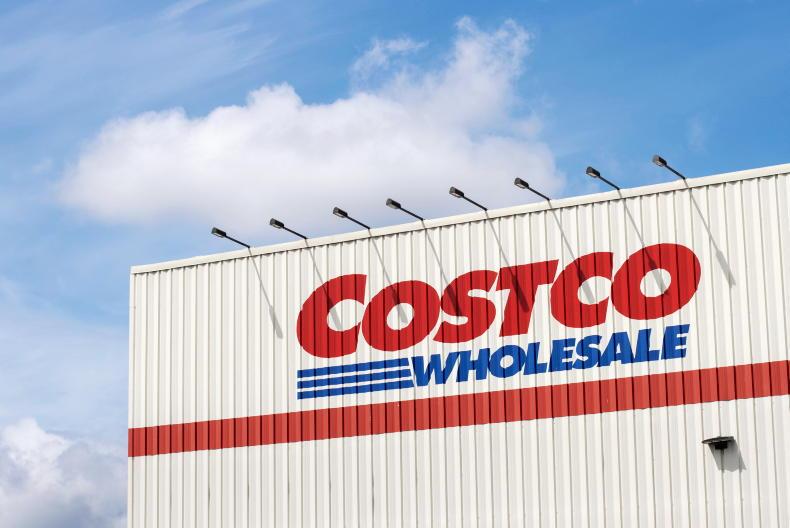
The rapid reversal in fortunes for the company is being blamed on the risk from increased competition in the key US market. Specifically, the worries surround retailer Costco’s move to restock its own-brand protein powder under its premium Kirkland label.
The Kirkland brand is listed at $64.99 (€59.25) while Glanbia’s Optimum Nutrition retails at $89.99 (€82.06) in Costco. The Glanbia package has more servings than the Kirkland brand, so the price differential per serving is significantly smaller than the price per pack.
The biggest risk for Glanbia is that it will lose shelf-space in Costco. When the retailer first launched its Kirkland protein powder in the US in 2025, it led to a drop in shelf space for Optimum Nutrition. There is no evidence yet that this has happened with the relaunch. According to Costco stock tracking website Warehouse Runner, the Kirkland brand is currently available in around 40% of Costco’s more than 650 stores in the US, while Optimum Nutrition is available in almost every location.
That being said, the extra competition from a discounter’s own brand in the critically important US market appears to have made shareholders nervous about Glanbia’s growth outlook.
In the first week of November, Glanbia upgraded its earnings per share growth forecast to between 22% and 24% for 2026. Speaking at the time, CEO Hugh McGuire said that the long-term fundamental demand for whey remains strong.
An analyst note from stockbroker Goodbody’s head of consumer research Patrick Higgins, published on Monday, suggested that the company shares had sold off too much in reaction to the Costco news. “We consider the pull-back to be considerably overdone at these levels,” he wrote.
Despite the reversal, Glanbia’s shares were still 17% higher for the year by the close of trading on 24 November.
A spokesperson for Glanbia said that the company does not comment on day-to-day share price movements and “continues to focus on delivering our strategy for our business and our customers”.
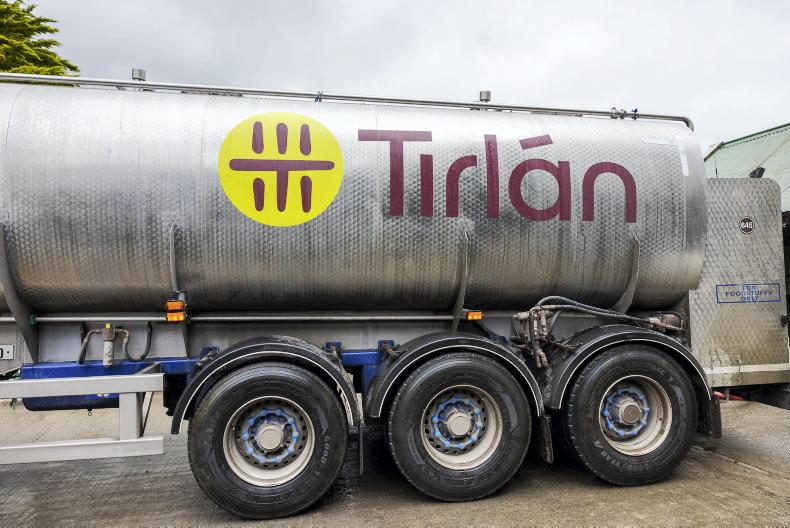
Tirlán
Tirlán still retains 31.5m shares in Glanbia, which means the co-op’s shareholding dropped in value by more than €68m on Monday and Tuesday of this week.
A spokesperson for Tirlán told the Irish Farmers Journal that the co-op currently has no plans to further reduce its stake in Glanbia, which means that the movement in Glanbia’s share price will have no immediate effect for the co-op.
The last couple of days aside, it hasn’t been a bad 2026 for Tirlán’s investment in Glanbia. In June of this year, the co-op sold 12m shares in Glanbia at €21.47 per share, netting approximately €257.6m.
That being said, it is notable that the value of Tirlán’s shareholding in Glanbia has been significantly reduced by competition from Costco’s Kirkland brand.
Tirlán’s decision to supply Irish grass-fed butter for Kirkland’s signature brand has proved to be hugely controversial. The fear among some dairy co-ops and farmers is that the availability of a close alternative to Kerrygold in US stores could force Kerrygold to reduce prices in order to maintain market share, which would, in turn, reduce the return to Irish dairy farmers.
At one Costco location in New York this week a 2lb pack of Kerrygold was selling at $10.99 (€10.05), a $4 per pack reduction, and around the same price-per-pound that the product retails at in Ireland. A spokesperson for Ornua told the Irish Farmers Journal that “Kerrygold runs a limited number of short-term promotional campaigns at key seasonal moments each year to reward loyal consumers”, suggesting that the reduction was implemented ahead of US Thanksgiving, rather than in response to the Kirkland butter selling at $10.99 in the same store.
Comment
There are some lessons which can be drawn from the move in Glanbia’s share price this week, which saw more than €500m wiped off the market value of the company by the close of trading on Tuesday.
For the Irish dairy industry, this is a useful lesson. The store and brand at the centre of the market moves, Costco and Kirkland, are the same ones at the centre of the current controversy around the Irish grass-fed butter market
The apparent catalyst for the sell-off is the increased competition for Glanbia’s flagship product in the critical US market. If that was indeed the driver for the selloff, then the reduction in value is a reflection of investors’ estimation of how the increased competition will hurt Glanbia’s future earnings potential.
For the Irish dairy industry, this is a useful lesson. The store and brand at the centre of the market moves, Costco and Kirkland, are the same ones at the centre of the current controversy around the Irish grass-fed butter market.
If investors believe that fresh competition from Kirkland will hit Glanbia’s earnings, then those same investors would also believe that competition from Kirkland would hit Ornua’s future earnings.
Ornua is not listed on any stock market, so we don’t get that kind of immediate valuation information. But with Glanbia’s troubles being such a clear parallel to what Ornua is facing it is fair to assume that an investor would be writing down any forecast of future earnings from the Kerrygold maker.
The irony for Tirlán, the supplier of Costco’s Kirkland Irish grassfed butter, is that any upside in the co-op’s profit and loss account from the sales of butter would have to be compared to the damage done to the co-op’s balance sheet from the reduction in Glanbia’s share price due to Costco and Kirkland.