



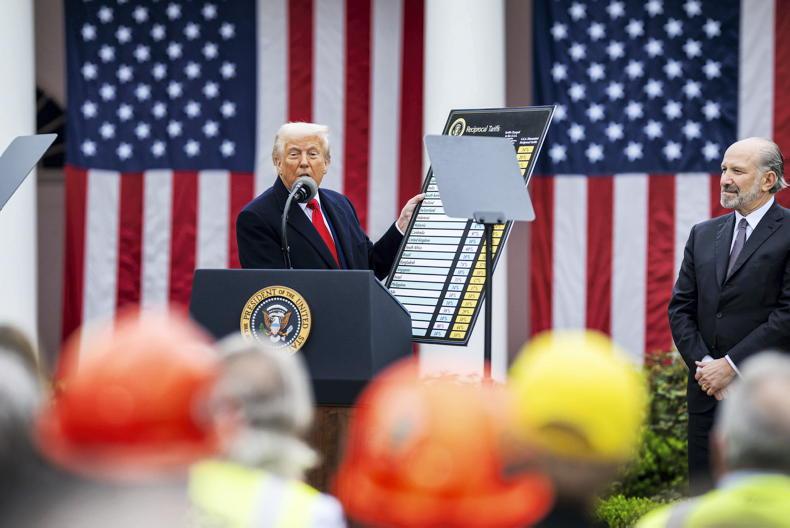
Last week, US president Donald Trump wrote to US Congress requesting $87.6bn (€76.84bn) in supplemental funding.
The letter stated that “most of this request will address urgent needs related to Operation Epic Fury (OEF), in addition to other critical needs such as responding to the ebola outbreak in central Africa and supporting hardworking American farmers”.
The support for farmers part of the request is defined as “$10bn (€8.8bn) in temporary economic assistance for row and specialty crops planted in crop year 2026”.
A further $1.1bn (€965m) was added to “help the state of Florida's agricultural producers to rebound from devastating losses that were the result of crippling storms this past winter”.
The Trump administration had previously provided $12bn (€10.5bn) to US farmers under the farmers bridge assistance programme in December 2025.
At the time, the reason given for the payment was that it was a response to “temporary trade market disruptions and increased production costs that are still impacting farmers following four years of disastrous Biden administration policies that resulted in record high input prices and zero new trade deals”.
Fertiliser investment
Farmers in the US have faced rising costs this year, particularly in relation to fuel for farm machinery and fertiliser.
Unlike what happened in 2022 after the Russian invasion of Ukraine, there hasn’t been a corresponding lift in grain prices to offset the higher input costs.
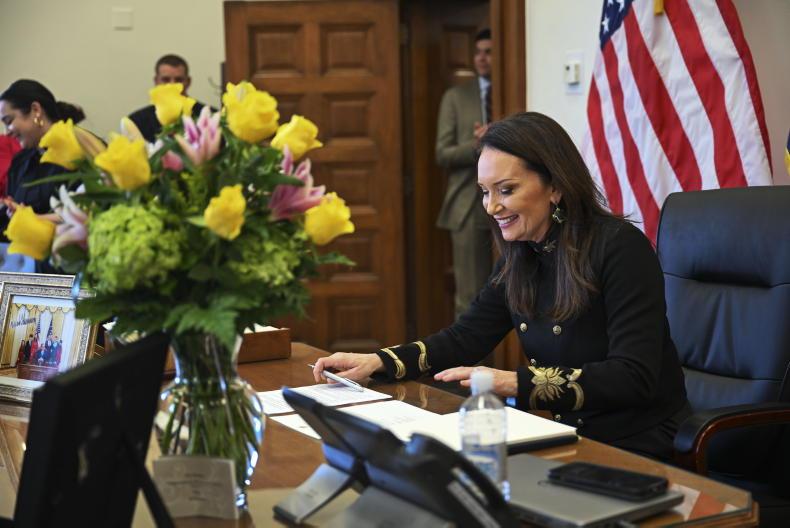
On Wednesday this week, US secretary of agriculture Brooke L Rollins announced a $500m fertiliser investment and expansion for long-term domestic supply (FIELDS) programme.
In the announcement, this is described as “a new initiative administered through USDA rural development to expand domestic fertiliser manufacturing, strengthen America’s fertiliser supply chain, and improve long-term affordability for American farmers”.
The agriculture secretary also spoke of American farmers being “forced to rely on unstable foreign suppliers for one of the most important inputs” and stated that “program[me] is solely focused on producing fertiliser leading to lower costs for American farmers and consumers, as well as restoring a critical supply chain for our country”.
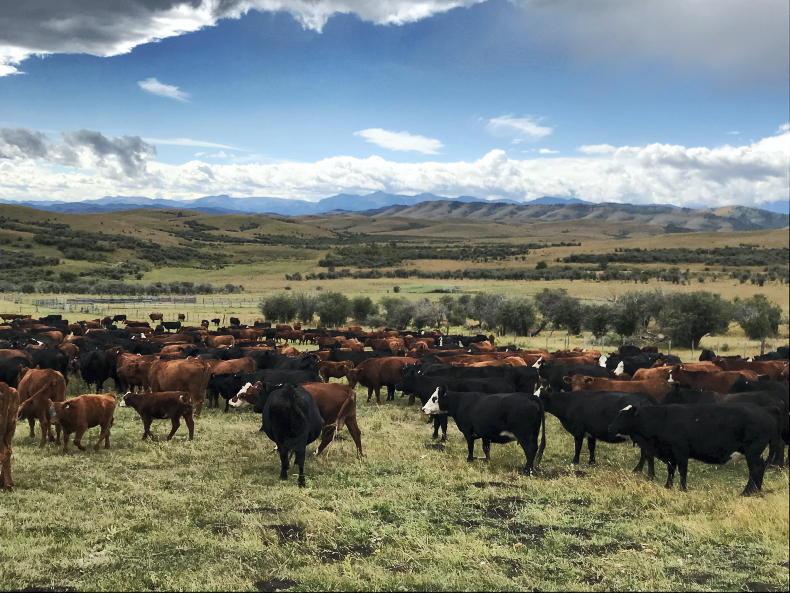
US beef farmers have been enjoying record prices and the dairy industry is performing okay, but crop farmers in the US, like tillage farmers in Ireland, have suffered over the past year from rising input prices combined with depressed markets.
The volatile tariff policy of the administration in 2025, particularly the trade spat with China, did serious damage to US grain exports. This was a contributing factor to the lowest area of wheat being planted in 2026 since the late 19th century.
US farmers have traditionally voted Republican – president Trump's party – but, unsurprisingly given the difficulties of the past year, are unhappy at present.
The decision by the US to go to war with Iran has exacerbated farm input costs and all of this is happening just weeks ahead of elections in October.
US crop growers need all the help they can get this year, but as is so often the case, there is strong political motivation behind the additional dollars being sought for US farmers.




SHARING OPTIONS