



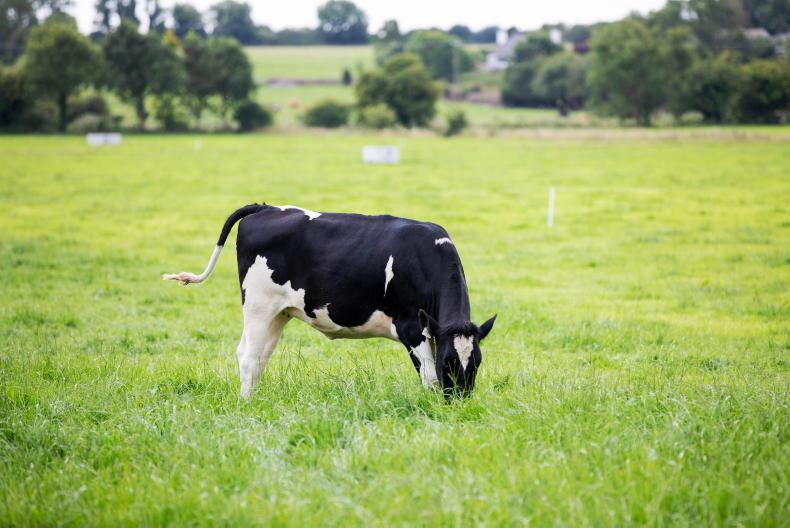
The revelation that Tirlán, Ireland’s largest dairy co-op, is to start supplying butter for US retail giant Costco’s private label brand has the potential to be the biggest shake-up of Irish butter exports in 60 years.
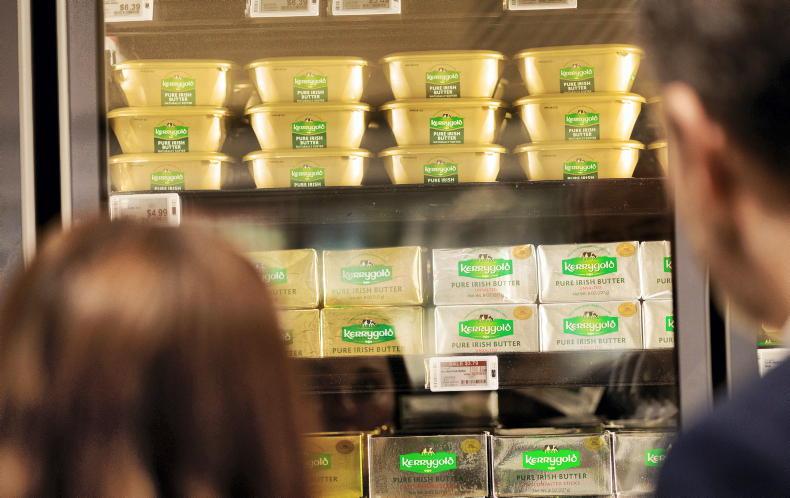
The fact that Costco can stock a product on its shelves that will be functionally little different to Kerrygold, at a considerably reduced price, will not have gone unnoticed by customers for Irish grass-fed butter around the world. The fact Tirlán has said that it will be getting a better return from the butter it supplies for Costco’s Kirkland brand than it has from butter supplied to Ornua for Kerrygold will not have gone unnoticed by other Irish dairy co-ops who, like Tirlán, are focused on growing value for their farmer members.
Considering the sustained success for the Irish dairy industry, which the Kerrygold brand has represented over the last 60 years, anything that threatens that future must be taken seriously by all concerned.
The logic presented by Tirlán for its decision is two-fold. The first is financial, as outlined above, and the second is opportunistic. They point to the size of the US grass-fed butter market, where Kerrygold sales continue to grow, and also the number of new competitors which are entering that market from countries such as New Zealand, France and, increasingly, domestic US production. There certainly appears to be plenty of room in the market for all newcomers at the moment.
Tirlán’s Truly Grass Fed brand, launched in the US in 2019, has done absolutely nothing to dent Kerrygold’s growth. In fact, seven years on from that launch, it is Kerrygold that is more successful than ever, topping $1bn in sales in the US, according to most recent data.
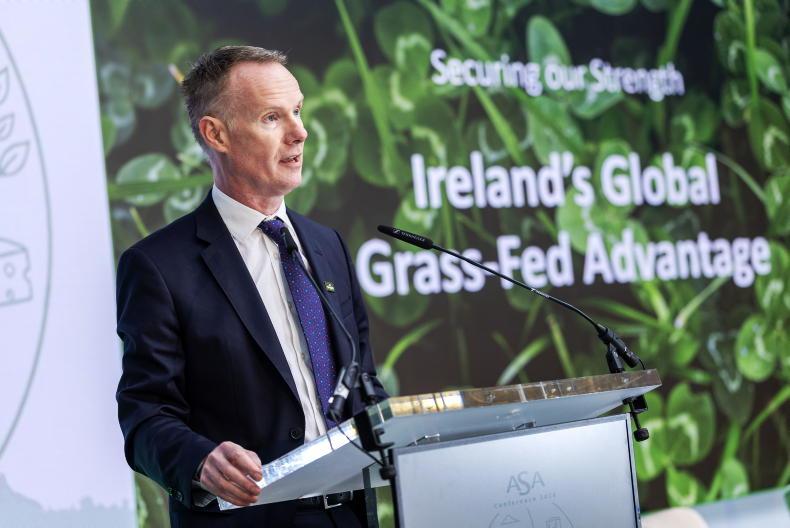
Ornua, however, isn’t resting on its laurels when it comes to protecting the Kerrygold brand. Speaking at last week’s ASA conference, Ornua CEO Conor Galvin said that “focusing on price alone may deliver short-term volume, but it can destroy long-term value”. While he didn’t mention Tirlán or any other member co-op of Ornua in his speech, his target seemed obvious.
He also highlighted how much extra value Ornua provides to its member co-ops and, by extension, the farmers supplying those co-ops, saying “today, we add 2c/l to every litre of milk that comes through our door”.
That 2c/l is a substantial amount, especially when margins inside the farm gate are tight like they have been in 2026. For many dairy farmers, 2c/l could be the difference between turning a profit and losing money this year.
The member co-ops do not break out the amount of money they receive from Ornua, and Ornua does not break down how much money it pays to individual member co-ops.
In order to get an idea of what the Ornua Value Payment is worth to co-ops, the Irish Farmers Journal added up the profit before tax of (operating entities of) member co-ops for each of the last four years and compared that to the Ornua Value Payment (OVP) for each year (see Figure 1).
It is clear from the data that the OVP was equivalent to a significant amount of the profit made at member co-ops, and in 2023 even exceeded the total profitability of co-ops supplying Ornua.
This is not to suggest that those co-ops would have made losses or much smaller profits in those years. Co-ops are unique in that they have control over their major input cost, the price of milk. This suggests that without the OVP, those co-ops would have paid less for milk.
For farmers, who do not see the OVP appear as an individual item on their milk cheque, the valued added by Kerrygold is perhaps not as clear as it could be. It is notable that when there was a Ornua milk levy, removed in 2016, that was very clearly labelled on milk payments.
As we wrote on these pages some weeks ago, there are two sides to the Tirlán-Ornua butter debate. Tirlán can strongly argue that it is doing what is best for its suppliers, taking advantage of an opportunity that has presented itself.
Nobody can argue with Ornua’s position that Kerrygold has been a huge success for generations of Irish farmers. Those same farmers are the ones who paid for the development of the brand, and who are now earning the dividend from all the work that went into getting where we are today.
However, the current debate does seem like a seminal moment for everyone involved. If major retail customers start to see Irish butter in the US at a significant discount to Kerrygold, they will surely start to seek bigger discounts from Ornua.
Sales of Kerrygold in the US passed $1bn (€860m) this year, a significant milestone for the brand. If customers there manage to negotiate a discount that leads to a 10% drop in the retail price of Kerrygold, then that would be equivalent to an €86m loss in sales revenue, which is more than equal to any value payment Ornua have ever made.
If the 2c/l Ornua say it is adding to the value of every litre of milk it processes is lost through this process, it is very hard to see how it could ever come back.


SHARING OPTIONS