



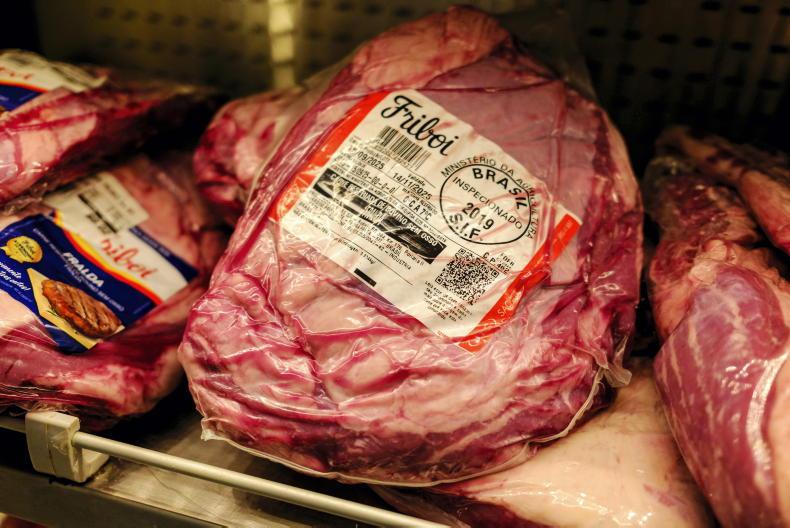
China has ramped up the pressure on Brazilian beef, with the imposition of a 55% tariff on all additional imports this year from the South American state.
The move by Beijing followed confirmation that Brazil had effectively filled its massive beef quota for China, which extends to 1.1m tonnes.
The imposition of the new Chinese tariff came in the wake of confirmation from the EU commission that Brazilian beef was likely to be shut out of the EU market for at least two years.
Brazilian efforts to circumvent the Chinese tariff by using the unfilled export quotas of other states – such as Brazil’s neighbour Uruguay – have been rebuffed by Beijing.
China introduced the beef quota for Brazil earlier this year as part of a suite of measures to protect and encourage domestic meat producers.
Brazil's beef exports totalled around 3.5m tonnes in 2025 but are forecast to contract by around 10% this year due to the heightened pressure on the EU and Chinese markets.
Some concern has been expressed that the closing of both the Chinese and EU markets for Brazilian beef will put increased pressure on Irish beef exports into Britain. Brazil exported 12,000 tonnes of beef to Britain in 2025.
Leading meat sector analyst Rupert Claxton – who is a director at the consultancy and market research firm Gira – agreed that Brazil is likely to focus more on the British market as a result of their EU exclusion but that this will probably happen in the first quarter of 2027 rather than this year.
Claxton pointed out that a lot of contracts were done for Brazilian beef prior to the EU ban coming into force, so that product will work through the system for much of the rest of this year.
However, there is already anecdotal evidence that Brazilian beef trading teams are targeting the British market for supply in the early part of 2027, Claxton said.
He predicted that most of the Brazilian focus will be on the service end of the British market.
“I don’t see a retail fit for it [Brazilian beef],” Claxton maintained.
In terms of the beef destined for China, Claxton said most of this product will find a home in markets across Asia, or as manufacturing beef in the US.




SHARING OPTIONS