
For young people considering a career in agriculture, apprenticeships offer an alternative to full-time college, combining paid employment with structured training and practical experience.
National apprenticeship registrations reached 9,461 in 2025, up slightly from 9,352 in 2024. Registrations in agricultural mechanics increased from 51 to 84, while farm manager registrations almost trebled, from 11 to 31.
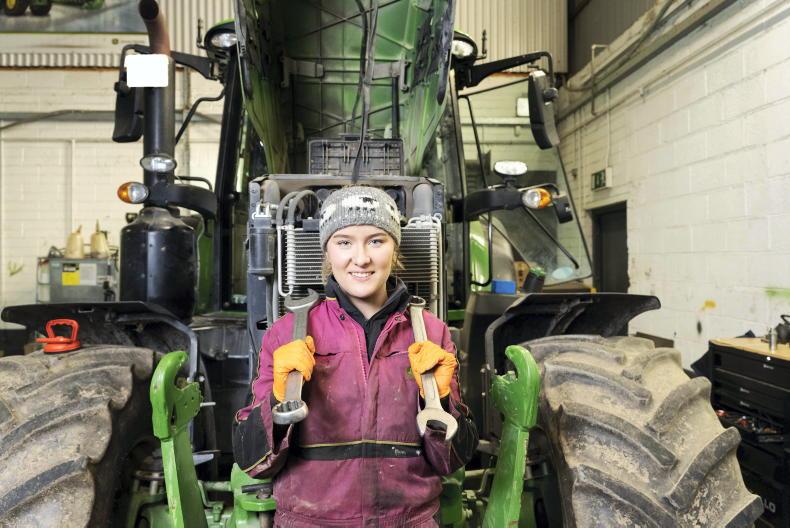
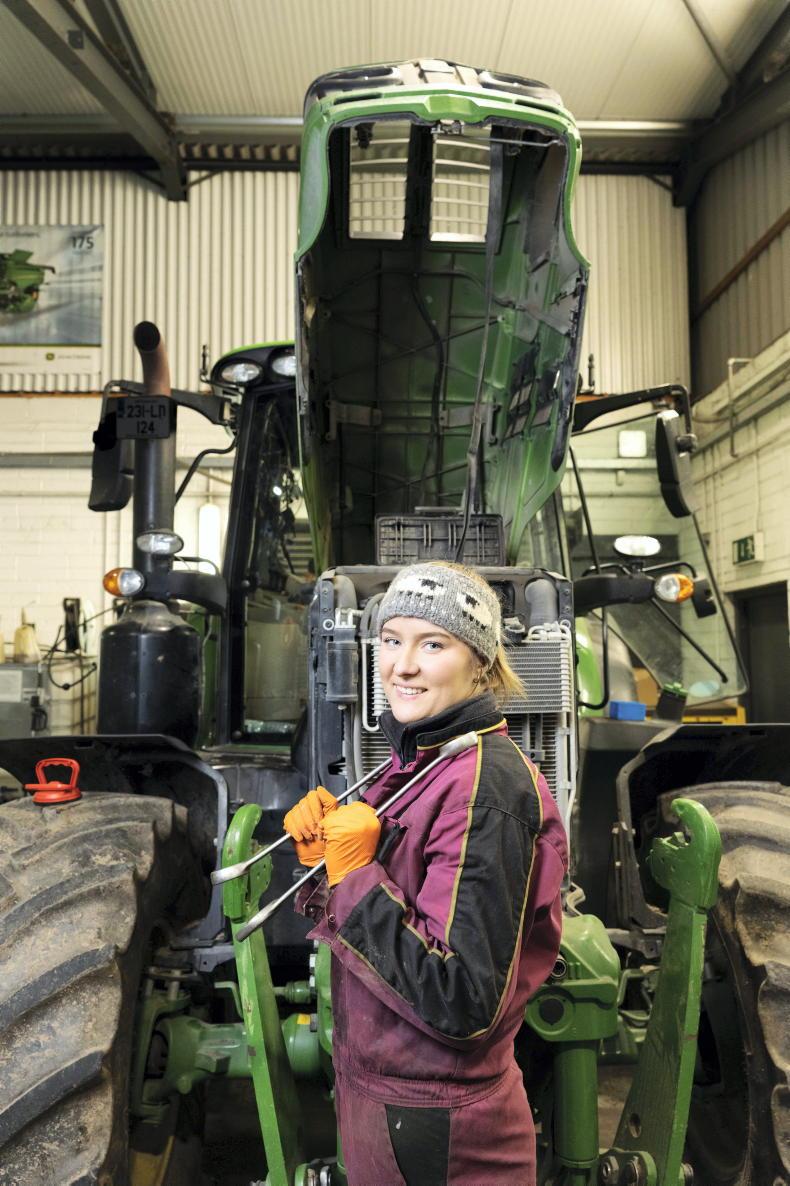
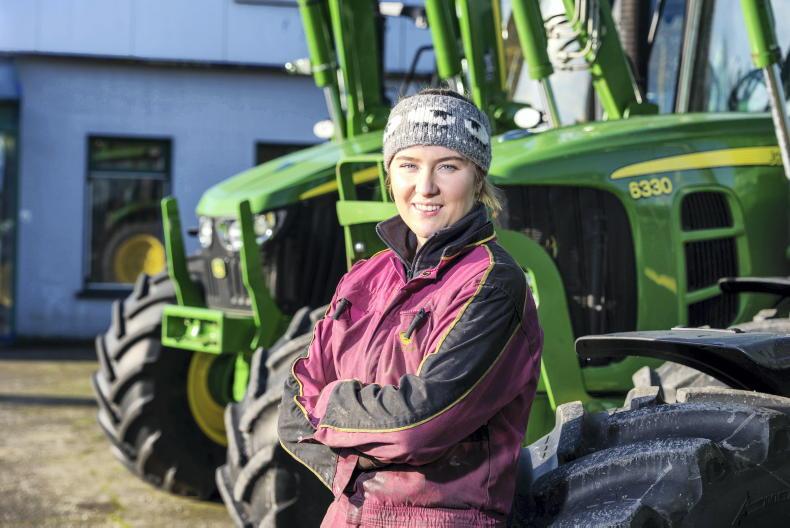
For agricultural mechanics apprentice Rosanna Murphy, the appeal was the chance to learn by doing. After completing her Leaving Cert in 2022, she went to college but soon realised that a classroom-based course was not the right fit.
“I hated college because it wasn’t hands- on,” she says. “I loved the mechanical side, and sitting in lectures, I would find myself thinking, ‘I wish I was out there doing that.’”
She began researching apprenticeships herself. From Drumsna, Co Leitrim, Rosanna had always been interested in large machinery, including trucks and tractors, and discovered that agricultural mechanics could offer the practical route she wanted.
“I’m very much a hands-on learner, so college did not work for me in that way. The apprenticeship was the only way to go,” she says.
Mechanics was not entirely unfamiliar to Rosanna. Her uncle worked as a truck mechanic and her great-uncle was a car mechanic. She grew up around horses and animals, and became increasingly interested in tractors, cars and how machinery worked.
“I’ve always been interested in how machinery works, what makes it do what it does and what’s going on inside it,” she says. “With new machinery and technology constantly developing, there’s always something new to learn.”
New apprenticeship
The combination of workplace experience and formal training is central to the apprenticeship model, explains Siobhan Duffy, senior training adviser with Cavan and Monaghan Education and Training Board (ETB). Traditional craft apprenticeships, including agricultural mechanics, generally follow a four-year, seven-phase structure, alternating between workplace training and off-the-job learning.
More than 65 new apprenticeship programmes have been developed since 2016, bringing the total to more than 90. Agricultural options include agricultural mechanics, farm technician, farm manager and horticultural apprenticeships.
“There’s so many different areas being covered, it gives everybody the opportunity [to progress],” says Siobhan.
The model can also make training more accessible for those who might struggle with the cost of full-time study, including accommodation and travel.
“You may not be able to afford to go to college because of accommodation costs or travel costs,” says Siobhan. “Whereas through apprenticeship, if you’re working, you’re earning.”
For those considering an apprenticeship, Siobhan says employers value communication, teamwork, punctuality and reliability, as well as an interest in understanding the work. Apprenticeships can also lead to further study and careers in management, teaching or business.
“You do have to show your interest,” she says. “Don’t do something just because you’re told to do it,” she adds, encouraging young people to ask questions. “You understand better, and you learn better when you understand why you’re doing something."
For Rosanna, securing an employer was one of the biggest obstacles. She says she was turned away by a number of businesses and believes this is because she was a woman entering a traditionally male-dominated trade. She kept applying until she found a place in a smaller garage, where she spent around two years.
“As a female, I really struggled for a long, long time to get a job,” she says.
When Rosanna later tried to move to another employer to complete her apprenticeship, she again found it hard to secure a position.
At one point, she feared she would not be able to finish.
That changed when she joined Meath Farm Machinery, who have centres in Meath, Louth and Cavan. Rosanna is the only woman in the Cavan depot, but says she felt welcome from the beginning.
Just like her male counterparts, colleagues take the time to show apprentices how they approach jobs, explain problems they have encountered and answer questions.
“They never looked down on me once, they have supported me from day one,” she says.
Varied work
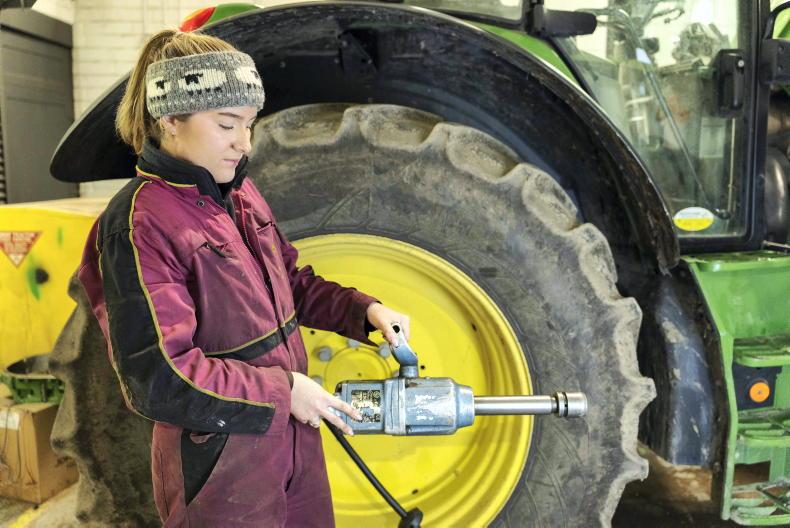
The work itself is varied. One day she might be taking the roof off a tractor; another could involve investigating its hydraulics or diagnosing a fault. She enjoys the changing demands of the job and the need to keep thinking.
“It’s nearly always something different every day, which I love. I hate a repetitive day,” she says. “Your brain is always active... it keeps you going.”
The college phase of her apprenticeship helped her understand the theory behind the practical work.
She says the training then gives her a better understanding of how machinery works and helps her bring that knowledge from the classroom back to the workshop, particularly when diagnosing hydraulic problems.
“You’re able to bring what you’ve learned in your college training to your job, and I think that’s where everything connects with the apprenticeship,” she says.
The college phases also give apprentices the chance to meet others working across different dealerships and machinery brands, including John Deere, Case and Massey Ferguson. For Rosanna, that shared experience is something to look forward to.
College element
Rosanna says her first phase in Waterford was daunting. She walked into a class of 35 men and was the only woman. Although she initially found the prospect intimidating, she says her classmates treated her well and made her feel part of the group.
“I walked in, and there was me and 35 lads,” she says. “For six months, I was like, ‘Oh my god, this is daunting.’”
Looking back to when she started at 17 or 18, Rosanna says she would not have imagined being able to take on the work she does now.
Her experience has grown from carrying out basic servicing and simpler jobs to getting further into the mechanics of a tractor and working through more complex faults. Her confidence has grown alongside those skills.
“My confidence has gone up, and I’m not doubting myself as much as I would have at the start,” she says.
A recent repair stands out. A tractor with significant hydraulic problems had to be stripped down while she worked through the faults. It was out of action for a time, but she has now got it running again.
She says there is great satisfaction, “when you see the job finished and they’re heading out the road.”
For Rosanna, recognition has also been another important milestone. She was nominated for National Apprentice of the Year last month, an acknowledgement that made her feel her efforts had paid off.
“It was just that rewarding feeling of everything I have done has paid off, and I can achieve these things in the job I’m doing,” she says.
“I just felt very happy that somebody is recognising my hard work.”
She wants to complete her apprenticeship, gain her qualification and continue learning. In time, she hopes to encourage other young women to consider agricultural mechanics, particularly those who might be put off by the fact that it remains a male-dominated trade.
Rosanna believes schools could do more to introduce students to apprenticeships and bring in people working in sectors where women are under-represented. Had someone spoken to her about the options in school, she might have taken that route from the beginning, she says.
“There’s no reason for a girl to not be able to do a job,” she says, pointing out that tools and equipment make it possible to manage physically demanding tasks.
Her advice to other girls is not to let other people’s expectations decide what they can do. “You can do whatever you want to do. Just put your foot down and don’t let anybody stop you,” she says.
See solas.ie/programmes.