
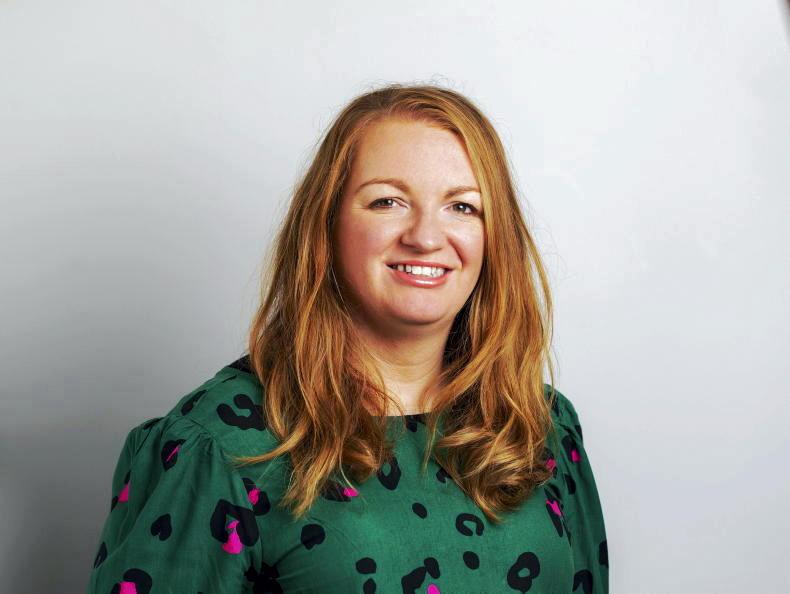
As the Irish Farmers Journal lands on shelves across the country this Thursday morning, 600 women will start to arrive at the Radisson Blu Hotel in Little Island in Cork. Our 17th Women & Agriculture conference takes place every October and after months of hard work, the day itself is always one to enjoy.
There is something very powerful about that number of women coming together in one room with a shared purpose – to learn something new, connect and enjoy themselves. I often joke that it’s like an annual family wedding; there are plenty of familiar faces – women who plan the day out with their sisters or friends – and it’s always great to catch up. And then it’s lovely to welcome women who come for the first time.
Last year, one woman came up to me and said she’d been thinking of attending for years. When we were going to Sligo and she had the day off work, she booked her ticket. She was nervous about attending on her own, but she had a great day. This is the reason our conference moves location every year or two – to connect with readers right across the country. This is our first time in Cork and I’m really looking forward to it being in my hometown.
One of the really special things about the day is the stories that women share on stage – and this is also reflected in some great stories in this week’s paper. Halloween comes alive at the Púca festival in Co Meath this weekend and while production designer Claire Morrissey has travelled the world perfecting her art, she brings her expertise back home creating an outdoor theatrical spectacle to celebrate Samhain. Deirdre Verney also has a piece about another impressive woman, Ciara Ryan, the youngest mart manager in the country who is revelling in her role in Mid-Tipperary Co-Op Mart. And from rugby to farming, Kate McCarthy talks about swapping the pitch for contract rearing.
Dense breasts
One story I would encourage all women to read this week is our health article on dense breasts and how it relates to a breast cancer diagnosis. There are many women who routinely undergo a mammogram and there’s plenty of public information out there on the signs and symptoms of breast cancer.
But there is a question that we all should be asking when we are getting a mammogram done: Do I have dense breasts? As Emer Roche outlines, on a mammogram, dense breast tissue appears white while fatty tissue appears dark. Breast cancer can also appear white, so when you have dense breast tissue, it is more difficult for tumours to be detected. This was the reality for Siobhán Freeney, who in June 2015 got a clear mammogram result and six months later received a stage three cancer diagnosis. She is now chairperson of Lobular Breast Cancer Ireland, advocating for women to be routinely informed of their breast density at mammograms.
When it comes to dense breasts, there are some factors at play. According to the Irish Cancer Society, women are more likely to have dense breasts if they are under 50, have a lower BMI or are pregnant, breastfeeding or taking hormone replacement therapy (HRT). But this is not a one-size-fits-all approach – any woman can have dense breasts and it can only be identified on a mammogram.
It is always worth asking the question.