
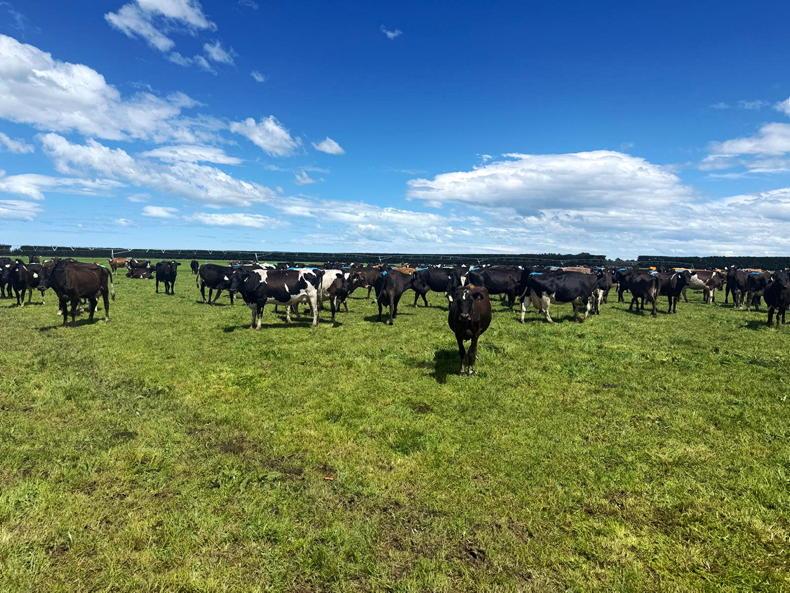
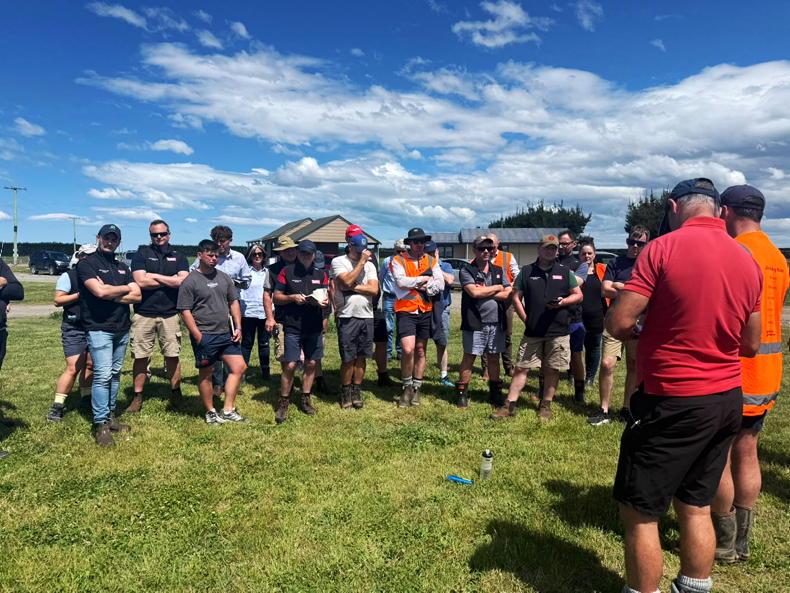
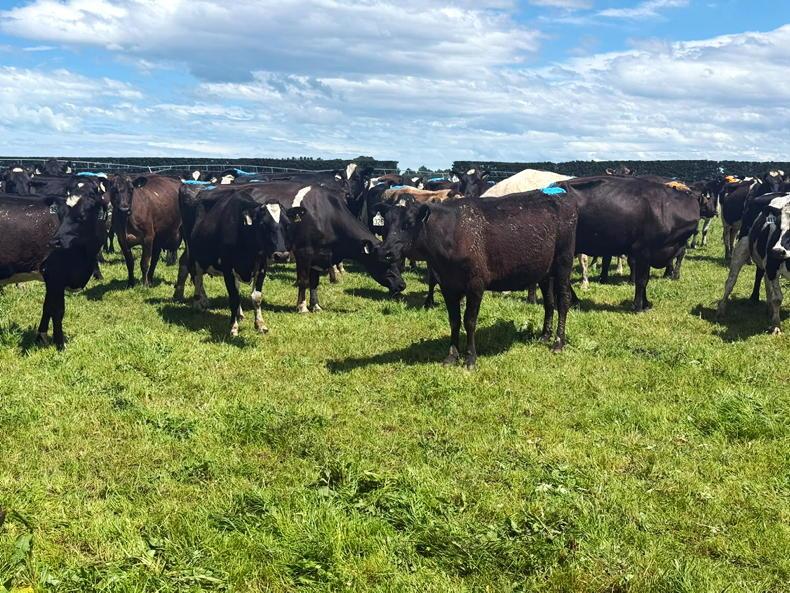
Dairy Holdings will be a familiar name to anyone in an agricultural context who has been lucky enough to travel to New Zealand.
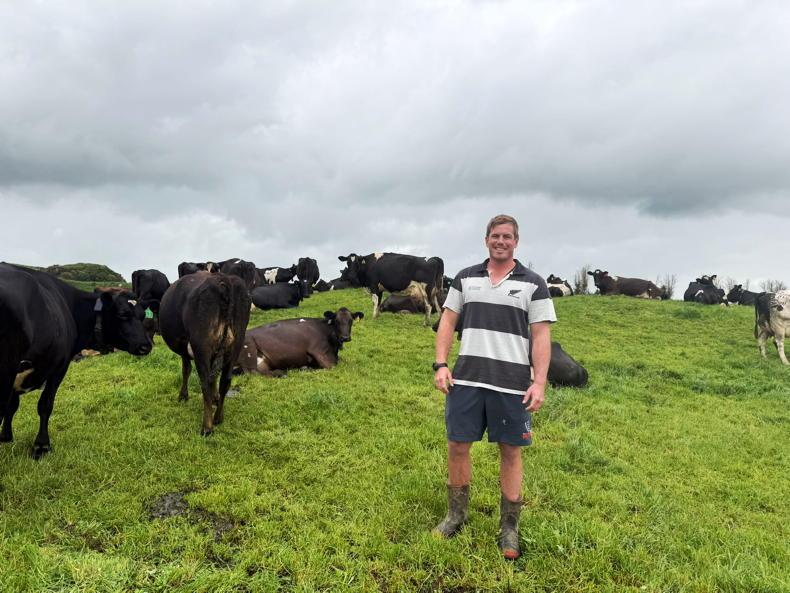
The organisation is referred to as ‘one of the big corporates’ in New Zealand dairy farming circles and owns 89 dairy farms, milking a total of 65,000 cows across the South Island.
The company was established back in 2001, when four dairy farming families came together to start a shareholder farming business.
The starting point was the purchase of 18 farms, and since then the business has gone from strength to strength.
Grass
According to former CEO Colin Glass, a well-known figure in the New Zealand dairy industry, and current CEO Blair Robinson, growing and utilising as much grass as possible every year, without deviation, has been key to the success of the business.
The majority of their farms are located in Canterbury, with a smaller number in Southland.
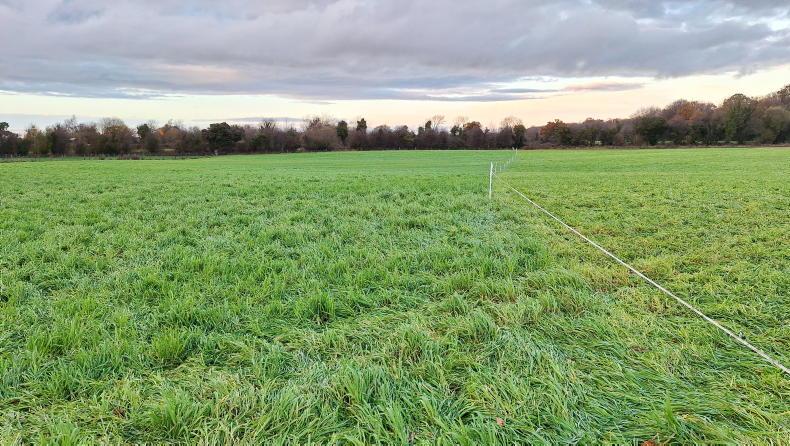
Canterbury is one of the best places in the world to grow grass. The soil type is a free-draining loam on top of gravel. There is only about 30cm of topsoil above the free-draining gravel, which helps keep the farms dry for the majority of the year.
The weather is very similar to Irish weather, with slightly warmer winters, and the vast majority of farms are irrigated.
All of Dairy Holdings' milking platforms in Canterbury are irrigated, allowing them to control grass growth throughout the summer months.
They can grow up to 17t DM of grass per hectare on most farms and utilise the vast majority of it.
Cows go into pre-grazing covers of 1,400kg DM/ha and work hard to graze down to very tight residuals.
When it comes to wintering, all cows are moved to outblocks, where they graze grass and home-grown winter crops such as kale and fodder beet.
Imported feed
There is no feed imported onto the farms, and the only supplement cows receive outside of grass is 30kg to 50kg of dry matter in the form of silage made on the milking platform and fed back over the course of the year.
Herd demand is matched exactly to the grass growth curve, which is more predictable than a typical Irish curve. If a deficit becomes a concern during spring, some of that 50kg of silage will be used.
In an autumn deficit, empty cows are culled early, cows are put on once-a-day milking to manage body condition, and thinner cows are dried off early if necessary.
This process is replicated across all farms, with slight tweaks to the system for those in Southland, where the climate is a little different.
Production
Milk production is of little concern to the people at Dairy Holdings, as it is not the driver of profitability. Cows are producing just 330kg to 340kg of milk solids, but because the main inputs are fertiliser, labour and animal health, the margin on the milk produced is very high.
This system helps to mitigate risk and remain profitable even in poor milk price years.
Farm working expenses are very low at around NZ$5–$5.50/kg MS, equivalent to €2.50 - €2.75/kg MS. This is about €1.50 to €2/kg MS lower than the best Irish farmers.
The breakeven milk price, which is essentially the milk price required to cover all costs, including interest and tax, for Dairy Holdings is NZ$7/kg MS. At the moment, milk price is NZ$10/kg MS, making the farms highly profitable at NZ$3/kg MS, or €1.50/kg MS.
There is no expensive technology or machinery on the farms. Cows are bred without collars, yet fertility remains excellent. Most fertiliser spreading is carried out by contractors.
People
Outside of grassland management, the other key pillar of success has been the organisation's ability to manage people and provide a pathway of opportunity from farm assistant right through to sharemilker, and even helping employees find the right opportunities to buy farms.
So far, 60 people have progressed through this pathway to farm ownership in their own right.
There are 480 staff in the company, with the chain of command running from the board of directors through to the CEO, senior management team, farm supervisors, sharemilkers, contract milkers and farm assistants.
They have a website where all staff can see company updates, standard operating procedures, as well as the financial data and budgets for each farm.
A fundamental KPI (key performance indicator) for Dairy Holdings is to see its people progress and succeed. This was made very clear after meeting some of the supervisors and contract milkers on farm, who were already on their own journeys through the business.
Comment
While farms in Canterbury have the advantage of being able to maintain a more consistent grass growth curve than the majority of farms in Ireland, what is really striking about Dairy Holdings, and a number of other successful farms we visited in the area, is their level of discipline and belief in their farming system.
All the evidence from Teagasc and DairyNZ tells us that farms which utilise the most grass per hectare while keeping the cost of production low will be the most profitable. Yet the vast majority of Irish farms, and a growing cohort of New Zealand farms, are straying from this message. There is certainly a reset needed in Ireland.
Although it may not be possible to manage with zero imported feed, the target has to be to utilise as much grass as possible and strip out the high costs. Costs such as excess meal feeding and expensive investments in machinery and technology, to name a few.
Another strong message from the day was the importance of fertility and the lack of correlation between milk output per cow and profitability.
There is no link between driving higher milks solids per cows and greater profitability. This is something Irish farmers, advisers, co-ops and banks need to get out of their heads, as it is driving our system in the wrong direction and increasing Irish farms' exposure to a poor milk price year.
The high milk prices over the past five years have insulated the entire industry from this significant risk.