




Paddocks grazed over the next two weeks should be drier paddocks that we want to have for grazing in February 2027. Grazing off these paddocks properly now in good conditions will give them a good opportunity to bulk up again for the first rotation next year.
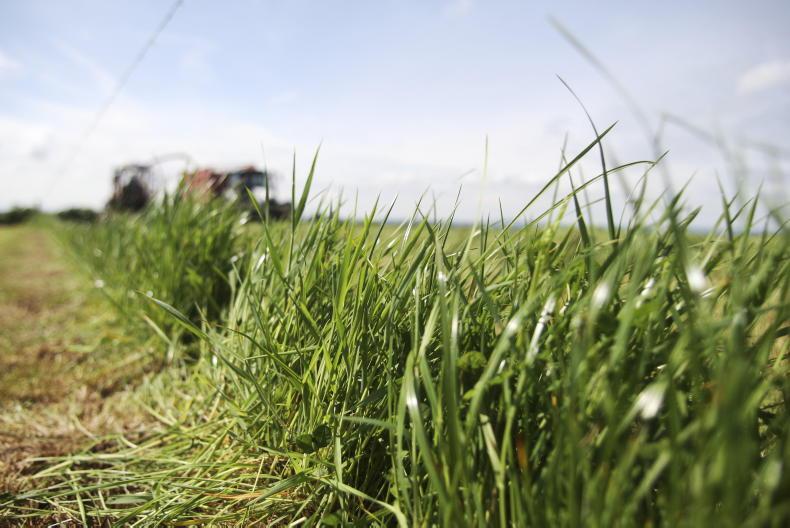
With pre-grazing yields at 2,000kgDM/ha or greater on many farms this week, it is inevitable that achieving target post-grazing residuals is going to be difficult. Around the country, farmers are struggling to clean off some of these heavy covers without penalising cow intakes even with good grazing conditions.
It’s tempting to feed additional ration to support cow intakes, but this will actually make the job of getting good clean outs more difficult as it reduces herd appetite.
Take advantage of the remaining good conditions by grazing off any remaining heavy covers now to get the full use of this feed.
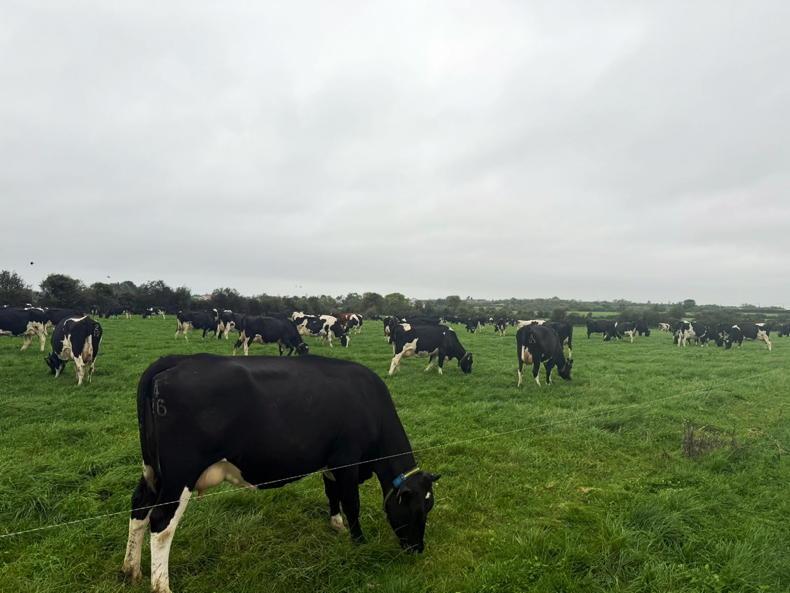
When it comes to extended grazing, flexibility is key. Many farmers are grazing heavier covers by night and offering lighter leafy covers by day to support animal intakes and increase the proportion of area being grazed this week.
To ensure that paddocks are well grazed, it’s also worth putting the herd back into any paddocks that are not well grazed for a few hours after milking and moving them on again when the correct residual is reached. This is an extra job but it will make a huge difference in terms of regrowth and quality for next year.
If not already done, keeping the feed budget up-to-date with the correct cow numbers and grass allowance will help to determine the appropriate ration level to feed each week to achieve the target average farm cover at housing.
On heavier soils, grazing conditions can deteriorate quickly and, if grass supplies are diminishing, housing cows at night may be the simplest option to stretch grass supply for the remainder of October.
As soils become wetter, avoid grazing vulnerable paddocks when heavy rain is forecast. It is essential to use on–off grazing to minimise poaching damage, as this will reduce subsequent pasture production into next spring.
Padraig McCarthy – Lixnaw, Co Kerry
Grazing conditions are still very good at the moment. Pre-grazing yield is 2,250kgDM/ha and we’re getting a good clean out with 24 and 36 hour allocations which keeps things simple. The cows are moved on whenever the residual is achieved during the day. We have 17% of the farm closed now. We will start grazing off the driest block of ground that we want for February from this weekend.
We aim to have the whole farm grazed by mid-November, with a closing farm cover of 700kgDM/ha for 1 December. That will give us an opening cover of 850kgDM/ha at the start of calving which will give us enough grass for the first rotation.
Stocking rate (LU/ha) 3.2
Growth (kg/ha) 50
Average farm cover (kg/ha) 923
Yield (l/cow) 13.7
Fat (%) 5.75
Protein (%) 4.53
Milk solids (kg/cow) 1.5
Concentrates (kg/cow) 2.5
James Taylor – Portrush, Co Antrim
I’m very happy with how grazing is going, although it has been harder to clean out paddocks over the weekend.
We had a green drought here during August but it’s been a good year overall. Cows are milking well and ahead of last year at the same point.
While grazing conditions are good, they can change quickly. We will house cows by night from this weekend to spare grass and graze by day until mid-November. We are feeding 2kg of silage at milking time.
We are aiming for a closing cover of 600kgDM/ha in late November to commence calving with a cover of 1,000kgDM/ha on 20 February.
Stocking rate (LU/ha) 2.6
Growth (kg/ha) 21
Average farm cover (kg/ha) 930
Yield (l/cow) 15.8
Fat (%) 5.60
Protein (%) 4.39
Milk solids (kg/cow) 1.6
Concentrates (kg/cow) 2.7
Aaron Pearson – Kildare Town, Co Kildare
Grazing conditions are super at the moment. Pre-grazing yield is 2,200kgDM/ha, grass quality is good and I’m happy with the clean outs.
We have about 10% of the farm closed and we’re grazing further away paddocks and heavy covers now.
The farm has continued to grow well and we don’t have a lot of very high covers in front of us.
We will close with a cover of 800kgDM/ha on 20 November and hope to have 1,000kgDM/ha by the start of calving.
In recent years, we’ve reseeded a few paddocks on peaty ground during September and they have established well for spring grazing subsequently.
Stocking rate (LU/ha) 3.3
Growth (kg/ha) 45
Average farm cover (kg/ha) 1,097
Yield (l/cow) 18.4
Fat (%) 5.20
Protein (%) 4.25
Milk solids (kg/cow) 1.8
Concentrates (kg/cow) 5.0



SHARING OPTIONS