



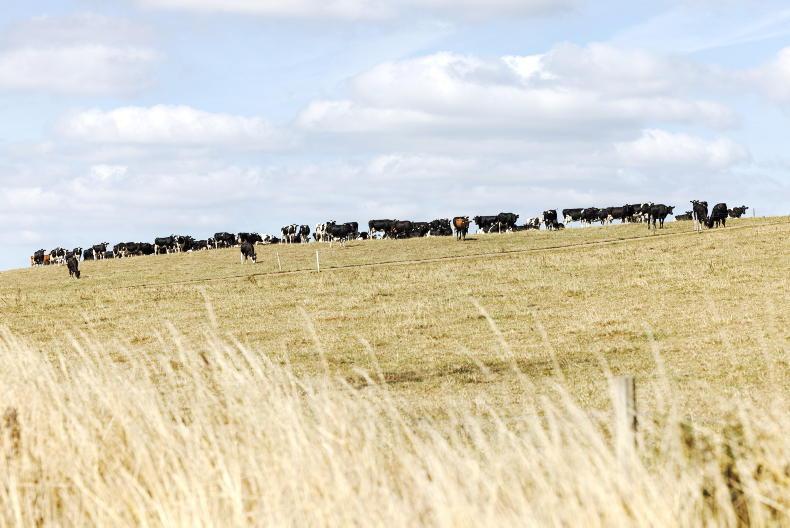
Some of the country has received much-needed rainfall to sustain growth and even improve it, while other areas are still suffering badly from what has been officially classed as a drought.
Though not to the same extent as we are seeing in the UK at the minute, there are still high levels of feed going in to stock amid the near complete lack of growth in the south and south east of the country.
Rainfall has been more frequent in the areas that had been least hit by drought, with those areas' farmers returning, slowly, to more regular rotation lengths and fertiliser-application rates. For those in the worst-affected areas, Teagasc is recommending that fertiliser application is delayed until 7-10 days post rainfall.
Many farmers will understand this already, with softer ground and more green in the sward allowing for greater N utilisation. Application rates should be kept to about 20 units; doing this will allow a further 20-30 to be spread before the closed period in September.
Fodder
Fodder supplies on these dry farms need to be assessed as a lot of silage has gone in to cows over the last six weeks or so. There are ample hay supplies still about, with straw coming on to the market as well now. With excellent-quality silage having been harvested this year, farmers may look to stretch out fodder supplies by purchasing hay and straw and mixing with top-end silage. This will do two things; provide a cost-effective fodder supply in to the winter months while also preventing dry cows becoming over conditioned during the housing period.



SHARING OPTIONS