



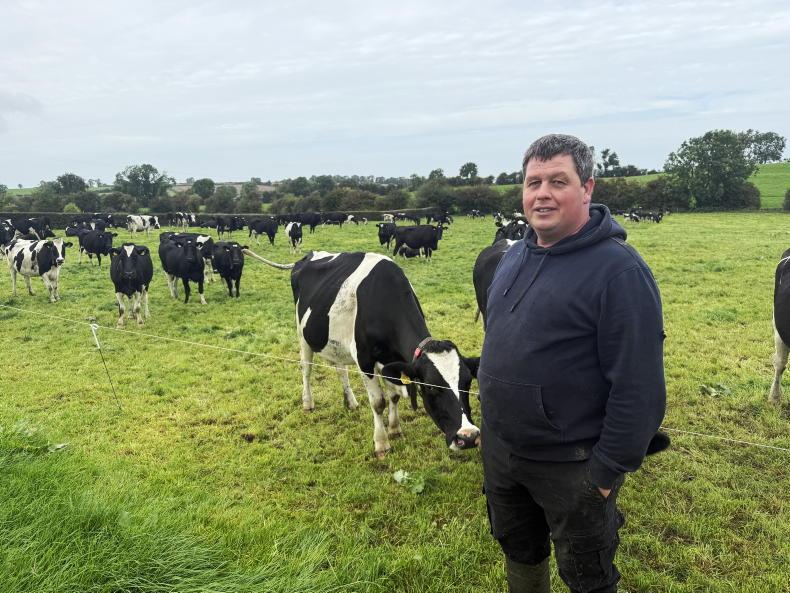
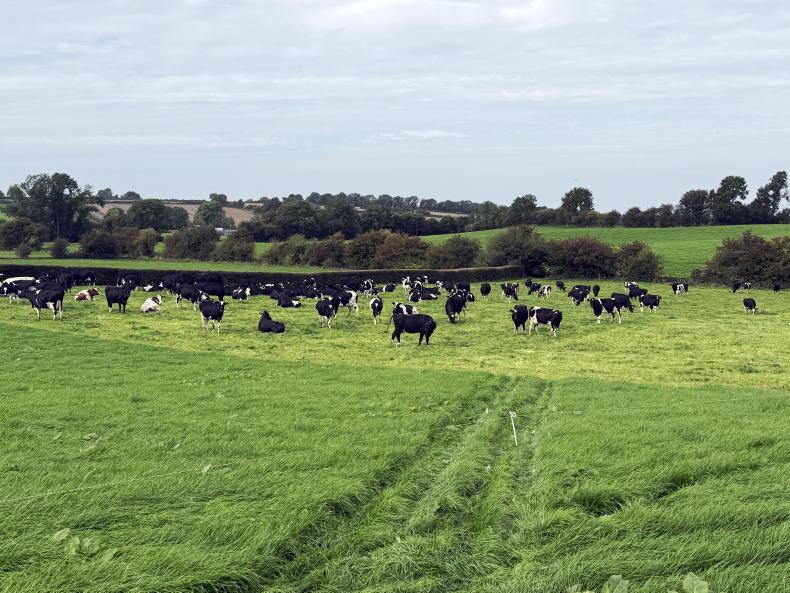
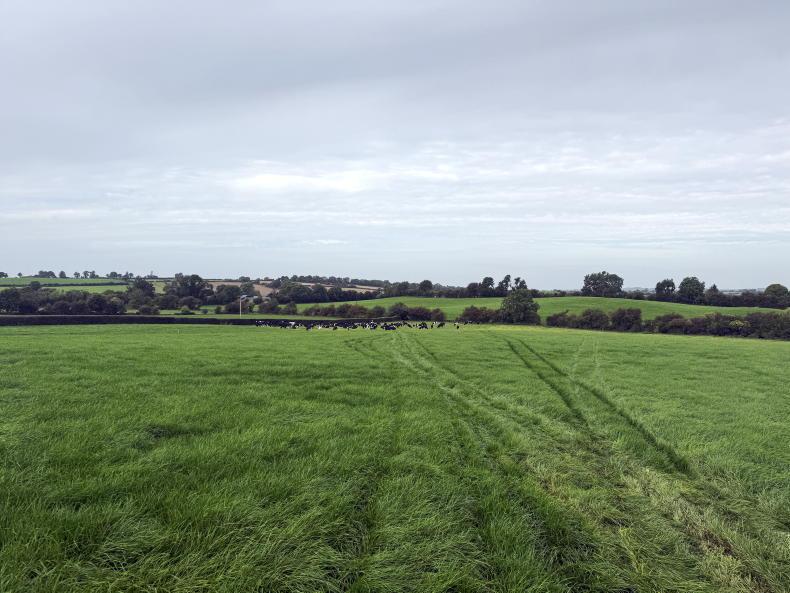
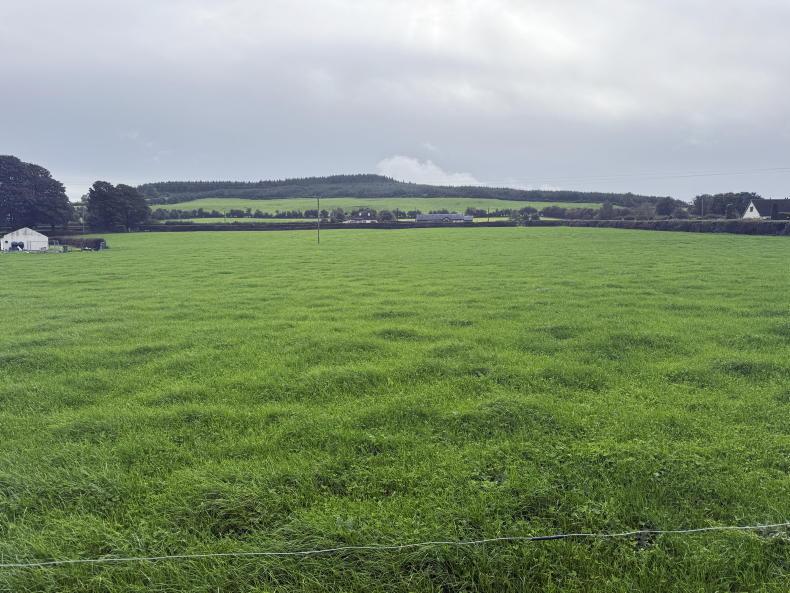
Walking through the cow paddocks on Declan Bollard’s farm near Baltinglass, Co Wicklow, you’d be forgiven for thinking it was early June, not late September – such is the vibrancy in grass growth.
For Declan, the recovery in growth has been the saving grace after a very difficult summer, after which he was facing into a substantial winter feed deficit.
Milking 125 cows on a 73ha farm, along with his wife Tina and father Tom, Declan says he had no grass by the end of August. He’s not exaggerating, as his Pasturebase grass report shows that average farm cover was as low as just 61kg DM/ha on 24 August, with a growth rate that week of just 4kg DM/ha/day.
“About half of the farm was yellow and totally burnt, while the other half, which is a little bit heavier in terms of soil type was still green, but it wasn’t growing. We started feeding heavily in mid-July, when cows were put on a 6/6/6 diet of 6kg grass, 6kg meal and 6kg of silage.
“By 1 August we had moved to an almost all indoor diet of silage and 8kg of meal, split between 3kg in the silage and 5kg in the parlour.
“We continued to graze one-thirteenth of the farm per day and I reckon they were getting around 1kg of grass in that allocation. Looking back now it was the right thing to keep grazing, because the fields bounced back quickly after the rain came and when they were out of the shed, it gave us a chance to clean cubicles and get the jobs done,” Declan says.
Implications
By the end of the drought, when silage was no longer required to be fed, Declan was short 50 days of his 150-day winter feed requirement. As part of the new Teagasc/Tirlán Farm Elevate joint programme, Declan sat down with Teagasc adviser Seamus Kearney to come up with a plan to build back up the 50 missing days in the feed stack.
Declan says that by doing the fodder budget and putting the plan in place, he has certainty and peace of mind about the months ahead. When the Irish Farmers Journal visited the Bollard farm last week, the average farm cover was 918kg/ha and the growth rate was 60kg/day with a demand of 50kg/day and Declan was happy.
“We’re on track to be out full time until 1 November, and then be out by day only for a few more weeks. My plan is to always close at an average farm cover of 750kg DM/ha by 1 December and open at 1,000kg by 1 February.
“We cut third-cut earlier in the week from the outside land and I reckon it made up around three-quarters of what we fed out in the summer. Whether or not I’ll actually cull the cows on 1 November remains to be seen, but at least I have the option,” he says.
One thing Declan is keen to point out is that he didn’t go mad spreading fertiliser after the rain came. Instead, he waited until grass growth rates were at 40kg/day in early September, before spreading the one round of 20 units/acre of nitrogen across the farm.
The scars from the drought remain with an extra 300kg of meal fed per cow. There’s also the toll on the body, with a near doubling of the daily workload during August, at a time when things should be quieter on the farm.



SHARING OPTIONS