



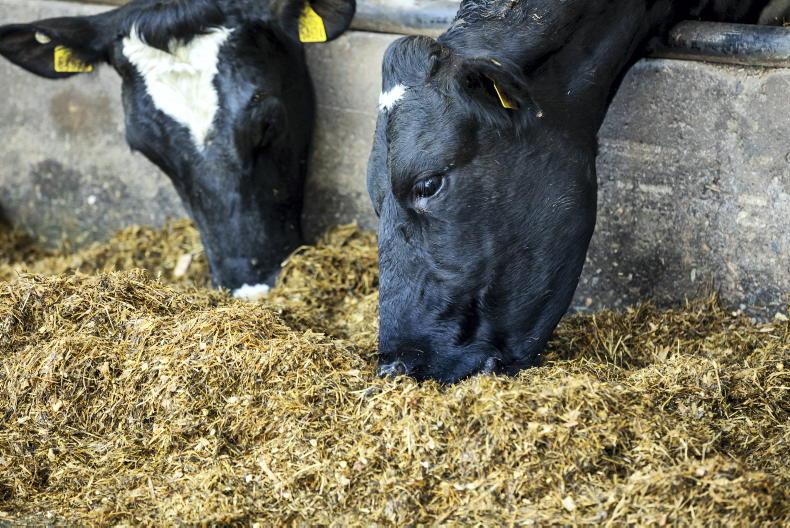
Closing off paddocks: While it remains to be seen if the current unseasonably high grass growth rates will continue into October, it’s likely that the paddocks being grazed this week are unlikely to be grazed again until 2027. The only exception should be paddocks with high-clover contents which should be grazed now and re-grazed again at the end of the rotation to maintain clover content during the winter.
What other paddocks are actually closed will depend a lot on average farm cover in early November. The best thing to do now though is to assume that the paddocks being grazed this week will not be grazed again. The most important thing now is to make sure there is a good clean after grazing. In many places, pre-grazing yields are over 2,000kg DM/ha currently and so strip grazing is essential to clean off these swards which are still very good quality right to the base.
Farms that are ahead of target cover should be reducing ration in the parlour to increase the speed of grazing through these higher covers. The target is to grazed a minimum of 2% of the farm each day from now until the end of October.
Slurry movements: While farmers have until 31 December 2026 to declare slurry movements to outblocks, the end of the slurry spreading season is a good time to get this new task complete while it’s fresh in your mind. This year, the milking platform was identified on BISS applications which included fields within 3km of the milking parlour that can be grazed by dairy cows. These are new requirements of the current NAP and are relevant to farmers with a milking platform stocking rate of greater than 259kg organic N/ha.
The farmer must move and declare slurry movement to the out blocks or accept a lower chemical fertiliser allowance on the milking platform. Movements must be recorded via the MyAgfood.ie platform or on the Department’s organic movement app. Farmers must record the date of movement, the volume and type of material moved and the LPIS parcels where the slurry was moved to. A guide for declaring such a movement can be found at www.gov.ie/nitrates.
Getting yards winter ready: Local authorities carry out farm inspections as part of the National Agricultural Inspection Programme (NAIP) to ensure compliance with the Good Agricultural Practice (GAP) regulations. Inspections are generally focused in priority areas where water quality is not meeting good status. The NAIP report for 2025 carried out by local authorities highlighted that 43% of the 4,315 inspections undertaken were found to be non-compliant for various reasons and required follow up actions by the farmers to resolve the issues identified. Uncontrolled runoff from farmyard manure was by far the largest single issue. Other frequently identified problems included inadequate gutters and downpipes and failure to keep clean and dirty water properly segregated. In many yards, heavy rainfall events at this time of year result in a lot of clean water entering slurry tanks and taking space needed for slurry storage. Now is the ideal time to check and fix leaky gutters and downpipes to avoid collecting clean water.



SHARING OPTIONS