
With many herds commencing to dry off groups of cows over the next few weeks, good routines are essential. The dry period allows the cow and her udder to recover and regenerate so that she can calve down with a low SCC and have a low risk of developing clinical mastitis in the next lactation.
The highest risk period for cows to acquire intramammary infections is during the two weeks after dry-off. While the use of antibiotics at the end of lactation will cure existing infections and prevent new infections over the dry period, the requirement for farmers to reduce antibiotic use and selective dry cow therapy (SDCT) means that extra attention to detail is required. Internal teat sealants (ITS) will provide a physical barrier and block the entrance of bacteria into the quarter during the dry period. Cows which are suitable for ITS only must have maintained an SCC below 75,000 cells/ml during the year and have had no cases of clinical mastitis. Studies show that the cure rate during the dry period for cows with a low SCC (<200,000 cells/ml) is high even when receiving ITS alone.
Preparing for dry off: Having a clean environment is essential and only drying off a maximum of ten cows per person per day is recommended. Cows selected for dry off should have their tail hair clipped and should be on a diet of dry forage with no ration for two to three days beforehand as reducing milk yield near dry-off is important. Cows should be dried off sharply after their normal milking routine without skipping milkings before dry off. If conditions allow, cows should be left out in a paddock for 48 hours after dry off. If going indoors, make sure that clean dry cubicles are provided. Each cubicle should be cleaned, scraped and limed twice per day around dry off.
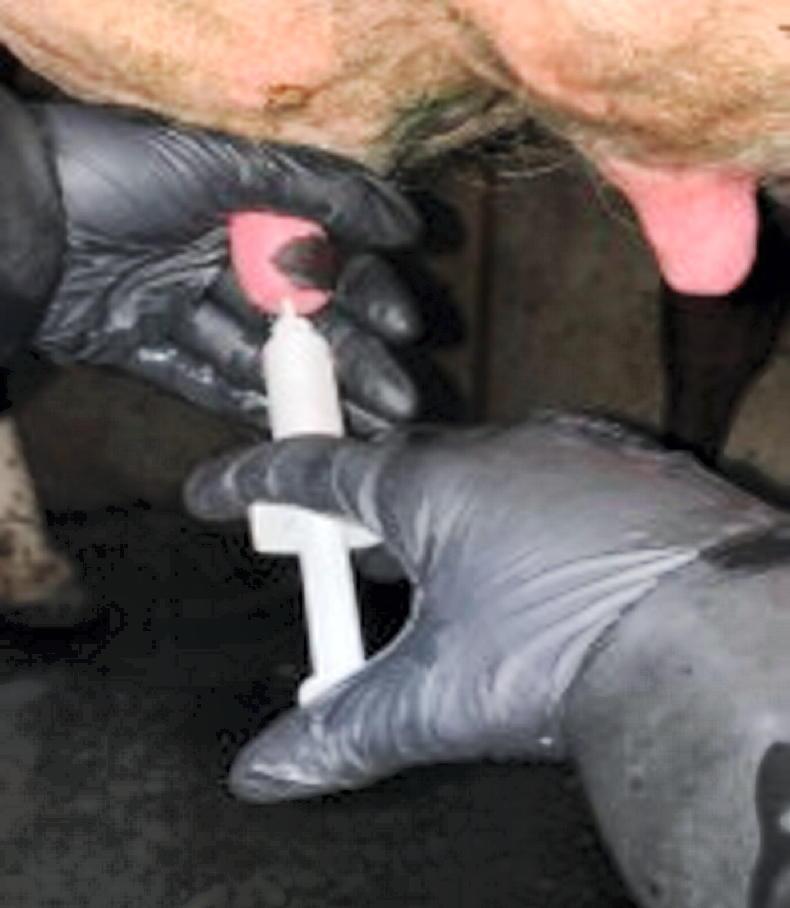
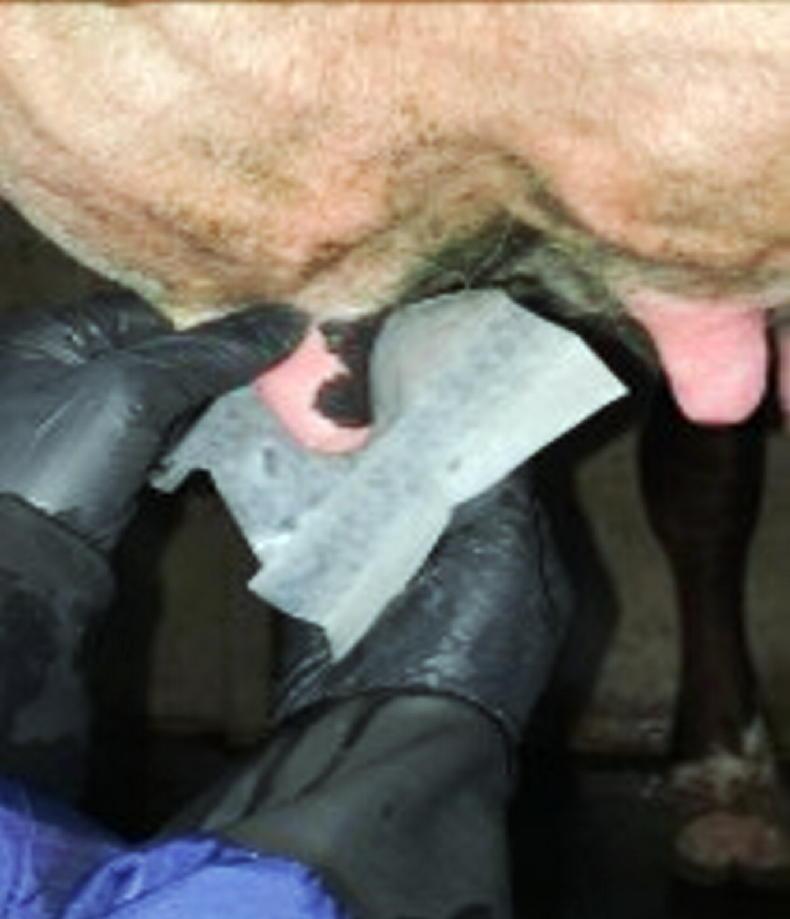
The dry off routine: The next lactation starts at dry-off and it is critically important to have a clear repeatable process to ensure that cows remain low SCC in the following lactation. Drying off cows is a two-person job and cannot be done in a rush. Farmers must ensure help is available and take the time to do the job as well as possible. Best practice guidelines have been developed and tested to ensure this process is done cleanly. On the day of dry off, wear clean gloves at all times, pre-dip all teats using a dip cup after milking and allow it to stay on teats for 30 seconds before drying each teat with individual paper towel. Disinfect each teat end with methylated spirits and use a white wipe to check and repeat disinfection if necessary. There should be no teat contact after cleaning. If infusing dry cow antibiotics, commence with the back teats and have a set order for each cow so that no quarter is missed. Infuse teat seals by pinching the teat base and partially inserting the teat nozzle. Apply teat spray with full teat coverage and allow animals to stand on a dry clean yard for 20 minutes afterwards. Do not dose animals after dry off as this will result in additional dirt slashing up on teats.
For further information on dry off protocols, visit the Animal Health Ireland website.