



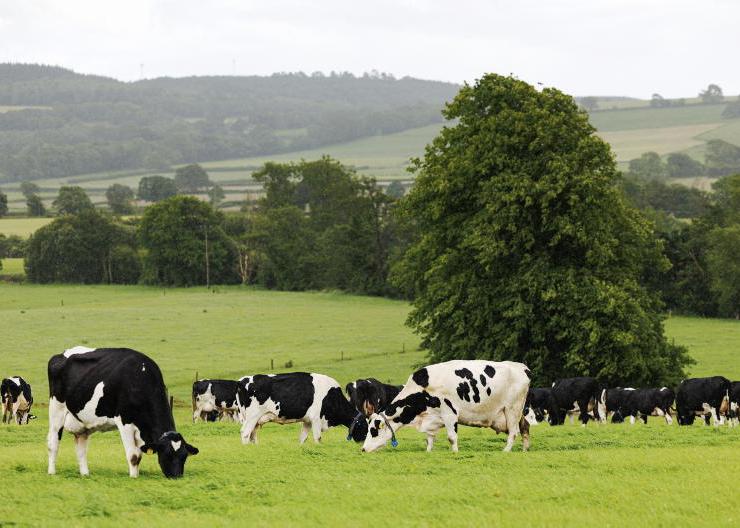
Following on from last week’s piece outlining the grass-fed standard, what it means and how it is policed, the Irish Farmers Journal is this week looking at opportunities that exist to capture more value from grass-fed milk products and whether that value should make its way back to the farmers responsible.
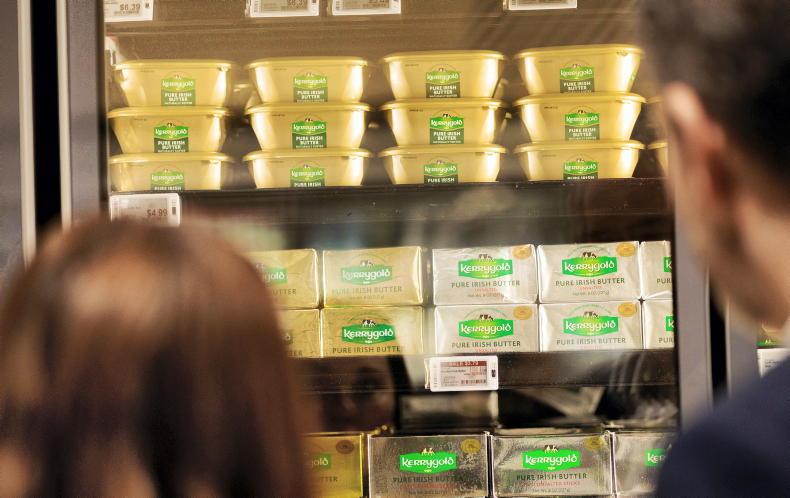
The Kerrygold brand has been the shining star of the Irish grass-fed dairy portfolio in recent years and the major success story.
Strong marketing, coupled with a quality product, highlights the demand that exists internationally for grass-fed dairy products.
Take the Kerrygold butter, its growth in the US market has been nothing short of exceptional, with sales surpassing $1bn in 2025 alone.
Ornua, the co-op which owns and markets the Kerrygold brand, is also involved in marketing and selling a wide range of other Irish dairy products.
Products including cheddar cheese, butter and milk powders are sold into markets across Europe, Africa, Asia and the Middle East.
While these products are purchased from Ornua’s member co-ops, not all of the milk behind them has to qualify under the grass-fed standard.
Kerrygold is different.
The milk used for the brand is required to meet the standard at all times.
Ornua CEO Conor Galvin said earlier this year that the Ornua Value payment which is the return from Kerrygold, adds 2c/l to every litre of milk purchased from member co-ops.
Kerrygold provides us with an example of how Irish dairy can extract additional value from its grass-fed production system.
The question is whether the industry can go further.
Ireland has invested heavily in developing, measuring and verifying its grass-fed credentials.
Farmers and the wider industry have also worked to maintain the production system that sets Irish milk apart from the majority of the milk that’s produced internationally.
So, what are the next steps for the industry?
Up to now, butter has been the go-to product for selling the grass-fed story.
Aside from Kerrygold, Tirlán’s Truly Grass Fed butter, the Kirkland range which will now be supplied by Tirlán, and the Golden Irish butter brand supplied by Kinisla have all made it to American retail shelves and all of these brands carry the grass-fed label.
The grass-fed story is a key part of the marketing strategy behind these products and a major reason for the success of Kerrygold.
The chance now is to see whether that same story can add value to a wider range of Irish dairy products.
Cheese is another obvious area that’s being tapped into, albeit with less success, but there are also opportunities with products such as milk powders and whey proteins.
Protein and in particular, dairy protein is a booming market.
It’s also a market that’s set to continue growing for the foreseeable future for a variety of reasons, the main underlying one being a massive cultural health shift.
Grass-fed protein powders are already a thing. Could Ireland’s dairy industry develop a market leading brand of whey, the most valuable of all dairy products which is on the market currently?
The interest in more grass-fed products is out there according to Bord Bia’s David Kennedy, who says the organisation is and will continue to be working to establish more markets for grass-fed products.
Ornua are of the same opinion so clearly the opportunities exist. The challenge for now is finding those customers and the markets, where guaranteeing that products come from a verified grass-fed milk pool, is worth something extra. Will commodity buyers be willing to pay more?
The next question is who benefits if the grass-fed products already in place and those that could emerge become successful?
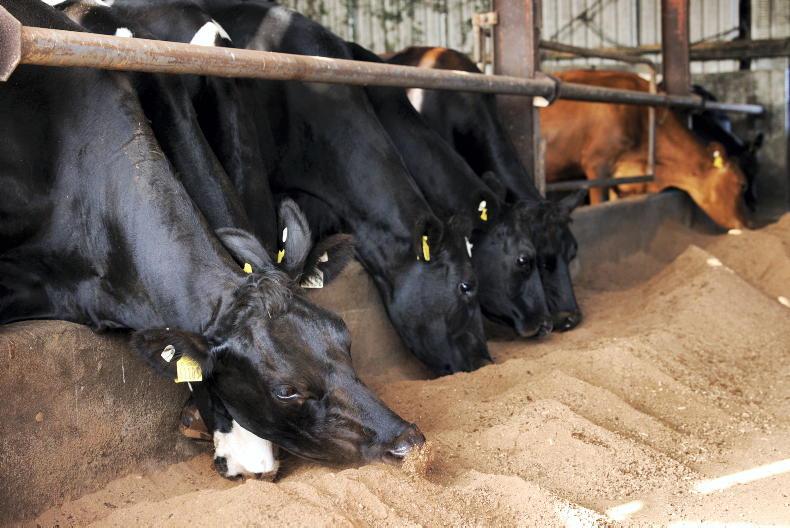
Should all farmers benefit from the premium attached to grass-fed products, including those who house cows year-round, feed high levels of imported feeds or simply fall below the 90% grass-fed standard?
Ultimately, that is a decision for the co-ops themselves.
Some may argue that without the milk supplied by farmers who don’t meet the grass-fed standard, these co-ops would struggle to fill processing capacity or maintain the milk pool needed to produce other products.
It is a valid argument and the reason most co-ops don’t have a written agreement in supply contracts to say milk must meet the grass-fed standard.
An under-supplied processing plant operating below capacity will have higher costs per litre processed.
Added to that, many of the products produced by Irish co-ops are not sold on the basis of being grass-fed in the first place.
Accepting that point, however, it is still difficult to see why farmers who meet the criteria required to have their milk marketed as a premium grass-fed product should not be rewarded for doing so.
One option could be a tiered milk price, with one rate for milk that qualifies for the grass-fed standard and another for milk that does not.
Another option could be an annual payment.
The proportion of Ornua’s value payment earned through the sale of grass-fed products could in essence be paid to only those suppliers who meet the criteria for grass-fed products.
The Irish Farmer’s Journal does not have the number of farmers currently qualifying for the grass-fed standard.
Bord Bia say they don’t release the number of farmers or the proportion of the milk that’s not actually meeting the grass-fed standard as it is “commercially sensitive and varies by processor and region”.
The figures are also counted on a rolling basis as audits are conducted and the three year averages worked out.
There would undoubtedly be practical considerations around how a milk pricing payment system like this would work and once again, it would ultimately be a decision for the individual co-ops.
However, as more value is sought from the grass-fed products, how that value is then shared with the farmers producing the qualifying milk deserves some consideration.
Decades of research from Teagasc has shown that utilising more grass and reducing the reliance on bought-in feed, is the best way of keeping costs down and ultimately improving farm profitability.
For this reason, rewarding farmers for producing a premium grass-fed product should not be perceived as an effort to keep farmers engaged with the grass-fed standard. The grass-based approach already makes the most economic sense at farm level; the figures and research prove this.
Without a significant milk pool coming from farms qualifying for the 95% standard, the future potential for growing the market of grass-fed products will be obsolete.
This point is particularly relevant given some of the commentary emerging from certain co-ops and industry people, surrounding higher milk outputs and flattening milk curves.
In recent months, the Irish Farmers Journal has heard a number of representatives from Irish co-ops on the record advocating for higher concentrate usage to drive output.
There also seems to be an obsession with higher milk solids produced per cows from some dairy advisors. This is despite research continually showing that the relationship between milk output per cow and profit is weak.
At the same time, out-of-season milk payments have increased incentivising more milk in the winter months and a flattening of the supply curve in the summer months.
A flatter supply curve and a greater milk output per cow may help processors maintain more consistent throughput and potentially gain some additional value in the market, if they had products to justify it. However, this has to be weighed up against the additional cost at farm level.
Producing that extra milk comes at significant cost for farmers and won’t be balanced out by a couple of extra cents on milk price.
At a time when Ireland should be trying to extract more value from its grass-fed credentials, it doesn’t make sense to encourage production systems that could start to increase the reliance on bought-in feed.
The opportunity for Irish dairy is to extract more value from its grass based system, not to move further away from it. That’s the challenge.




SHARING OPTIONS