
Calf sheds are an ever-popular investment for dairy farmers for three reasons. Some build them to be able to hold calves longer either for home buyers or the export market, while others fear a TB outbreak forcing them to hold calves or take a reduced price.
For others still, rearing calves to utilise an out-farm is another reason to be able to handle a large capacity of calves. All three reasons still see farmers wanting ample room, ease of management and reduced work load.
For the Coffey family in Co Waterford, it was the latter of the three reasons that ticked their requirements. Relatively recent converters to dairy farming, with the farm having previously held a suckler herd, the 150-strong herd run by Tom Snr and Thomas Jnr sees all calves brought through to beef. An outside block, which is too distant for silage harvesting or zero grazing, is instead used to carry beef weanlings and yearlings.
Cubicle accommodation was ample, and a new parlour went in as part of the conversion, but like many farms prior to building the new calf unit, calves were scattered in various dry sheds around the farm, making feeding and keeping calves cleaned out and bedded a laborious and time-consuming task. Keen to simplify the system, the father son duo completed their new bespoke calf unit in early 2026, just before calves hit the ground.
Design and layout
Eddie Rocket Architecteral Techinician designed the shed for the Coffeys. “With him being a farmer himself, he knows what works well,” explained Thomas, with Eddie having designed all the sheds on farm as part of the recent converiosn. All work was completed to TAMS specifications, with ground being broken in May 2025. The shed was supplied and erected by Dalton Steel, Carrock-on-Suir.
After a pause in works over the summer, flooring and penning went in in November 2025, with the Coffeys installing the pen work themselves. Concrete work on the build was completed by James Norris Plant Hire. All penning was made to measure after a site visit by O’Donovan Engineering, Co Cork, with height adjustable gates specked throughout.
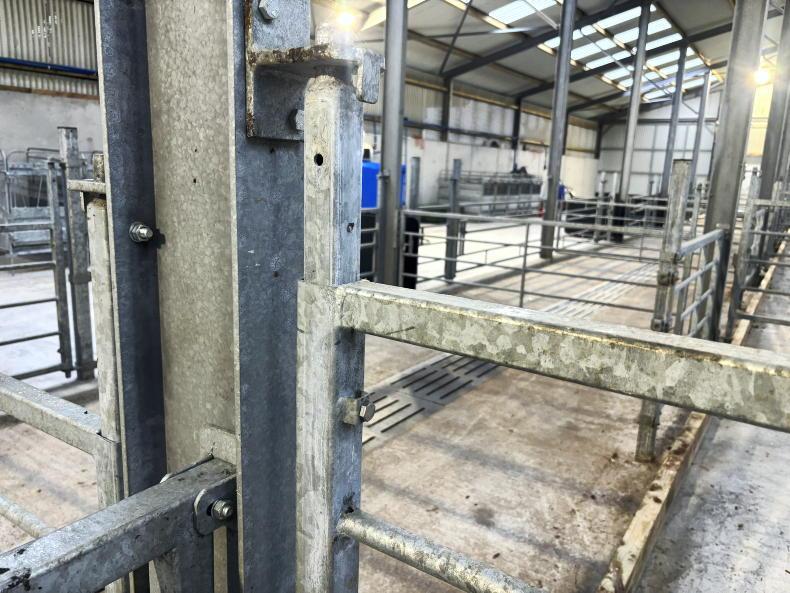
This allows gates to be risen as needed should bedding in the dry area rise, with the loosening of two bolts making this a quick and easy task.
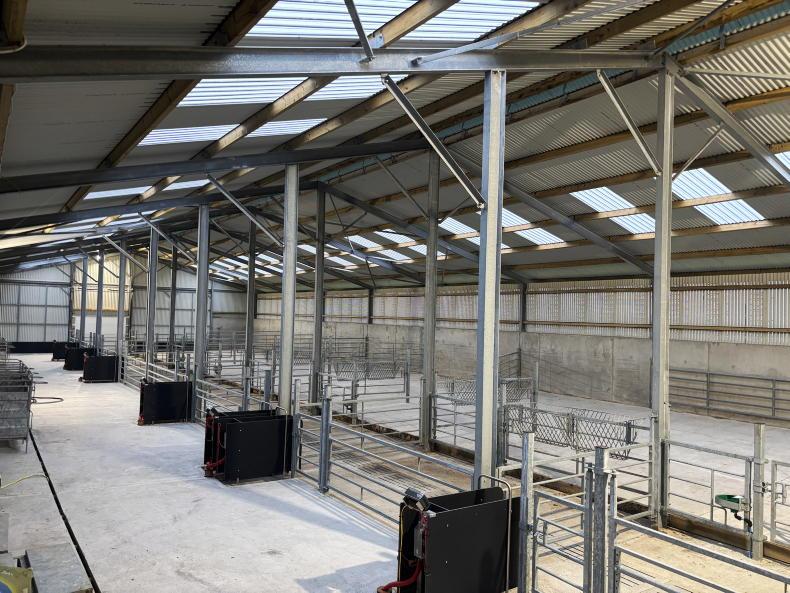
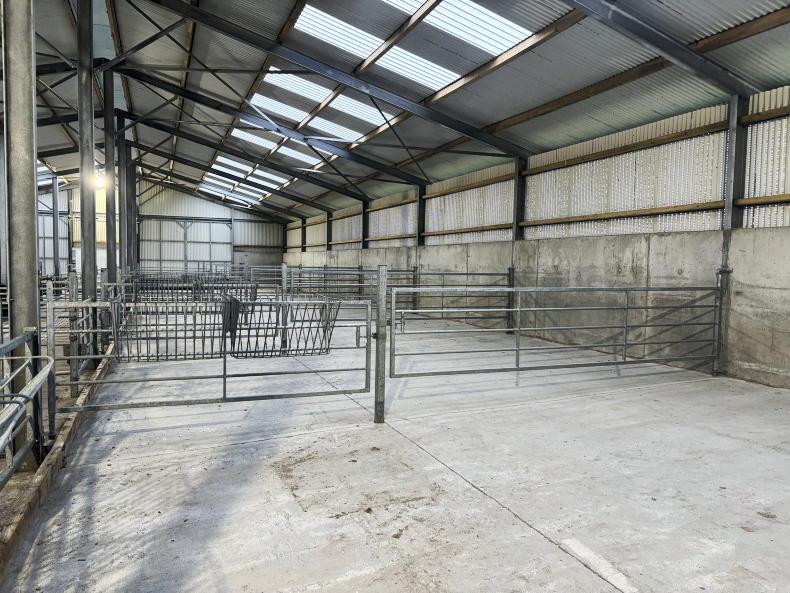
The dry bedded area to the rear measures 25ft (7.62m) in depth, with each pen divided by two of these height-adjustable dividing gates locked into a removable central post. Penning has been designed in such a way as to allow all calves to be locked into the wet area at the front without calving mixing.
Wet area
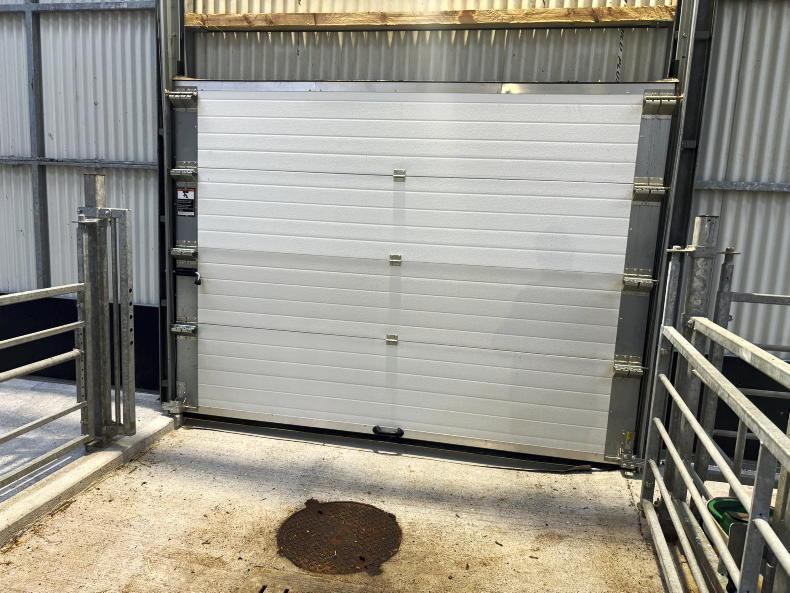
The wet area is hosed infrequently, while there is light soiling on it. The farm’s Bobcat skid steer complete with a brush can be deployed when more power is required, with the 10ft (3m) doorway being more than wide enough for the machine, which then pushes any faeces or straw into the bucket of the loader at the far end of the shed.
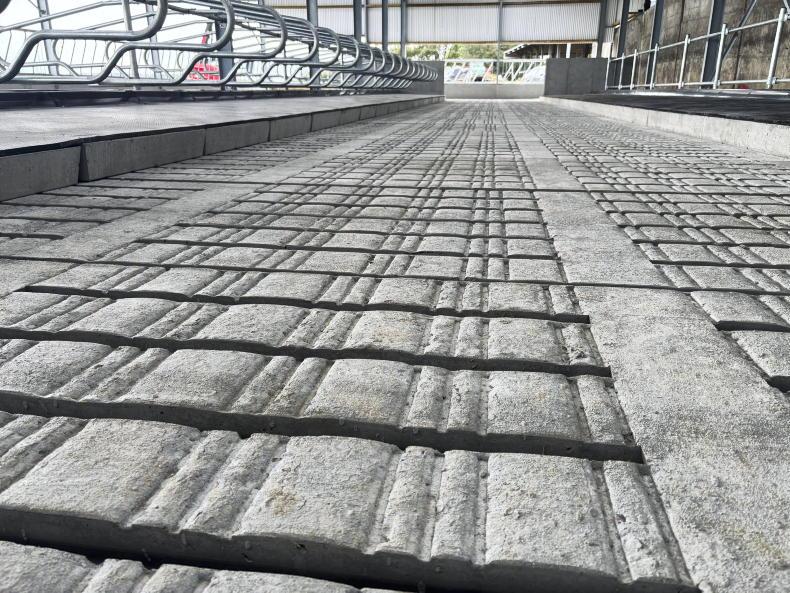
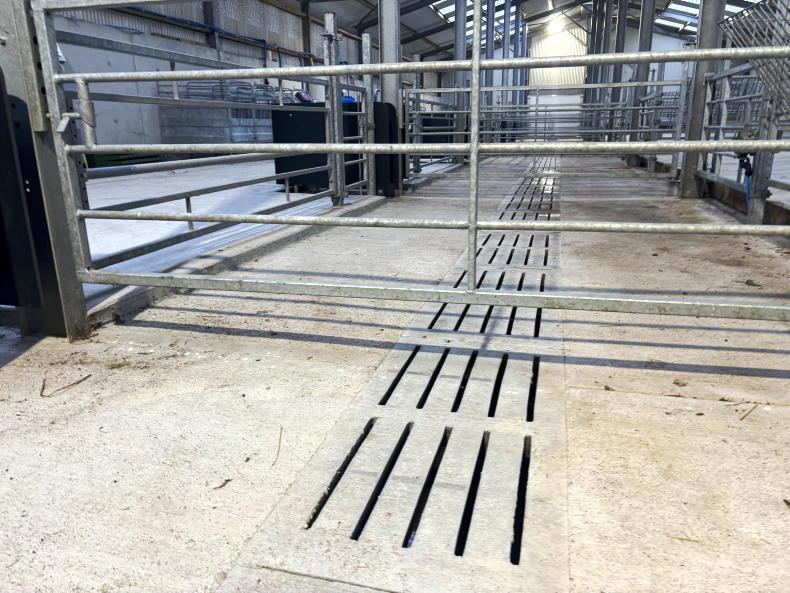
A clever channel has been made to remove effluent from the wet area by the Coffeys. A 2ft (600mm) pipe has been cut in half and overlayed with a pig slats, with the floor of the wet area cambered from each side in to this channel.
This effluent is then carried through to a slatted tank, with manhole inspection points at either end should any flushing out or jetting be required.
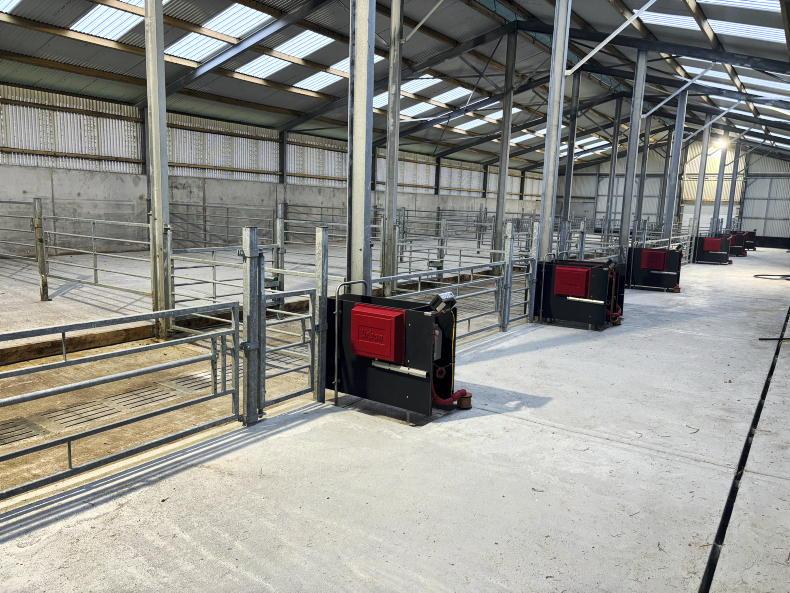
The floor of the passageway has been raised above that of the wet area to prevent any leakage of effluent, with the area under each feed station kept to the same height as the wet area.
Urban Alma Pro
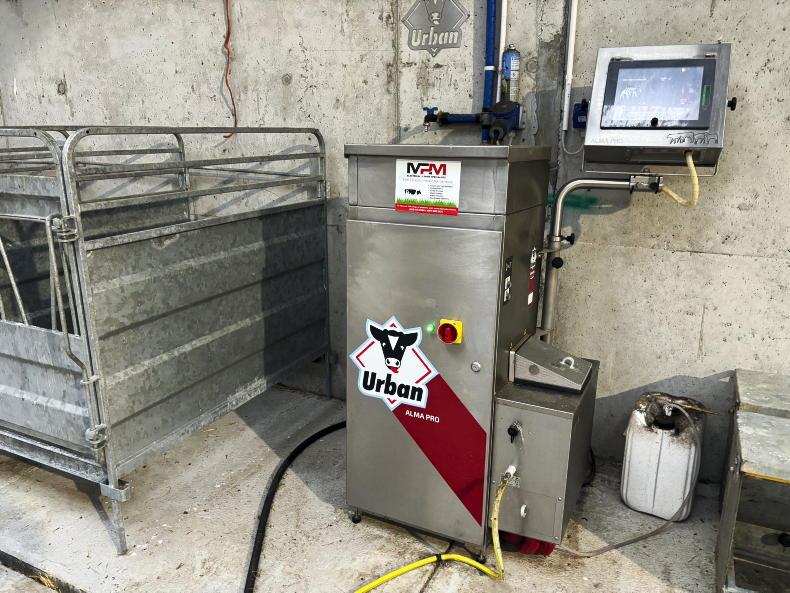
In a bid to reduce the time spent feeding calves, the Coffeys invested in two Urban Alma Pro automatic calf feeders, each servicing four feed stations. After investigating several brands, a visit to the O’Donovans Engineering stand at the National Ploughing Championships sealed the deal for the Coffeys, with the systems subsequently installed by MPM Electrical. The milk pipes to each feed station come insulated as standard. This, combined with Urban’s continuous loop system, ensures a consistent supply of warm milk is available at the teat.
Thomas finds the Urban traffic light system particularly helpful. Not only does it highlight calves that have missed a feed, but it also monitors feeding behaviour over a rolling 72-hour period, alerting Thomas to changes that may indicate a calf is becoming unwell. The machines automatically wash the mixing bowls and milk lines twice daily, with each wash taking approximately 40 minutes. Thomas can programme the wash times around his routine, allowing him to check calves before and after milking. Calves are typically introduced to the feeders from seven days of age, moving from individual pens into smaller training groups before joining the larger communal pens. To encourage calves to take to the feeder, their morning milk feed is held back until lunchtime, allowing them to develop an appetite. With warm milk available at the teat, calves generally latch on quickly.
“We would check them that evening and they would nearly have all gone into the feeder themselves by then,” noted Thomas. Each feed station is capable of feeding over 30 calves, with the Coffeys comfortably accommodating 25 to 28 calves per pen during spring 2026.
Ventilation
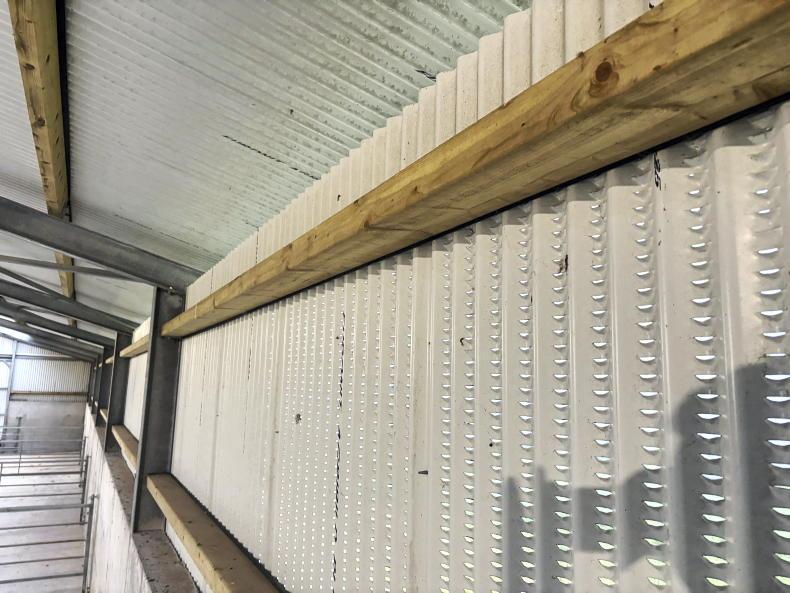
As per TAMS specifications, a minimum air inlet and outlet spacing was required. To achieve this, the Coffeys used a mix of vented sheeting along the sides of the shed with a gap left under the eaves, while the air outlet for the calf shed comes in the form of a central ridge outlet.
Even at capacity in spring, Thomas noted that the shed never became stuffy: “We used to get some trouble with pneumonia in calves previous years, but this year it was minimal.” No cold draughts are present in the shed, with calves observed lying throughout the dry area and no movement in straw from excess air coming in.
Other points of note
As per TAMS specifications, all structural steel has been hot-dipped galvanised, with ample bracing in the roof. Even on dull October day, the shed is pleasantly bright from a total of 32 skylights in the roof, each with its own safety cage underneath.
Three LED flood lights were fitted in spring, and while this does give good light, Thomas is looking to install some more over the dry area ahead of this year’s calving spread.
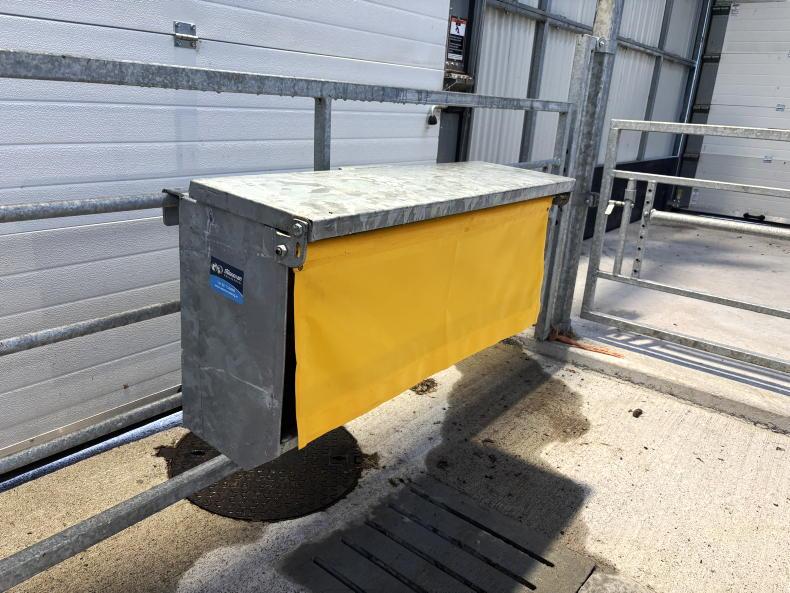
Hay racks in the dry areas are filled with straw to keep fibre into calves and to stop them picking at their bedding, while creep feeders with a bird flap capable of holding two standard bags of ration are fitted in each pen.
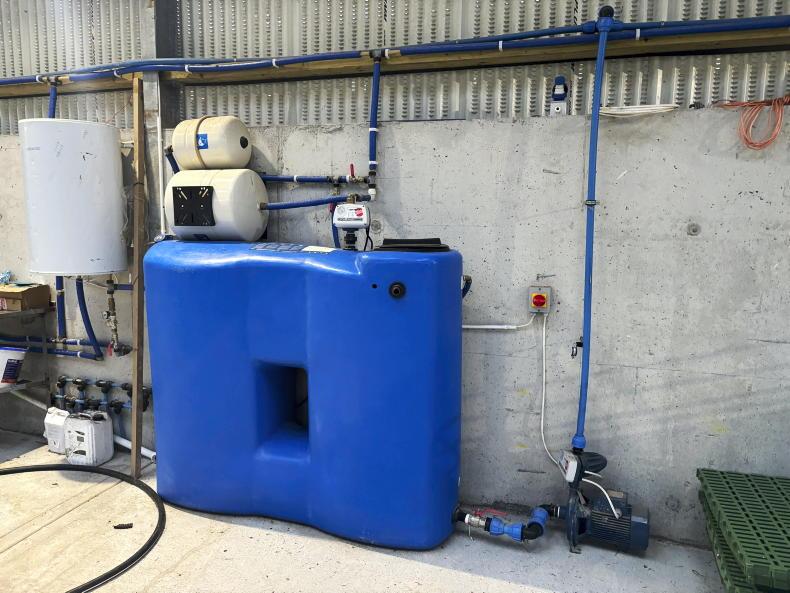
A 1,000 litre buffer tank was fitted to ensure that a constant supply of water was available to the feeder, especially at milking times.
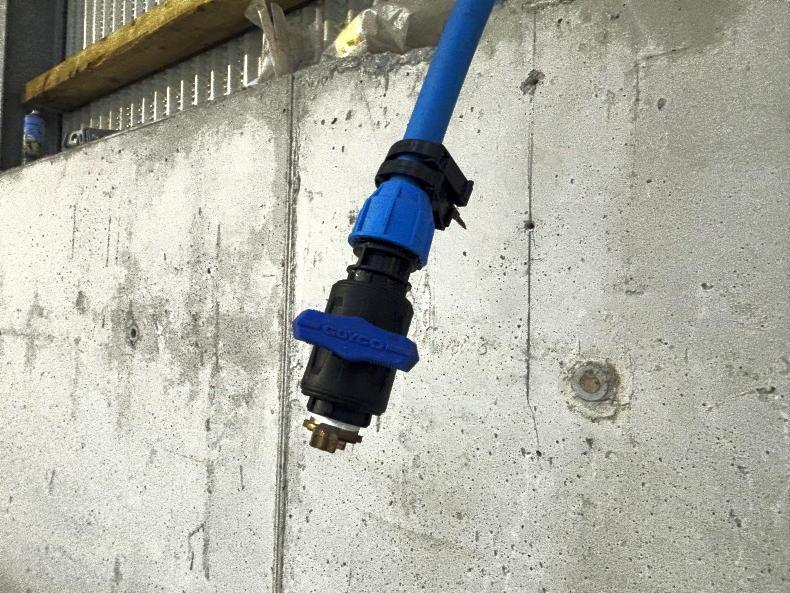
This tank also been plumbed into the wash down pump, with connections in several locations around the shed to allow for the reel to be quickly connected.
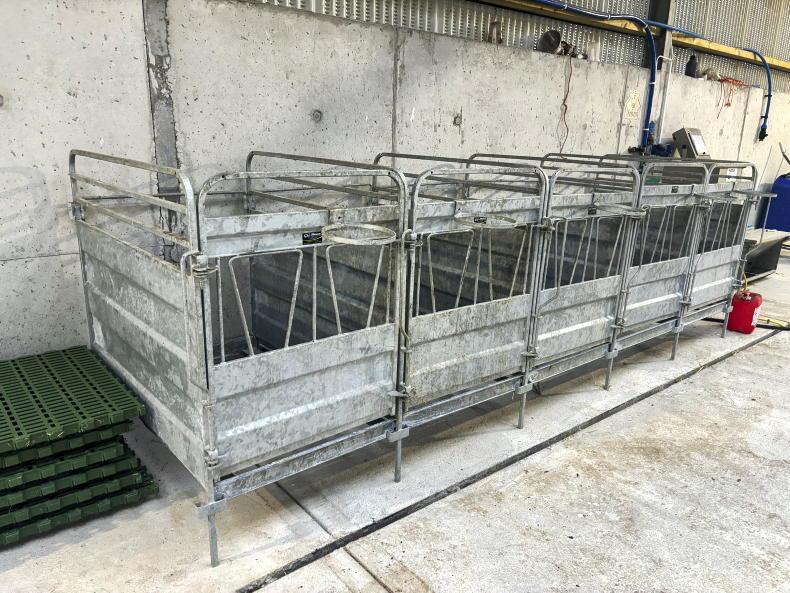
Nine individual calf crates, complete with a slatted floor, are bedded up and used for new-born calves. A channel has been cut in the front of these pens to catch any effluent discharged.
Pricing
All work was completed to grant specifications as stated before. The pricing of the project is as follows:
The shed is currently being used for penning calves in batches of 25 or so, but spacing and auto feeders allow up to 30 calves per pen, leaving the shed capable of accommodating 240 calves, equating to a cost of exactly €1,000 per calf.
The Coffeys were highly complimentary of all contractors involved in the project.
The project is finished to an exceptionally high standard, with ample access to all areas, ample drainage of any effluent from pens and plenty of natural ventilation and light coming in to the build.
The height adjustable gates, being so easy to move up and down, are one of my favourite features, while the drainage channel overlayed with concrete slats and fitted with manhole covers either end ensure that the channel can be easily flushed of straw or debris.