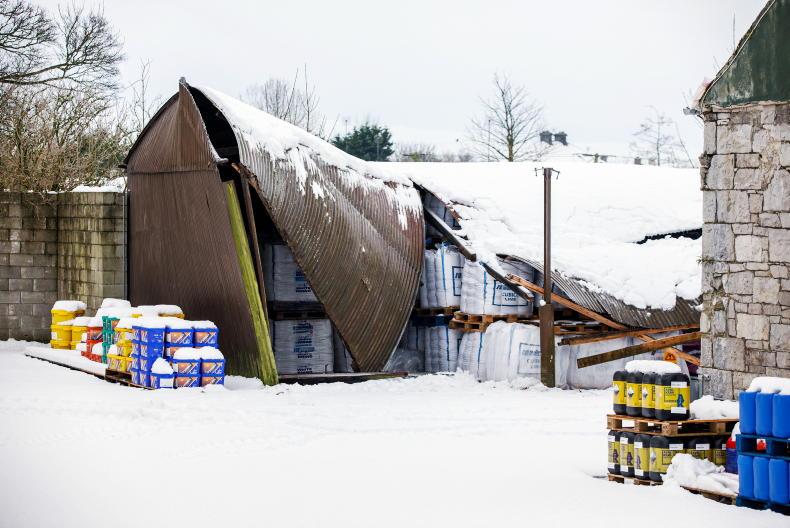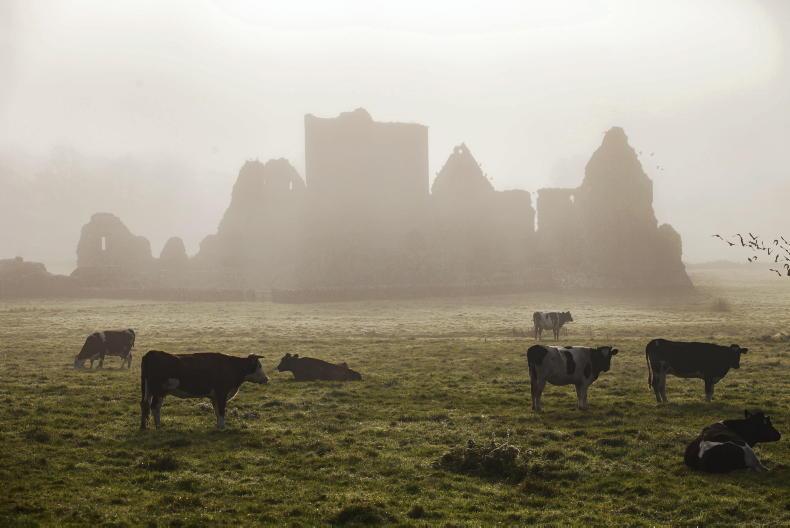

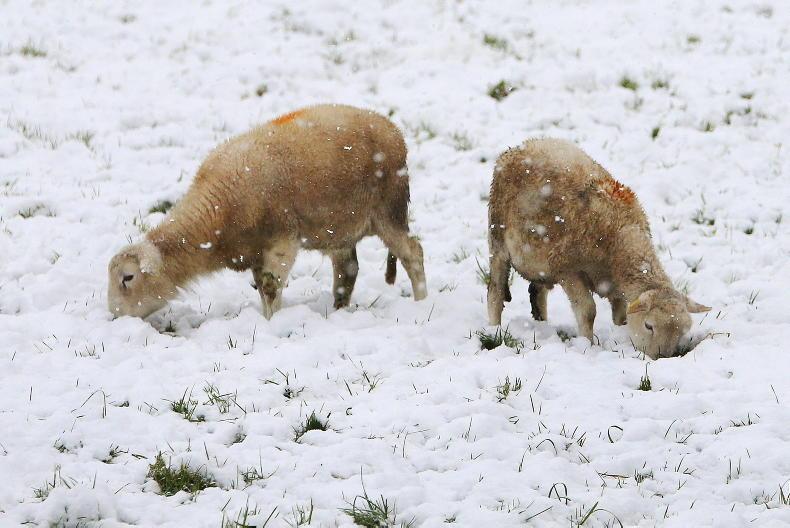
Good shelter and sufficient feed are the main tools farmers can use to help cattle overcome the challenges posed by extreme winter weather, including freezing temperatures and snow.
Maintenance requirements increase during cold weather, with animals using more of their energy intake to keep warm. That is the case for both older and young animals, and it’s why providing sufficient intake is so important.
If lactating cows or ewes have a nutritional deficit, then milk yield will suffer. That, in turn, will leave their calves or lambs more vulnerable.
Offering cows or ewes, with young calves or lambs, access to silage or hay will help to underpin dry-matter intake at grass, while the easiest way to boost energy intake is by offering concentrates.
The volume will vary, with 1-2kg sufficient for most mature cows, though increasing concentrates to 2-3kg for first-calved heifers, older cows or those with low- or poor-quality forage would be recommended. For lactating ewes, 0.5kg should be sufficient, again with up to 1kg/head/day fed for ewes in poorer condition or suckling multiple lambs.
Shelter is the other critical area to monitor at winter time.
An east wind will bring a greater wind chill and may also see a field that normally provides good shelter from the prevailing wind demoted to a poor option.
Pay close attention to the weather forecast, and if the direction of the prevailing wind is likely to change, then there may be no option but to move animals to a different field that will provide better shelter.