



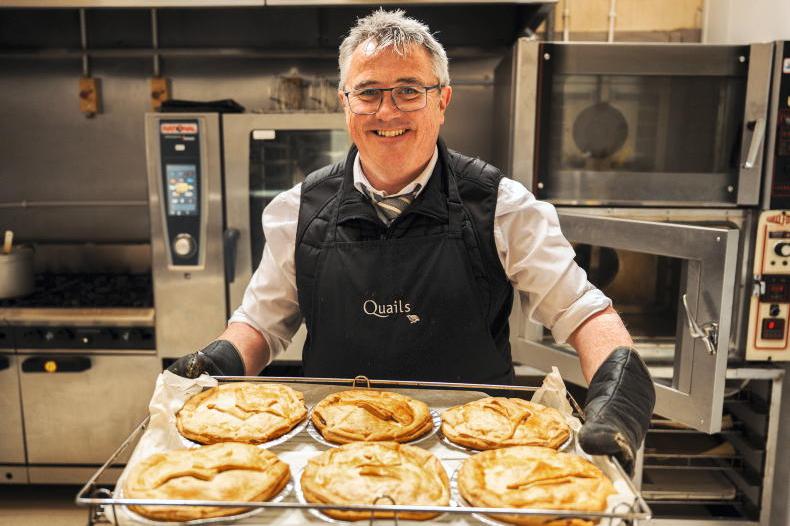
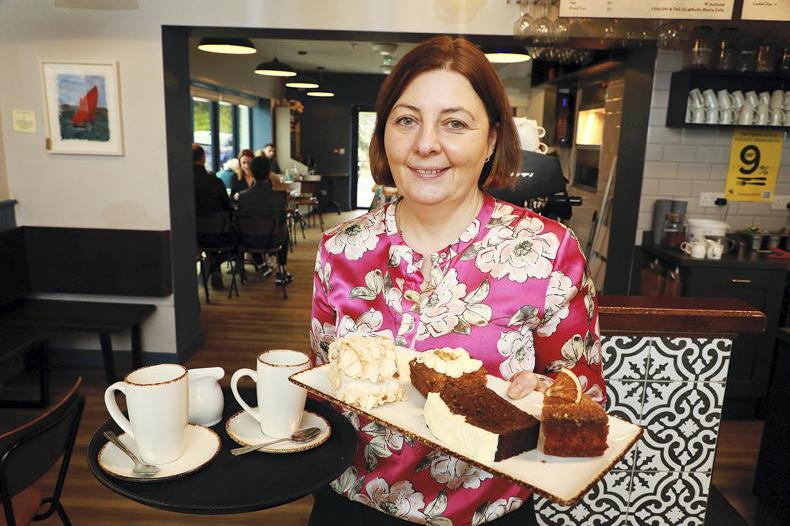
Food, farming and art: it’s an unlikely trio, but one that comes together in style at Quails At The Gallery, a café with a unique setting in the F E McWilliam Gallery and Studio in Banbridge, Co Down. For more than 125 years, the Quail family has been an intrinsic part of the Banbridge food story and operating Quails at the Gallery since 2008 enables them to bring their local food ethos into the art world.
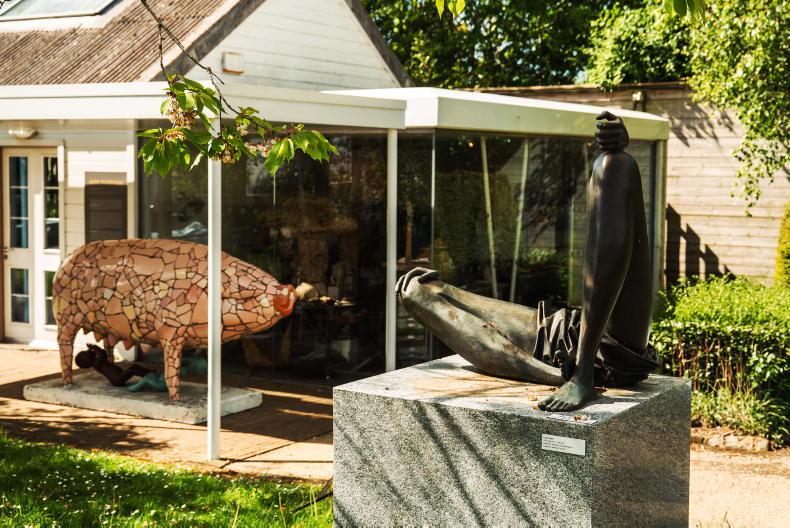
It’s a local art story as well. Born in Banbridge in 1909, F E (Frederick Edward) McWilliam went on to become one of Ireland’s most significant sculptors. He studied art in Belfast and London – becoming friends with contemporaries Henry Moore and Barbara Hepworth – and spent time in Paris in the 1930s where he became influenced by Romanian sculptor and modernist pioneer Constantin Brâncu?i.
While McWilliam spent much of his career in London, some of his most well-known works are from the Women of Belfast series of sculptures, made in reaction to the bombing of the Abercorn Tea Rooms in Belfast in March 1972.
He died in 1992, leaving his studio and its contents to Banbridge. The F E McWilliam Gallery and Studio opened in 2008 and showcases the largest collection of the artist’s work in the world. It’s a wonderful setting for Quails at the Gallery with a menu that showcases food sourced from their own butchers and farm alongside other local producers in a space which celebrates the work of an Irish art hero.
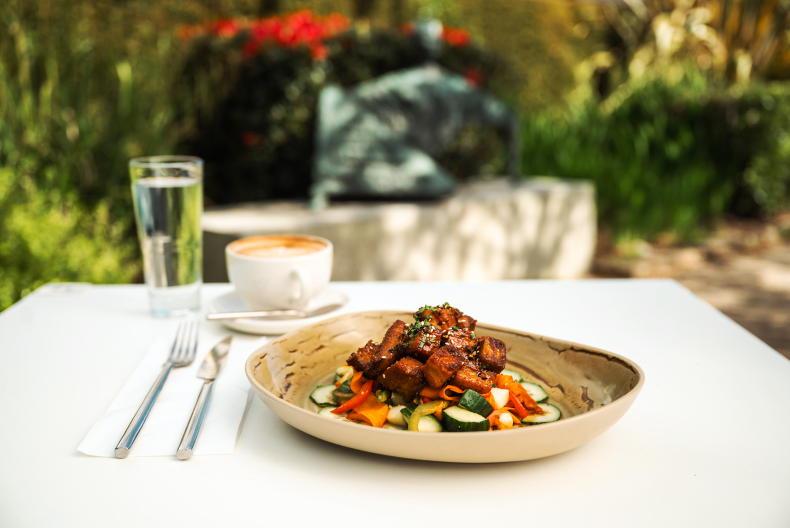
“Good food is a kind of art, isn’t it?” asks Joe Quail, who is the fourth generation of his family to work in Quails Fine Foods. “We’re trying to make a bit of art on a plate. [Chef] Fernando does his very best to do that.”
Art and food
Fernando Correa, the head chef at Quails at the Gallery is from near Mexico City. As Riann Coulter, curator at the Gallery, points out, this is a real strength for the restaurant.
“There are always a couple of dishes on the menu that reflect his culinary origins and offer visitors something a little bit different. Fernando and his team are also masters at making their food look beautiful and dishes such as their goat’s cheese salad uses edible flowers to create gorgeous looking meals that people cannot resist photographing.”
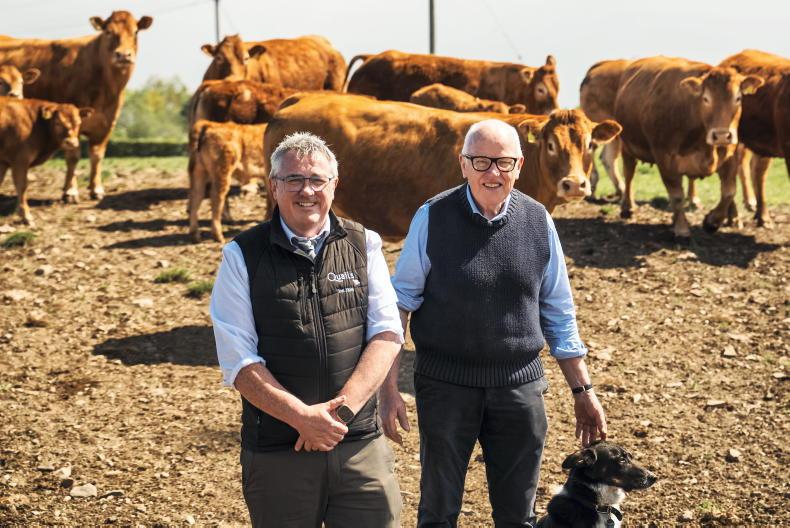
While telling the story of how Quails at the Gallery came about, Joe explains that the building – currently being renovated and expanded – “was originally a tourist information centre just on that corner between Banbridge and the A1.
“F E McWilliam bequeathed his studio to the people of Banbridge so Banbridge Council, as it was at the time, decided to create the gallery.
“The café came with that and we put in for tender because we thought it was a great opportunity to be part of it. It runs from 9am to 5pm but it’s much more a restaurant than a café,” he explains.
“We’re trying to do that lunch/brunch thing, and do it well for people that are coming to see the art, or people that are commuting from Belfast to Dublin, or just those that want a nice cup of tea. We bring our ethos with that of sourcing local quality food and giving good service with it and doing our very best.”
High standards
These are the standards that Quails Fine Foods have held close over many years. Their butcher shop in town was first opened in 1898 by Joe’s great grandfather Mathew Alexander Quail, although, as Joe points out, “my great-grandmother, Dora, actually ran the shop, as he was more of a [cattle] dealer man.”
Joe’s father, Jim, went into the business in the 1970s, running the family butchery in conjunction with their mixed beef and sheep farm, focusing on strengthening the connection between field and fork. Jim established his well-known Lynderg Limousin herd in 1977 and is the current president of the British Limousin Cattle Society. He’s well known in the show ring and the sale ring – as Joe puts it, with gentle understatement: “he’s bred some good cattle over the years.”
Jim is also the man that expanded the butcher’s shop, selling two flocks of sheep in the late 1980s to buy the premises next door and start the development of what is now a bright, well-stocked butchery, food hall and café.
Joe grew up between the farm and the butchers before heading to the University of Reading to study Food Science, Food Economics and Marketing. He returned to work at the family business in 2004.
“My grandfather obviously liked good cattle and my dad went to Greenmount [Agricultural College] to study agriculture and then he brought the continental cattle in,” explains Joe.
“We’re very passionate about Limousin cattle,” he says, “the tenderness gene, the ease of calving, the fine bone, superior carcase and yield, those things tick all the boxes for us. We don’t buy box beef,” he says adamantly, “we buy cattle on the hoof and we bring them to the abattoir.
“We hang the forequarters for a week to 10 days and we dry-age the hinds for a minimum of 28 days. So that ensures that you’ve got the really traditional method of butchery, but also the dry-aging helps the tenderness and the flavour. That’s what we do, and we’ve won 41 Great Taste Awards for it.
“You go to a supermarket, you’ve no idea where that steak came from,” Joe adds, “but you come to our shop, we can tell you that beast came from Henry Savage or Keith Tumulty or Alistair Graham or any of the guys that we use, and we can tell you…that batch has come from that farmer and I can give you – I’ll not give you the names of those cattle – but I can give you the tag numbers. So we’ve got full traceability. It’s that farm to plate ethos.”
Rooted in the community
For Riann at the Gallery, this is also something to be celebrated.
“The fact that Quails’ are a local business, who have been trading in Banbridge for [more than] 100 years, and that their butcher’s shop would have been known to F E McWilliam... helps root the gallery in the local community. Quails’ commitment to local produce and local suppliers is also very important.”
As a farmer as well as a butcher, Joe understands the necessity of supporting local producers.
“The chicken livers in our chicken liver parfait are from Rockvale, near Richhill, the pork is from Pinkerton’s [of Armagh]. Drayne’s Farm [in Lisburn] are our milk supplier. We’ve been dealing with them probably for about 20 years, and like ourselves, they’re farmers.”
It works both ways: the gallery introducing visitors to Quails, the restaurant attracting customers who also spend time looking at the exhibitions on-site.
“Every museum and gallery needs a good café. Good food in a comfortable and culturally enriching environment is an integral part of the visitor experience,” says Riann.
“There are locals who come to the gallery several times a week for coffee and people from further afield who regularly meet friends for lunch before having a look around the latest exhibition. We also get lots of visitors who stop off on their way from Dublin to Belfast as we are a handy place to take a break on the A1. During the summer, people love to eat out on the terrace and enjoy the sculpture garden.”
“They know that they are sure to be well fed and get a bit of culture at the same time,” concludes Riann.
See quailsfinefoods.co.uk
visitarmagh.com/places-to-explore/f-e-mcwilliam-gallery


SHARING OPTIONS