



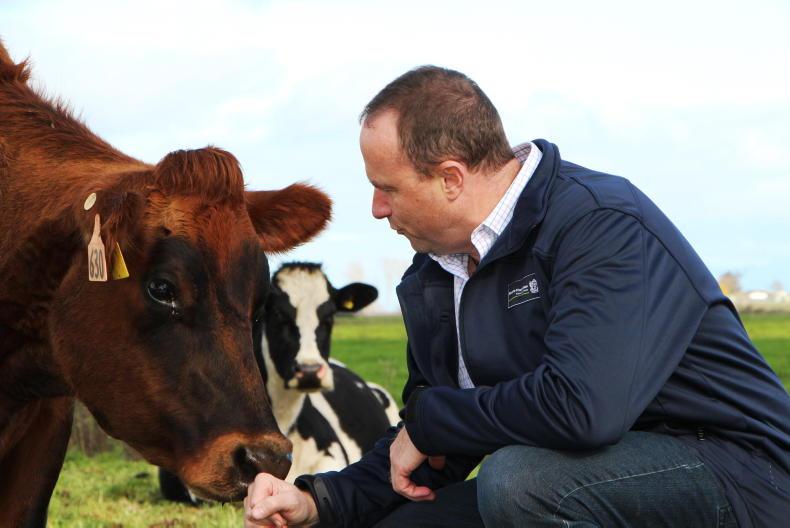

When John Roche finished his degree in agricultural science, he had no fixed career plan. In fact, his immediate ambition was to move to Chicago to play Gaelic football.
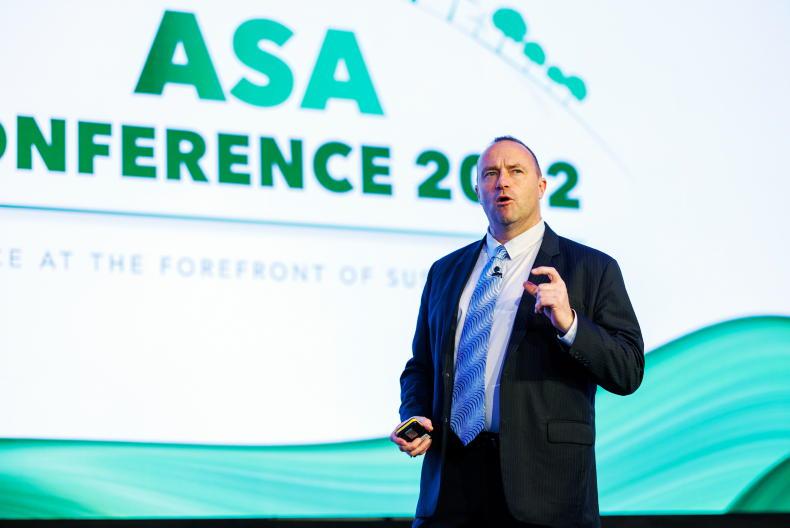
Today, Dr John Roche is a world-leading authority on pasture-based dairy systems and currently serves as the prime minister’s chief science adviser and the chief science adviser to the Ministry for Primary Industries in New Zealand.
His career has taken him across the United States, South America, South Africa, the UK and Ireland.
But none of this was mapped out when he graduated.
Agriculture had always been part of everyday life for John growing up in Castleisland, Co Kerry. After completing his degree, his parents, along with Dr Myles Rath, one of his lecturers in UCD, saw potential in him before he saw it in himself. They encouraged him to stay in Ireland rather than pursuing his plan to play Gaelic football in Chicago, and to get a master’s in grassland management at Teagasc, Moorepark, Co Cork.
John reluctantly agreed – but that decision would change the course of his career. He explains that the support he received from his family and educational mentors gave him the confidence to explore where agriculture could take him.
“UCD gave me a strong foundation, but it also broadened my view of what was possible. I learned that a career could have a direction without following a straight line,” John says.
So rather than following a carefully mapped career path, he remained open to opportunities as they arose.
“I was open to travel, but I cannot claim there was a grand international plan,” John explains.
“The opportunities developed as my career progressed. I moved to Australia after my master’s, completed my PhD while working there and the work created the platform for me to take up a scientist position in New Zealand.
“From there, research, farming, business and advisory work took me across the world. Each move arose from the opportunity in front of me, rather than a fixed blueprint,” John says.
Different countries
When John moved to Australia, he began working as a scientist. It was also his first experience of living and working outside of Ireland.
“It was the first time I had gotten on a plane. But it gave me responsibility, exposure to a different production environment and the chance to work at the interface of research and farming,” John says.
“Different countries have different climates, markets, regulations, farming systems and approaches, meaning that solutions cannot simply be transferred from one place to another.
“The practical knowledge and formal science are strongest when they challenge and improve each other,” John says.
For him, this relationship between science and farming has remained central to his work. Farmers have provided not only practical knowledge, but also support and a challenge to scientific thinking.
“I have to acknowledge farmers all over the world, too numerous to mention by name, who had faith in me, encouraged me and supported me when the facts were unpopular,” John says.
He believes that international experience can be particularly valuable for agricultural graduates, although he stresses that it is not the only route to a successful career.
“It exposes graduates to different farming systems, climates, institutions and ways of thinking. It also teaches humility. Practices that appear obvious in one setting may not work in another,” he says.
For students, opportunities to study or work abroad can provide an insight into agriculture beyond their own local experience. Erasmus and other international programmes can allow graduates to experience different farming systems, cultures and approaches, while building confidence away from home.
“Living abroad builds independence, adaptability and perspective, and often creates lifelong professional networks. Most importantly, it helps graduates separate enduring scientific principles from assumptions that are simply products of their home environment,” John says.
Those lessons can be particularly valuable in an industry that increasingly operates across international markets and relies on collaboration between different disciplines.
His career demonstrates how those experiences can build on one another. Moving between research, farming, business and advisory work gave him exposure to different perspectives, and helped him understand the importance of communicating scientific knowledge in a way that is useful to the people applying it.
So what does John believe today’s agricultural graduates need if they want to build successful careers, whether in Ireland or abroad?
“Technical competence remains important, but graduates need much more than subject knowledge. They need to be able to understand systems, work with people and question why things happen
“Build a strong foundation, make yourself useful and be open to opportunities that do not fit your original plan. Seek mentors and tell them what you hope to do.
“Ask about graduate research programmes, internships and roles where you will gain real responsibility. Do not wait until every detail is perfect,” he advises.
Mentorship has been an important part of John’s own development, and he believes young graduates should actively seek advice from people who have experience in the areas they want to explore.
John also advocates being willing to take on opportunities before you necessarily know exactly where they will lead: “I have a philosophy to say yes to opportunities and figure out how I will do them later. I have always had great mentors – mostly farmers, but also some great scientists and advisers. Their wise counsel has been deeply influential in my thinking and my career changes.”
Modern agriculture
Alongside qualifications and experience, John believes employers are looking for graduates who can communicate, collaborate and adapt.
“Graduates need to be able to analyse, communicate clearly and be comfortable working with people from different disciplines and cultures. They also need curiosity, resilience, integrity and the humanity to change their minds when the evidence demands it.”
These qualities are increasingly important in modern agriculture, where scientific research, technology, sustainability, business and farming practice are closely connected.
John’s main message is summed up in his description of an agricultural science degree:
“A degree in agricultural science is a passport, not a map. It opens doors, but graduates decide which ones to enter. Don’t be afraid to try something different, find your comfort zone and then leave it.”



SHARING OPTIONS