



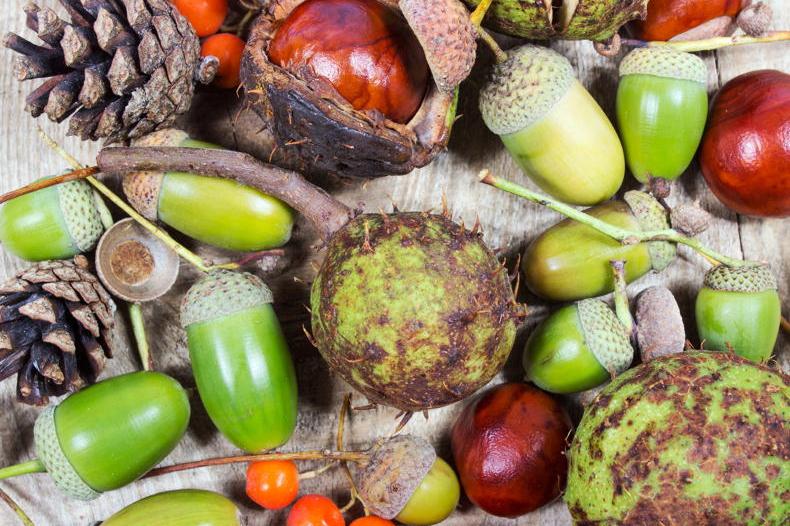
‘The trees are in their autumn beauty,” wrote WB Yeats in his poem The Wild Swans at Coole, capturing the transformation of the landscape as deciduous trees erupt into brilliant displays of gold, red and orange. The softer light of the low autumn sun illuminates their vibrant hues, while distinctive branching patterns and bark textures of different species become more prominent as leaves begin to fall.
This is also an excellent time to begin growing trees from seed. Whether for the garden, a farm hedge or shelterbelt, a small woodland or a community planting project, raising a tree yourself is enormously satisfying. A tiny acorn, seed or berry collected this autumn can, with patience, become part of the Irish landscape for generations.
Many native Irish trees produce seed in autumn. Oak acorns can be collected from September onwards, while berries, nuts and winged seeds offer opportunities to grow species including rowan, hawthorn, hazel, holly, birch and alder. Non-native species, such as beech, chestnut and sycamore, that grow well here and have become familiar in our landscape, can also be raised from seed.
Start with good seed
Choose healthy, mature trees and collect from several individuals rather than relying on a single parent tree. Gather firm, undamaged seed and avoid anything mouldy, shrivelled or badly eaten.
Where possible, collect seeds locally to where the eventual trees will be planted, as they may be better adapted to the local conditions. Always ask permission if collecting seed from land that is not yours.
Seed does not all behave in the same way. Depending on the species, sowing can be carried out from October to April. Some seeds, such as acorns and chestnuts, can be sown immediately while others need a period of cold, known as stratification, before they will germinate. For species-specific advice, consult publications like Our trees: a guide to growing Ireland’s native trees, available from the Tree Council of Ireland (treecouncil.ie). See also teagasc.ie for online advisory articles on growing trees from seed.
For beginners, oak is particularly rewarding. Acorns are ready for sowing when they have turned brown and come away from the cup easily. Collect them soon after they fall to the ground. To check acorn viability, do a float test. Fill a basin with water and drop the acorns in. The ones that sink are viable while those that float are best discarded. Sow good acorns individually, about 5 cm deep, into deep containers with drainage holes, using soil or a free-draining compost. Place the pots in a sheltered position or cold frame, out of direct sunlight, and keep the compost consistently moist but not saturated. Protect the pots and emerging seedlings from birds and rodents with fine mesh and keep weeds under control.
Resist the temptation to plant seedlings out too soon. If they outgrow their original pots, move them into larger, deeper containers to allow a stronger root system to develop. Oak produces a long, deep main root very quickly. When the seedlings are sufficiently robust, usually after about two years, plant them during the dormant season into well-prepared ground, choosing a position appropriate to the eventual size and requirements of the species.
There is a critical reason to grow trees from seed today. Ireland needs a continuing succession of trees. Many of the magnificent, mature and veteran trees that define our demesnes, avenues, gardens, farmland and countryside were planted generations ago. As these old trees reach the end of their natural lives, a new generation needs to be ready to take their place.
Storm damage, drought and diseases such as ash dieback, first detected in Ireland in 2012, have accelerated tree decline. One response is to broaden the range of tree species we plant, including both native and suitable non-native trees, to create a more diverse and resilient landscape.
Every single tree planted has value. Your seedling might eventually become a garden specimen, hedgerow tree, part of a farm shelterbelt or part of a new community woodland. It could provide blossom, autumn colour, berries, nesting sites and shade for generations to come.
That is the particular pleasure of raising trees from seed: you are contributing to a landscape beyond the boundaries of your own lifetime. This October, while established trees take centre stage in their autumn glory, collect a handful of seeds and begin something that may still be standing when a future generation looks up and thinks simply: what beautiful trees.
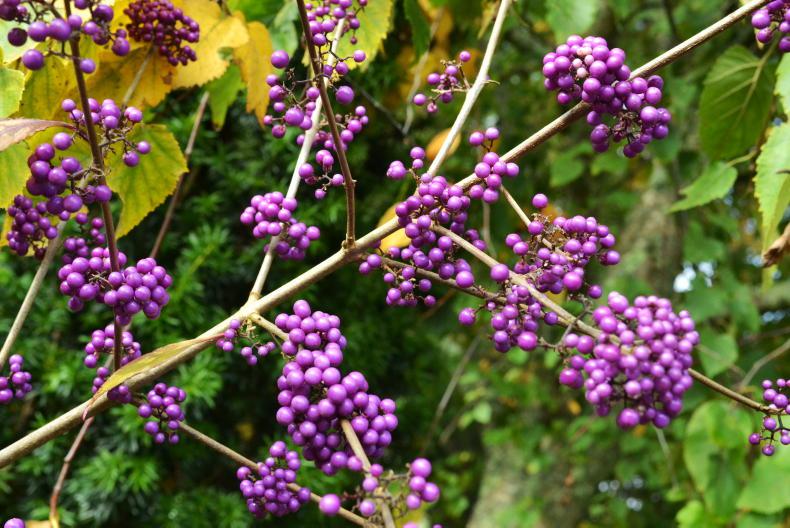
My beautyberry, was covered in beautiful, purple berries when I bought and planted it three years ago, but hasn’t produced berries since. What could be wrong? - Tony Gleeson
Prized for its striking, violet-purple berries, Callicarpa bodinieri is a lovely, deciduous shrub for brightening the autumn garden. If your plant is producing clusters of small, pink flowers in midsummer, lack of pollination is the likely problem. Planting a second beautyberry nearby can improve berry production through cross pollination. If it’s producing lots of foliage but few or no flowers, its growing conditions may be the issue.
A sunny position, adequate moisture and good soil will encourage flowering and fruiting. Pruning could also be a factor. Callicarpa flowers on new-season growth, so prune, if necessary, in late winter or early spring. Pruning too late in the growing season can remove or delay the production of flowering wood.
Clear leaves: clear fallen leaves from all lawn areas, either by lifting them with the lawnmower or by raking with a light leaf rake, to avoid damage to the grass.
Window box: plant
Saucers: remove saucers placed under pots during summer and raise containers off the ground with pot feet or bricks to help prevent compost becoming too wet over winter.
Mary Keenan and Ross Doyle run Gash Gardens, Co Laois. See gashgardens.ie


SHARING OPTIONS