



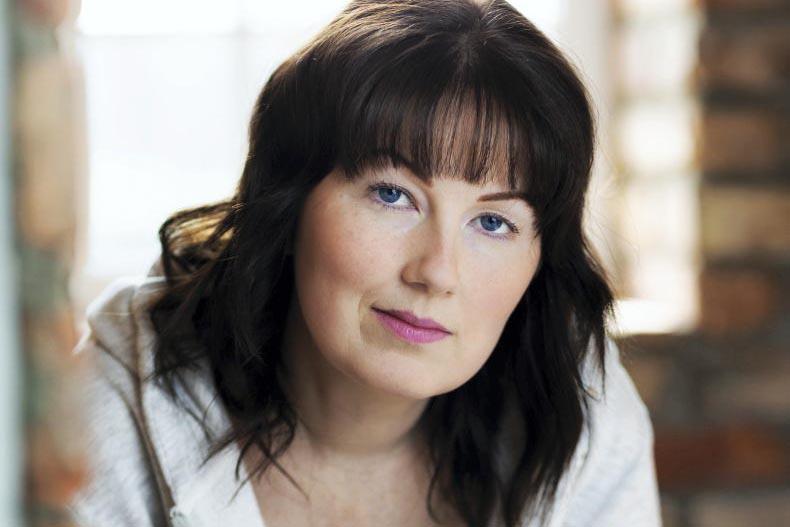

Katie Joan Maguire (38) from Mornington in Co Meath can pinpoint exactly when she started to get ill. It was the day after her 21st birthday in 2008.
“I woke up and I had a stiff neck, swollen glands and a sore throat,” says Katie. “I just didn’t feel right at all, but I put it down to organising the party. That’s how it started.”
Over the next few months, she picked up one infection after the other and had to defer six months of college as a result. “It got to the stage where I was basically in bed all day, every day with some infection or fatigue.”
Things improved after a year and a half, so she was able to go back to college and finish her degree, but her health issues continued. It took her weeks to recover from any ailment.
“If I were to get a kidney infection or something like that, it would set me back for weeks,” says Katie. “That caused problems for me with employers because I couldn’t explain what was wrong. I’d be grilled on what was going on, and I couldn’t give anybody an answer, because I didn’t know.”
That pattern continued throughout Katie’s twenties, as she did everything she could to maintain a job and something of a normal life. Meanwhile, her health continued to deteriorate.
She developed joint pain, migraines, digestive problems and even neurological issues. “My speech and my memory were affected. I studied English in college, and I was always very articulate, but my vocabulary went down to nothing.
“I could hold basic conversations, but I wasn’t really able to express myself. It got to the point where I had to essentially retire from my career in sales because I couldn’t function,” she says.
The physical issues weren’t the worst aspect, Katie says. With no diagnosis she couldn’t even put a name to what was wrong. Eventually, she gave up trying.
“That is one of the things that upsets me the most. I let other people’s opinions and even medical professionals not giving me an answer, or being dismissive at times, really get in on me, to the point where I stopped looking for an answer.”
Living with Lyme
It took years – over a decade since her first symptoms appeared – but that answer was to come eventually from an unexpected source.
“In 2018, my grandmother and my aunt happened to see a documentary called Living with Lyme on TV. Nana said, ‘These people have all of your symptoms; you need to contact somebody immediately. I’m telling you, you have Lyme disease’.” It would turn out that Nana was right.
Following her grandmother’s ‘join-the-dots’ moment, Katie finally got her diagnosis of Lyme disease at the age of 31. She attended an infectious diseases specialist and had a blood sample sent to Germany for specialised testing.
“Initially I tested negative and I thought, here we go again,” says Katie. However, the specialist was confident she did have Lyme disease and that the negative result was because her immune system was exhausted. “He said, ‘I’m going to start you on treatment then test you again in three months and it’s going to come up positive’,” Katie explains. That second test revealed three strains of Lyme disease as well as a number of other tick-born infections.
Katie was put on high doses of three antibiotics along with other medications and supplements. While the treatment worked, having the disease go undiagnosed and untreated for so long has left her with ongoing issues.
“I have improved massively but, unfortunately, because I had it for so long, it doesn’t fully leave you,” says Katie. “I still have chronic pain and migraines, and some neurological issues as well. I sometimes get twitching if I stretch myself too much or am over-tired.”
What is Lyme disease?
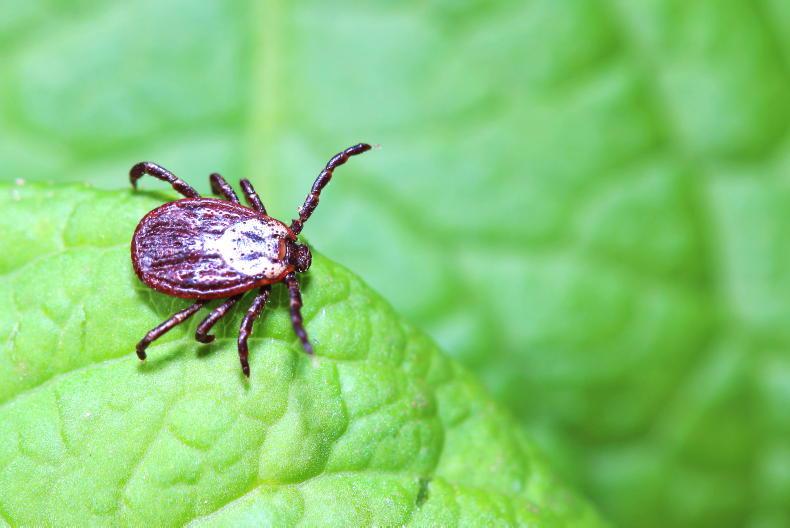
Lyme disease, or Lyme borreliosis, is a bacterial infection caused by infected ticks. Ticks are tiny creatures that feed on the blood of humans, animals and birds. Found in both urban and rural areas, they are more active in summer months and can be picked up in woodland, grassland, parks or old pastures. Farmers should be extra cautious given the time spent outside.
The most common sign of infection is a skin rash, known as a bullseye rash or erythema migrans. Untreated, Lyme disease can progress to more serious health issues, as Katie experienced.
Katie doesn’t know where or when she contracted Lyme disease. She had been in the US the year before her symptoms first appeared, but, as she points out, the disease is prevalent in Ireland.
“I don’t even remember getting bitten,” she says. “I never had the classic bullseye rash, so I really don’t know where I got it.”
Once Katie discovered she had Lyme disease, she reached out to Tick Talk Ireland, a volunteer-run organisation that offers advice and support for people dealing with Lyme disease.
“Tick Talk were brilliant,” she says. “They have a Facebook group, so I was able to ask questions and find a community. Reading other people’s stories was helpful, to know it wasn’t just me going through this.”
Katie has channelled her experience in other directions too. She was inspired to write Warrior, a short film about a woman navigating chronic illness.
“It’s based on my personal experience of living with an undiagnosed chronic condition for 10 years. It’s not directly about Lyme disease but I really want to raise awareness of invisible illness.
“We did a private screening in March, and we’ll hopefully have more screenings over the next few months. It’s been very well received so far. We’ve had a lot of people reaching out saying that they’ve gone through something similar and this is the kind of story that needs to be told. I really feel it does.”
Katie’s own health challenges have made her a more compassionate and understanding person, she says. Unsurprisingly, she is also passionate about getting the message out about Lyme disease.
“I don’t think people are aware of how serious Lyme disease can be,” says Katie. “Even though it is only a bacterial infection, when it really gets a grip and runs rampant through the body, that’s when you have all of these problems.”
This tick season, it’s essential to do all you can to avoid being bitten but it’s also important to be aware of the classic symptoms and to seek medical attention as soon as possible if you do have a bite.
Katie says, “If you’re starting to get sick, think back and ask yourself, was I on a hike or somewhere outdoors in the last couple of weeks?” she says. “It’s like when you get a stomach bug you might think, maybe it’s food poisoning. Did I eat somewhere new?’ Start to consider tick bites as an option if you’re feeling unwell.”
“We all still have to go out and live our lives, and we want to be out in nature but doing the little things can make a huge difference.”
Given the time that farmers spend outside in fields, ditches and woodland, it is important to protect yourself from ticks and be aware of the symptoms of Lyme disease, especiallly at this time of year. The Health Protection Surveillance Centre (HPSC) shares this practical advice.






SHARING OPTIONS