
Following concerns within the European forestry contracting sector about a proposed ban on timber harvesting during the spring and summer months of wild bird nesting periods, the European Commission has updated its guidance document on the general system of protection of bird species in relation to Article 5 and Article 9 of the EU Birds Directive.
The EU Commission issued a new guidance document on the general system of protection of bird species – Article 5 and Article 9 of the Birds Directive on 31 July this year.
This follows previous guidance from the Court of Justice of the European Union (CJEU) given to Estonian judges which stated that a ban on the ‘deliberate’ disturbance or killing of wild birds and their nests should still apply even when it is unintended, in a case concerning forest clear-cutting in Estonia.
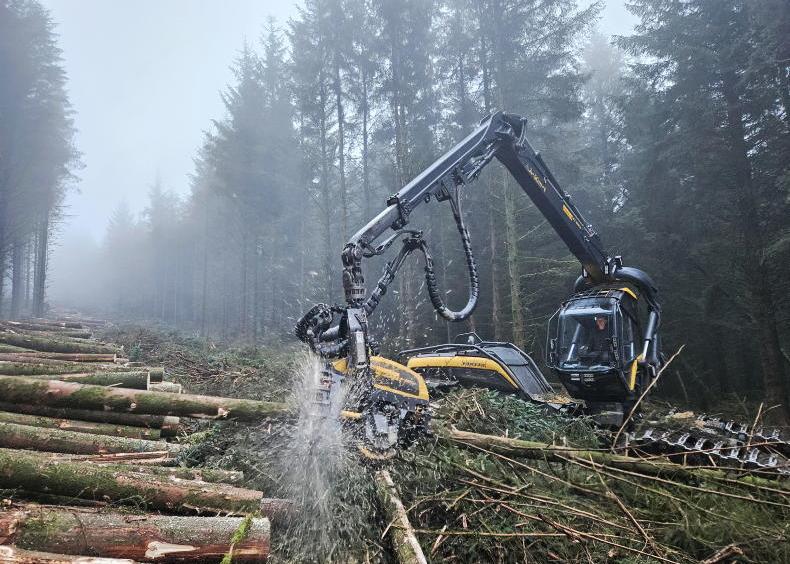
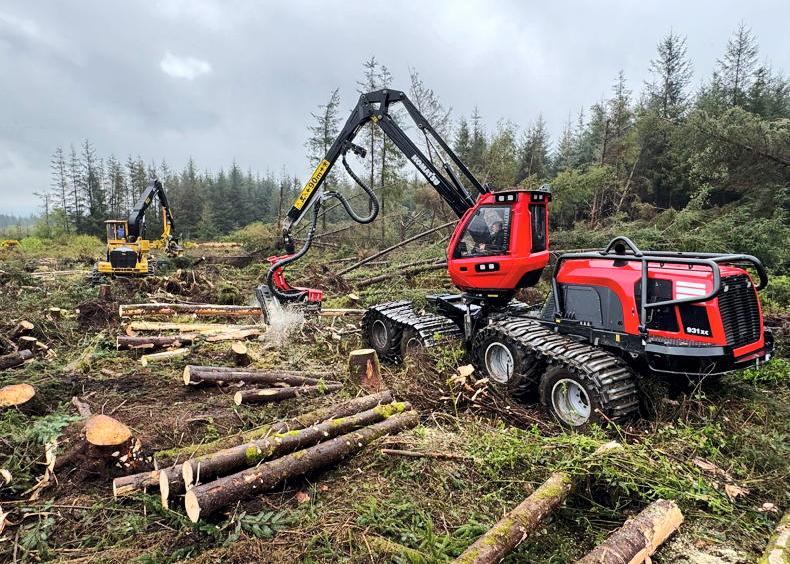
The word ‘deliberate’ is key here. The CJEU ruled that actions like timber harvesting during the breeding season can be considered deliberate under Article 5 if the operator knows about high nesting density (eg, roughly 10 breeding pairs per hectare) and accepts the risk of disturbing or destroying nests.
The EU Commission states that the determination of the risk is therefore based on an interaction between the impacts of the activity at issue and the needs and sensitivities of the species in question.
This could concern, for example, felling trees during the nesting period in places where forest birds are known to nest, or certain agricultural practices affecting some ground-nesting birds, which may lead to the killing of birds, the destruction of their nests or significant disturbance.
The EU Commission guidance states that this does not result in a ban of logging and mowing but aims to ensure that the practice is compatible with the protection of birds.
In its recent guidance, the EU Commission states that Article 5 of the Birds Directive does not mean that forestry activities cannot take place during the breeding and rearing period.
It states that preventive measures should be integrated into forest management planning and practices in order to avoid harm to bird species, in particular, logging during the breeding season, which is likely to impact birds and their nests. Preventive measures may include risk-based spatial and temporal planning of operations, for example, buffer zones around sensitive features or retention of key habitat structures, as appropriate.
It states that the CJEU has clarified that if logging or felling (whether clear-cut or not) is planned in a forest known to host bird nests, regardless of the conservation status of the species, logging during bird breeding and rearing is covered by the prohibitions under Article 5(a) and (b) of the Birds Directive.
Any such ban in Ireland, following the same timelines as the hedge-cutting ban, would prevent timber harvesting and extraction for a six-month period from March to September each year. The result of such a harvesting ban would clearly make the operation of forestry operations unviable for forestry contractors in Ireland.
It could result in a complete exodus of operators from the sector. While some Nordic countries may benefit from frost cover during winter timber harvesting, this advantage does not exist in Ireland because of our wetter climate and the resulting poor ground conditions.
Timber harvesting volumes in Ireland are projected to roughly double by 2030 as the private forestry area matures.
These volumes will not be achievable if the harvesting window is to be halved due to any national ruling around the Birds Directive.
The EU Commission states that, in all cases, the role of the national authorities is essential. The national authorities, in the case of Ireland, the Department of Agriculture, Food and the Marine should rely on scientific data about the geographical and temporal occurrence of birds when regulating economic activities.
They should use all appropriate means to proactively disseminate information about the occurrence of birds, any existing rules for their protection and available preventive measures. The EU Commission states that the national authorities should also make that information available to the stakeholders concerned so that their economic activities, such as timber harvesting, can coexist with bird protection requirements.