



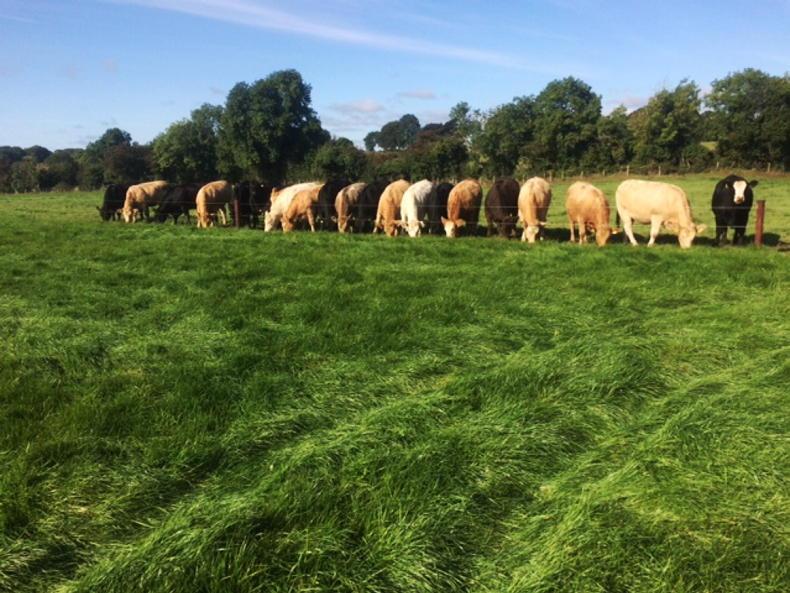
In my mind, 2025 will go down as the most positive year for suckler farmers and beef finishers. Unfortunately, that positivity hasn’t continued through to 2026, but the higher prices in 2025 were a turning point for many beef farmers.
The mood was good at BEEF 2026, the national beef event held at Teagasc, Grange on Wednesday. The industry continues to have huge challenges with profitability, generational renewal and the prospects of much lower support payments in the next round of CAP.
Higher prices in 2025 injected some much-needed confidence into the sector, with suckler cow numbers stabilising for the first time in a decade.
The Irish beef industry is privileged to have a facility such as Grange and Teagasc, who provide independent research and advice to farmers. That independence has been lost in other countries, and is something we should hold sacrosanct in the Irish system.
Organic systems
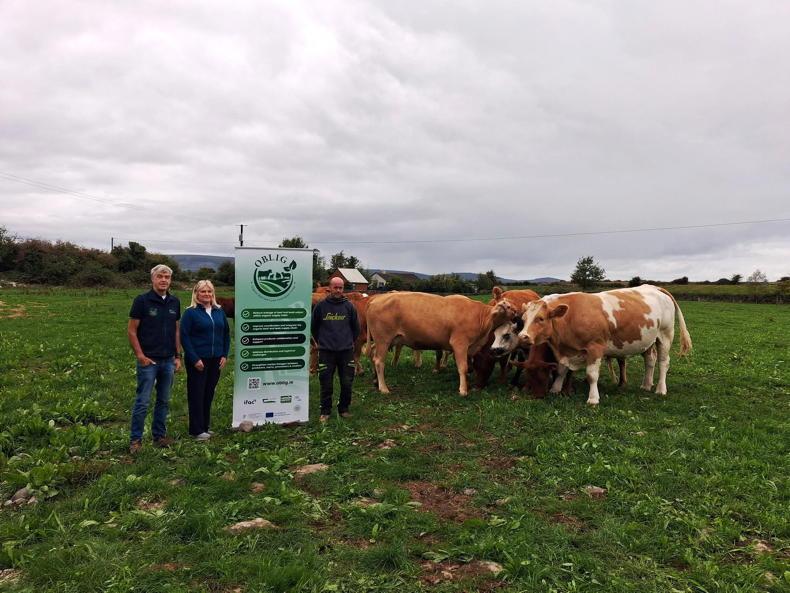
One of the most interesting stands in the technology villages was on Organic beef farming systems research and the first insights from the National Farm Survey data looking at farm incomes on organic farms versus conventional farms in 2024.
Under the EU farm to fork strategy, a target has been established for 25% of European agricultural land to be farmed organically by 2030.
Over the last five years the proportion of Ireland’s utilisable agricultural area under organic production increased from 1.6% to 5.5%, leaving Ireland with one of the fastest conversions to organics in Europe during that time, with the target to increase that figure to 10% by 2030. There are now close to 6,000.
In March 2026 Ireland’s organic cattle herd stood at 131,464 head of cattle, including over 40,000 organic suckler cows now in the country.
Looking at the 2024 National Farm Survey data, it’s interesting to note that organic farms at 43ha are substantially bigger than conventional farms at 31ha.
The stocking rate on organic farms is also much lower at 1.15 L.U/Ha compared with 1.76 L.U/Ha on conventional farms.
Higher output
Organic farms generated slightly higher output in 2024, coming in at €51,308 when direct payments were included compared with €47,862 for conventional farms.
Direct payments represented 56% of the output on organic farms compared with 35% on conventional farms.
One of the biggest wins on organic farms is the lower costs, with lower concentrate feed expenditure, fertiliser costs, veterinary expenditure and no crop protection expenditure.
These lower costs were one of the key drivers of the higher farm family income figure of €19,653 on organic farms compared to €13,442 on conventional farms.
Challenges remain within the sector, with huge leakage occurring where farmers are selling organic cattle and sheep in conventional markets.
Bord Bia have said in the past that up to 80% of organic lamb ends up on conventional markets. While not as high, large numbers of cattle are also sold on the conventional market.
Organic concentrates also continue to be prohibitively expensive, with the majority of organic beef finishing farmers focusing on a grass-based finishing system avoiding the need for purchasing expensive concentrates.
This presents challenges for marketing the product, which needs a year-round supply to penetrate markets. You can’t argue with the financial figures, but we need to ask the question as to what has been the real driver of farmers converting to organic systems.
For many it has been to shore up income from a big reduction in support payments arising from convergence and a flattening of payments.
These farmers see organic farming as the best way to replace those lost support payments.
If, at some point in the future, those support payments reduce or are eliminated altogether, will we see a mass exodus from organic farming and is it right to build the sector on the back of these supports without adequate focus on the market delivering the premium as opposed to supports propping up the system?
Has the dream been sold to farmers without the market to back it up?



SHARING OPTIONS