



My autumn-calving cows finished calving in early September and everything went really well.
All but one calved by themselves and the calves all got up and suckled with no issue. One heifer needed slight assistance, but it was no real issue.
Like most farmers, I am always afraid when things are going well – experience has taught us there is a problem or issue just around the corner.
However, I try to be proactive and anticipate problems before they happen or take steps to mitigate against them.
Last week I went out one morning to check on my autumn cows and calves. To my total disgust there was a cow lying dead in the field. You could see where she had kicked about a little. It was obviously grass tetany (or Hypomagnesemia).
It is a long time since I lost a cow to tetany, and I thought I was doing enough to avoid this. All cows get a magnesium bolus just after they calve and then they have access to high magnesium lick buckets when they are at grass. This has been good enough to prevent tetany for many years, but not this year.
This was a first-calving cow, and she was about 50 days calved. I was really disappointed and to prevent it happening again, I had to take another look at options.
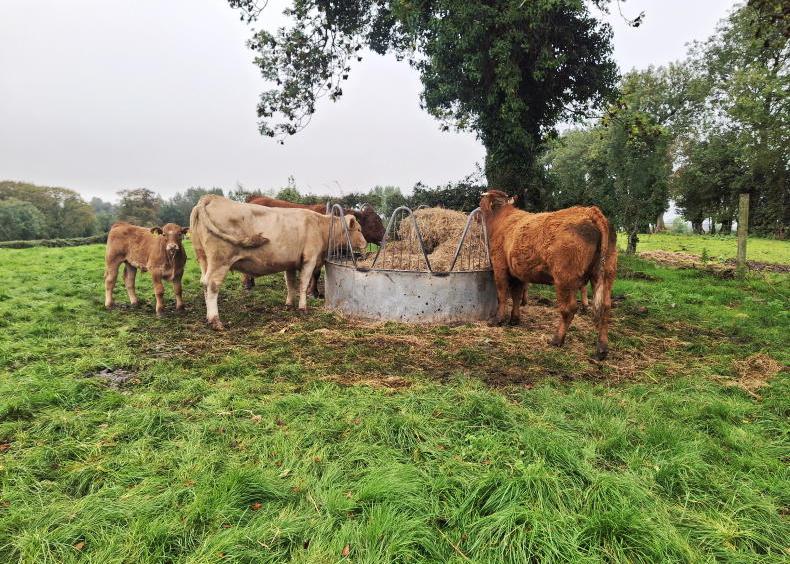
I have decided to put a ring feeder out with the cows and put some hay in it and hopefully this will stop any more problems until I get them into the house. It probably happened due to all the rain we have had since early September and some cold nights.
Visitors
That morning when I found the dead cow was the same morning that I was having a farm walk, so it was just enough to deflate me before I had to try and pick myself up and sound positive for my visitors.
Those visitors were a bus load of students from Greenmount, and I was looking forward to having them out on farm. Due to issues with TB, there has not been many farm walks here recently.
I really enjoy having young people out on my farm. They are the future of our industry and I think it is particularly important to portray a positive picture about what we are all doing as farmers.
However, I really had to dig deep at the start. But they were really good, and as well as being polite and well-mannered, they had an interest in what we were doing. They did not ask a lot of questions in front of their friends but there was a lot of chat and questions in the background.
Over 40 years ago when I was at Greenmount, we would always look forward to these farm visits, although there is one significant difference between then and now. Back then there was only one female in our class of 30. Now the class is nearly half and half of young men and women.
I think it is wonderful to see that there is no longer any issue with women going into Agriculture – it can only have a positive influence on our industry.
When the farm walk was over, we had some food and a chat.
One of the group came up to me afterwards and said how impressed she had been by our farm and that she had enjoyed the visit. To be honest, those few words went a long way to lift my spirits after the start I had that morning.
Farming is full of highs and lows, and you will always get lots of both, but it is particularly important to try and stay positive.
The highs that come with working as a farmer outweigh the lows.


SHARING OPTIONS