



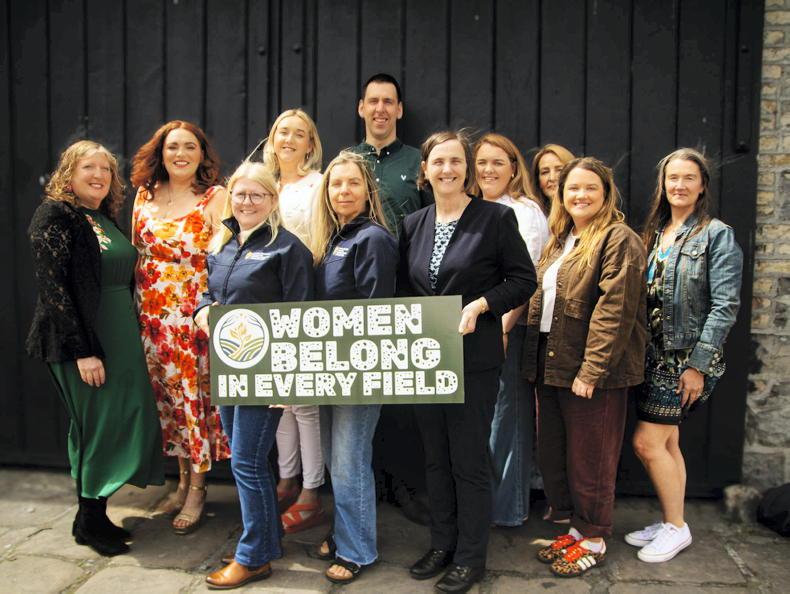
Claire Brennan, project leader of Making Farms Work for Women, was working as an agricultural adviser with a private advisory service in Co Mayo when she came up with the idea for the European Innovation Partnership (EIP) project.
Claire noticed that women often found it intimidating to speak up in mixed discussion groups and training courses, so she decided to establish a women-only knowledge transfer group. She recruited 35 women from north Mayo, and the group quickly became a space where women could share experiences, ask questions and build confidence.
While the group was getting underway, a call opened for EIP project proposals focusing on gender balance. Claire saw an opportunity to tackle many of the challenges the women were discussing, applied for funding and successfully secured support for the project.
Over the lifetime of the three-year project, 60 women from across north Mayo, ranging in age from 30 to 80, are taking part.
The project focuses on three main areas: improving farm tools and accessibility, providing practical training to build farm skills, and creating a stronger sense of community by connecting women involved in farming.
Since the project began last November, members of the team have been visiting participants on their farms to identify the everyday challenges they face. Those range from lifting heavy bags of meal and handling livestock, to using equipment such as a calving jack.
Solutions
The next stage will involve developing solutions to these challenges before testing them on farms to see whether they work or whether another approach is needed.
The project is also working with the engineering department at Atlantic Technological University (ATU) to help design tools and equipment that are better suited to women working on farms.
Claire said one of the issues she is trying to tackle is encouraging the animal feed industry to introduce smaller feed bags.
“It’s proving difficult, but I hope we’ll make inroads during the project.”
Although the project centres on women’s experiences, Claire stressed that it is not exclusively for women.
“We want to talk to all farmers, not just the women. Sometimes men think it’s just for women, but men are definitely welcome. Lots of men too have had injuries or difficulties on the farm, so we want to learn from them too.
“Our goal is that we want women in agriculture recognised, and we need men and women to do that.”
Benefits
Claire believes women often put both their families and the family farm first, and that supporting women to take larger roles on farms can have benefits across the industry.
“Women are good at protecting the environment, highlighting farm safety, making money from the farm and increasing the value of the farm.
“It’s not shown or spoken about as much, and people are modest – you just get on with it. I’m learning about these stories and I’m telling everyone. I’m saying this is really good, this is happening and it’s providing value to the food chain.”
She sees her role as shining a light on those contributions and giving women greater visibility. She said something magic happens when the group comes together.
“There’s something very electric when the women are coming together and learning and being comfortable around each other. I can’t put my finger on what it is, but it’s just powerful.”
Looking to the future, Claire hopes the project will become a model that continues beyond its three-year lifespan and expands outside Mayo to support female farmers across Ireland.
Charlene McDonnell works full time as a veterinary nurse, while also farming part-time, running a pedigree Charolais suckler herd. She became involved in Making Farms Work for Women through Claire’s original knowledge transfer group.
“I found that was a fantastic way for women in farming to have a social aspect,” she said.
One of the biggest challenges Charlene faces is using the calving jack. “For bigger calves, it can be difficult at times because of my height and strength,” she said.
She also highlighted the importance of improving safety around calving through better facilities in calving sheds.
The practical training offered through the project has made a real difference she said as they recently had the first hands-on demo with quad training.
“Obviously I did my Green Cert and you maybe would have touched off it, but you would never have had that one-to-one training or training in a small group.
“I find personally as a woman, you wouldn’t have as much confidence going around doing stuff when there’d be other men involved.”
Looking ahead, she wants to see more farm equipment designed with women in mind rather than assuming one standard fit for everyone.
She also hopes more young women will be encouraged to see farming as a career.
“You have the opportunity and you also have the skill as a woman, whether you’re five foot, whether you’re six foot – no matter what it is, you’re able to do it, and you’re just as good as anyone else or any man that might have to do it.”
Connie McKeon became involved with the project while Claire was preparing the funding application and now works as the project coordinator, alongside managing her cattle and sheep farm.
Connie believes the original knowledge transfer group offered women something that had been missing.
“It offered a safe space for women to air their views and specific challenges that otherwise they probably wouldn’t have in a room full of men.”
She stressed that the project is not about criticising men.
“We’re not bashing men. It’s just traditionally it would be a male-dominated space, so there are things we need to innovate ourselves and move along.”
Many of the challenges women have raised relate to practical tasks that are made more difficult because equipment is not designed with them in mind.
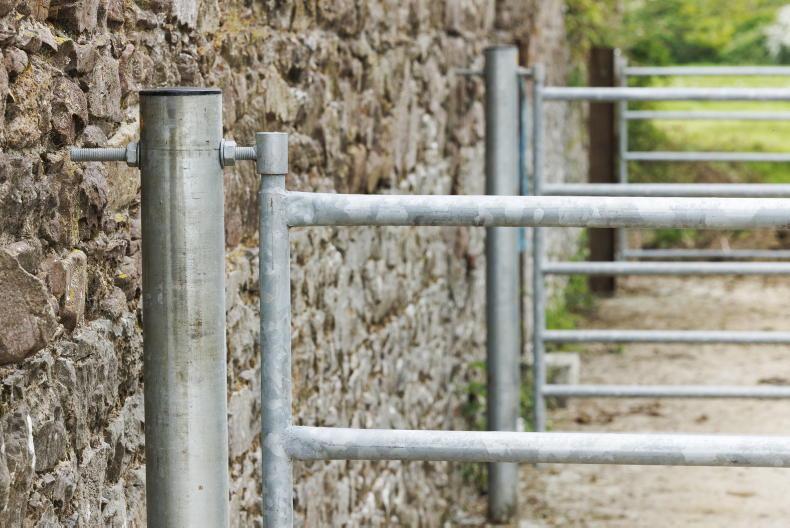
“Sometimes it might be lifting a heavy gate or a bag of meal.”
She pointed out that many tools, for example sheep hooks, are ergonomically designed for someone around 5ft 10 or taller.
One issue repeatedly raised by participants is farm succession.
Connie said many women farming full-time described themselves as becoming farmers almost by default or second choice, rather than through a planned pathway.
She hopes the project will leave women feeling more confident and empowered about speaking up and taking ownership of their role in agriculture.
By creating opportunities for women to learn together, share experiences and solve practical problems, she believes the project is helping build a stronger future for farming – one where women’s contributions are recognised, valued and visible.


SHARING OPTIONS