



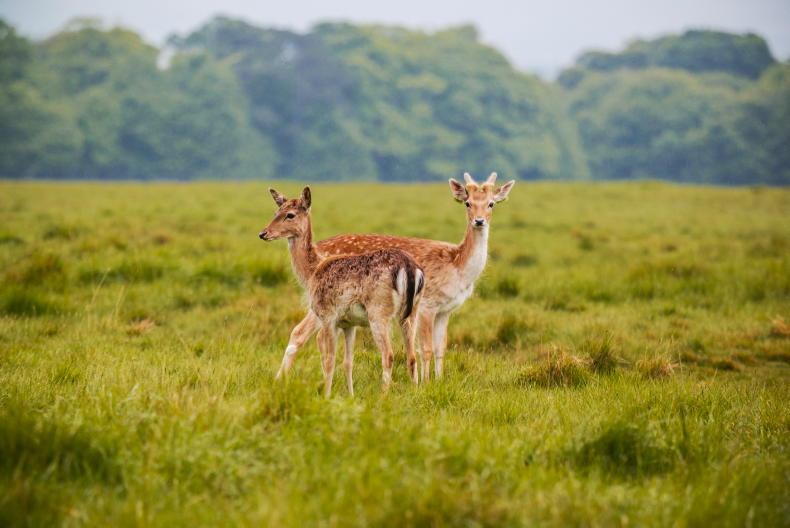
Damage to silage fields caused by grazing deer could cost farmers up to €180/acre, a study by Wicklow Uplands Council has found.
The research was carried out to assess the impact deer had on silage fields in Wicklow as part of the Wicklow Deer Management Project from 2018 to 2022.
It was presented to attendees at the FRS Co-op deer management group in Kinnitty, Co Offaly, by Molly Kennedy of Maynooth University on Friday.
Kennedy, whose master's research investigates the impact of grazing deer on agricultural grassland production in Ireland, informed attendees that the production losses equate to a 30% yield loss.
In addition to yield losses, damage to fencing and the potential spread of TB were cited as serious concerns of farmers, who are bordering forestry with deer present.
Established in 2022 and funded by the Department of Agriculture, the FRS deer management programme is a “golden opportunity” to shape how deer are managed in this country, programme manager Michael Keegan explained to attendees of the event.
“Landowners need to be active participants in their group and drive decisions on the ground - make assessments and identify local priorities,” he said.
Active participants
“Deer management is not something that can be delivered from an office; it depends heavily on people working together and making informed decisions at local level,” he added. “The best decisions are made by the people who know the land.
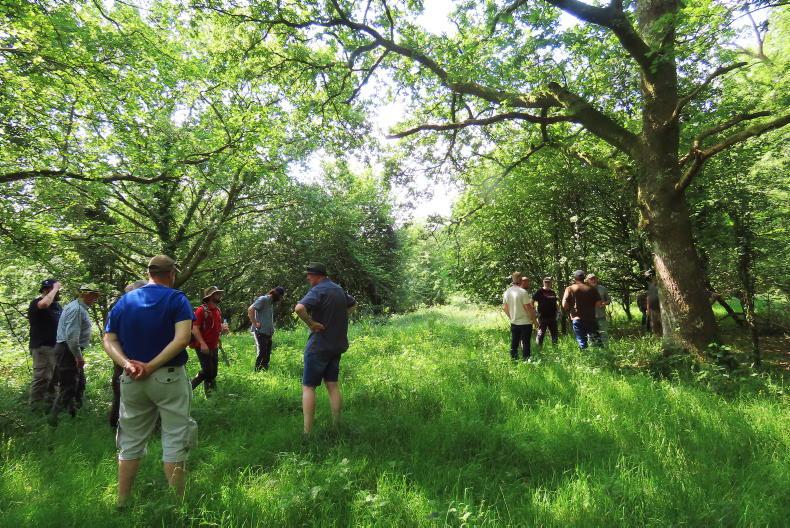
“Working together, sharing knowledge and taking ownership of your own deer-management group is the only way this is going to work and is the only way we can continue to deliver. We want to deliver for landowners, hunters, forestry, agriculture, biodiversity and for the long-term sustainability of our populations.
“This is not about wiping out all deer in the country, there has been a lot of misinformation about that… it is about sustainable effective deer management.
“Land-ownership rights are not affected in any way. We don’t put people onto land. We can, if requested, but the landowner drives those decisions, not FRS.”
“In relation to money, the deer management strategy group is seriously looking at incentives for deer shooting. I believe without incentives for hunters, we are going to struggle to get hunters to shoot more deer,” Keegan added.
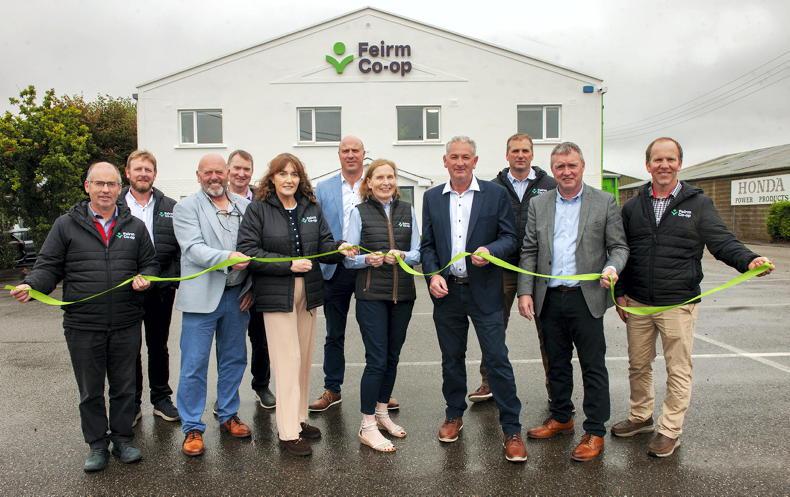
In February 2025, FRS Co-op was awarded a contract to establish a new deer management programme in Ireland, with an aim to deliver a number of recommendations from the deer management strategy group. This includes the establishment of 15 deer management units in hotspot areas of the country and to appoint local co-ordinators to work with landowners and hunters.
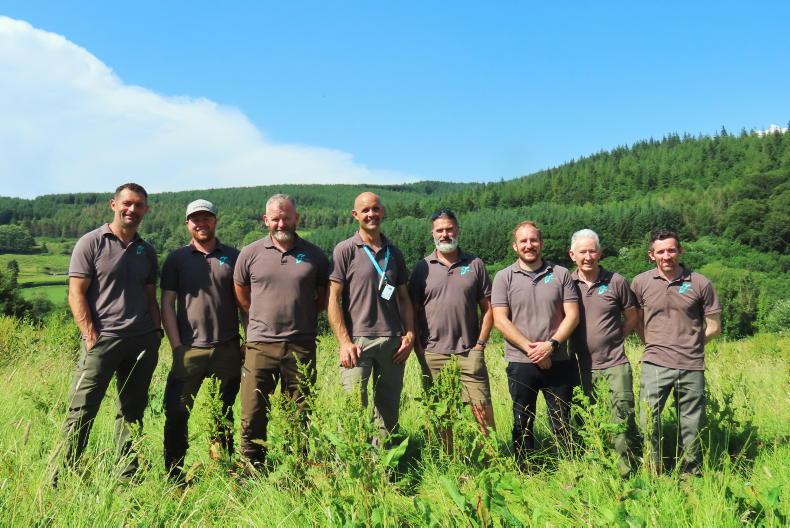
Now in its second year, FRS Co-op continues to work closely with landowners, hunters and other key stakeholders to ensure the best deer management practices are implemented on a landscape scale.
There are, currently, 193 deer management groups set up around the country, with 1,251 landowners and 754 hunters enrolled, covering 100,858ha of land, according to Keegan.
Main concerns about rising deer numbers
A stakeholder survey of 1,500 people found that biodiversity loss or damage due to deer was the main concern of 82% of respondents, who said it was “very important” or “somewhat important” to them.
Damage to agriculture was cited by 81% as being of the same levels of importance, while 80% cited road-traffic accidents or road safety.
Some 77% pointed to damage to high-value nature conservation sites as their main concern arising from rising deer numbers; 73% cited damage to farm infrastructure and 70% referenced forestry damage.
Two-thirds of respondents said that that the increase in deer numbers was a threat to farm animal health and welfare.
Speaking on the availability of venison to consumers, Michael Keegan said that the meat needs to be promoted and that it is something the group is working on.
“DMSG has been in talks with Bord Bia,” he said. “We are working on a video series to promote venison, which will take some time.
“We also have commissioned a study of people’s habits around eating deer. We have done research into it and we are working on it. There are a number of challenges with it.
“I suppose, traditionally, venison wasn’t seen as every man’s food, it was seen as a bit of an elitist product, we want that to change.
“There is a lot exported, I think we should find a market for it at home.
“It is a tiny amount of product compared to beef or lamb, so it will never be a threat.
“We hope that it will become a readily available product,” Keegan added.
Funding worth over €454,000 (including VAT) was approved for five refrigerated cold-storage units by the Department of Agriculture, according to Minister for Agriculture Martin Heydon.
Cold storage
Responding to a parliamentary question put forward by deputy Natasha Newsome-Drennan regarding the cost associated with each of the planned cold storage units, he said that, to date, expenditure on the units themselves amounts to €356,028.86, with over €50,000 incurred to date in respect of associated planning, site-preparation works and ancillary costs.
“Under the Irish Deer Management Strategy Group, the procurement and use of refrigerated cold storage units are recognised as essential elements in supporting sustainable wild deer population management and the development of Ireland’s wild venison sector,” he said.
“These units facilitate the safe and hygienic storage of deer carcases harvested during targeted culling operations, enabling hunters and game handlers to efficiently consolidate and manage multiple carcasses for onward processing.”
On the planned locations of the cold storage units, the minister said they are delivered and are “being prepared to be delivered to their respective sites, which are located within designated deer management units in key deer ‘hotspot’ areas, including Wicklow, Roscommon, Tipperary, Kilkenny and Limerick.
“Planning permission applications are progressing for each location and it is anticipated that all units will be operational in advance of the forthcoming hunting season in September.”




SHARING OPTIONS