



A nasty, multi-billion-dollar trade war has erupted between Canada and the US that has farmers in both countries pleading with their leaders for peace.
But the rhetoric – and the associated tariffs that have become so commonplace in all trade negotiations with the US – show no signs of subsiding, as farmers here wonder where it will all lead.
The dust-up began last year as trade negotiators were preparing for the long-planned review and, presumably, renewal of the well-established Canada–US–Mexico (CUSMA) free-trade agreement.
CUSMA, launched in 2018, is credited with now underpinning about USD $1.9 trillion a year in tariff-free trade among the three North American countries. Some $285 billion of that amount is agricultural. The agreement covers commodities such as beef, pork and fresh fruit and vegetables, along with processed foods and beverages.
But even that kind of money and scope hasn’t slowed the sparring between Canada and the US.
It started in earnest in December of 2024, when Trump launched a mean-spirited movement to make Canada the 51st US state. Canadians were aghast, but Trump wouldn’t back off.
Then last year, Canada elected a new prime minister, former Bank of England governor Mark Carney, who campaigned against Trump’s threats and imperialism and ignited an unprecedented spirit of nationalism in the country.
This past January, Carney delivered a devastating blow to Trump.
In a landmark address at the World Economic Forum in Davos, Switzerland, Carney urged the world’s middle powers to unite and kick back against power coercion, the kind that Trump has fostered to bully deals with most of America’s trading partners.
Carney didn’t single out the US, but it was clear to whom he was referring.
Trump, unaccustomed to the public criticism, started a slow burn. He intensified accusations that Canada was just like all other countries that had been “ripping off” the US through bad trade deals, including the CUSMA agreement, a version of which he had signed during his first term in office.
Political tensions
Political tensions continued rising this spring and summer, in advance of preliminary discussions to review CUSMA, which was scheduled for renewal this year.
In the spring, Trump said that he wanted US negotiators to reach deals with Canada and Mexico bilaterally, rather than charging headfirst into an overall trilateral deal.
Canada complied, and on August 21, as three intense days of discussions entered the 11th hour, it appeared a trade deal was on the table.
But it wasn’t to be. Canada claims that at the last minute, the US came forward with additional demands that were untenable, including the right to oversee Canadian trade deals with other countries that might weaken or run counter to US interests.
The US is especially concerned about Canada’s growing relationship with American rival China, which resumed shipments of Canadian canola under Carney.
Unwilling to squander trade opportunities to please the US, Canada walked away from the bargaining table, and talks collapsed. Carney later said Canadian negotiators would consider returning when the Americans “start being serious”.
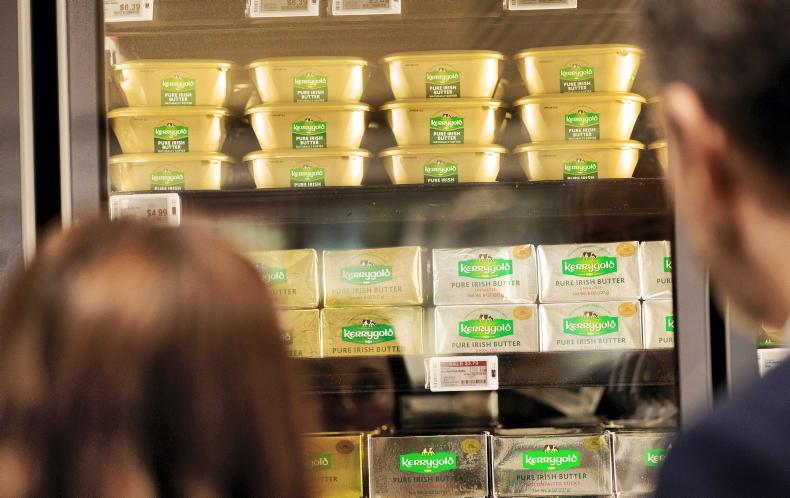
The rejection further infuriated Trump. In August, the US imposed new 50% tariffs on roughly $20 billion of Canadian goods. On 8 September, Canada retaliated with dollar-for-dollar counter-tariffs on targeted US goods. The day after, the US banned Canadian alcohol and dairy from crossing the border. Canada had already banned US alcohol from entering the country, a serious blow to US grain farmers.
This all left producers on both sides of the border wincing.
“This isn’t good for farmers and ranchers. It’s not good for consumers,” Nick Levendofsky, executive director of the Kansas Farmers Union, told Saskatchewan radio station CKOM. “I just wish [Trump] would listen and maybe not post as much on Truth Social and [not] make these comments that cause fluctuations in the markets.”
In Ottawa, Canada’s biggest farm lender, Farm Credit Canada, said the ongoing cycle of tariffs is causing a chill in business investment and holding back long-term agricultural development plans.
Agriculture Producers of Saskatchewan president Bill Prybylski agrees, telling Canada’s CTV News “it would be very unfortunate if food and the production of food is being used as a weapon in a political dispute.”
But with Trump needing a bump in US midterm elections in November, and his supporters favouring strong-arm tactics, the weaponry may just be starting to unfold.
Trade deals
Meanwhile, Canada is aggressively courting investment to diversify and expand trade beyond the US. Carney says that over the last year, the country has signed more than 20 trade and security deals across five continents.
“Canadian businesses now enjoy tariff-free access to one and a half billion consumers,” he said on X. “Over the next six months, we’ll double that number through new trade deals from [the Association of Southeast Asian Nations] to India.”
Summit
Last week, Canada held an international investment summit in Toronto, Ontario, to promote its open-for-business attitude.
The first announcement was that of a partnership between the Canada Pension Plan Investment Board and Brookfield Asset Management Ltd., who are jointly launching a $50-billion “Maple Fund” that will make major investments in infrastructure and key sectors in Canada.
No specific mention of agriculture was made, but it’s reasonable to expect some investment in food processing, a federal priority.
Owen Roberts is an agricultural journalist from Canada and a past-president of the International Federation of Agricultural Journalists.




SHARING OPTIONS