
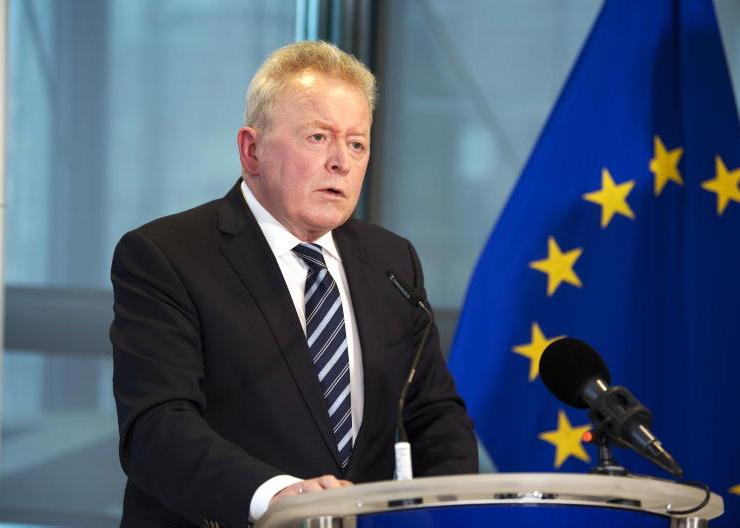
As the former European Commissioner for Agriculture (2019-2024), I am deeply concerned by the European Commission’s proposal for the Common Agricultural Policy budget for 2028–2034.
The current budget set out in the National Strategic Plans provides funding of around €61bn per year for the entire union (including national co-financing). For Ireland, this means approximately €1.96 billion annually.
The budget for 2021–2027, which as Commissioner for Agriculture I pushed through in 2020, will unfortunately remain the highest agricultural budget in the history of the EU-27. I state this without satisfaction. The work on that budget led at the time to an increase of €22bn for the EU-27 compared with the Commission’s initial proposal, including more than €700m for Ireland.
I had hoped that the new budget would be further increased to better respond to growing challenges. Unfortunately, that did not happen. Under the commission’s new proposal, the guaranteed minimum for farmers’ income support is only around €42bn per year for the whole union. For Ireland, this is approximately €1.17bn annually.
This represents a reduction of around 40% on an annual basis. It results from comparing the amounts guaranteed in the strategic plans for five years (2023-2027), which include both EU funds and national co-financing, with the amounts proposed in the budget for seven years (2028–2034), which are exclusively minimum EU funds. In real terms, after taking inflation into account, the cut is even larger.
Irish presidency
Unfortunately the Irish presidency has not put forward any proposal to increase these amounts, and the European Council has likewise taken no action in this direction. In these circumstances, the budget cut appears to be a foregone conclusion.
It is not excluded that the reduction will go even further, as some member states are calling for additional cuts to agricultural spending.
The Agriculture and Fisheries Council agreement of 26 October 2026 does not change this assessment. Ministers reached a partial general approach on the post-2027 CAP framework, but the financial allocations and CAP-related provisions of the future EU budget remain unresolved.
Agreement on parts of the regulatory framework, however welcome as procedural progress, cannot in itself provide farmers with the financial certainty they need. The real test will be whether member states secure an adequate, predictable and genuinely protected CAP budget in the forthcoming MFF negotiations.
This is very bad news for farmers. EU agriculture is currently affected by multiple crises at once. It is feeling the effects of the war in Ukraine and the conflict in the Middle East, which are destabilising markets and raising costs.
Fuel and energy prices are rising, and there are numerous climate-related disasters that increasingly destroy crops and infrastructure. In addition, the interests of European farmers are seriously threatened by the Mercosur agreement.
In such a situation, reducing the CAP budget is, in my view, a mistake and will have a negative impact on the situation of farm holdings across Europe, including in Ireland.
Particularly worrying is the fact that the new budget architecture relies on minimum ring-fenced amounts, with the remainder depending on national decisions taken within broader partnership plans. In practice, this means that farmers may face serious difficulties in competing for EU funds against sectors with stronger political influence and lobbying power.
Pillar two
It is also a mistake to plan the liquidation of the second pillar of the CAP, which has a clearly pro-development character. In the current period, the second pillar (rural development) amounted to around €109bn for the entire union (including national co-financing), and approximately €3.86bn in Ireland.
Without it, the Common Agricultural Policy loses an important instrument for farm modernisation and rural development.
Food security should be treated on a par with national defence. A strong, independent and adequately funded CAP is the foundation of that security.
As commissioner, I consistently stressed that the CAP must remain a sovereign policy, free from political conditions unrelated to agriculture.
Irish farmers have long demonstrated that they can combine high productivity with care for the environment and climate. They should not, however, be forced to do so with steadily diminishing public support.
I urge member states and the EU institutions to undertake a serious revision of this proposal. European agriculture needs stable, predictable and adequate funding – not symbolic minimums that fail to match the scale of the challenges we face. The current proposal offers no such certainty.