



The general perception of farmers is that they have a chip on their shoulder. Like most perceptions, there is some truth in it.
Farmers as a rule have worked their entire lives. As children, they put in full days at weekends and on holidays for pocket money, while their classmates earned 10 times as much in supermarkets, petrol stations or on building sites.
On leaving school, there was no college experience for most. A year in an agricultural college was the high point for a lucky minority.
The one I went to 40 years ago was more like a boarding school than a college. The 108 students – all boys – were confined to the campus from Monday to Friday, inmates of Rockwell College.
The alternative was to do the certificate in agriculture (green cert) classes over two years in a local Teagasc office. The final step was three months placement on another farm, before returning home, to again work for pocket money.
And all for the promise of the farm in years to come. Years that often turned into decades. If that sounds like something John B Keane, John McGahern or Patrick Kavanagh would have written, it does. Very little changed in the rhythm of farming families for generations.
A much higher proportion of farmers today have studied further, receiving Level 8 degrees. But most farmers aren’t young – the average farmer is my age, with a similar story to me. So, yes, there is a tinge of resentment among many farmers, a willingness to see the world as a place that takes more from them than it gives back.
There is a burden of responsibility in taking over the family farm. From an early age, the fact that their grandparents and great-grandparents sweated blood to build a viable holding is recounted daily. The knowledge that it’s more about stewardship than ownership.
The priority is looking after the land to pass it on to the next generation in as good a condition as you received it. If the chance comes to add to the holding, to buy a few acres, that should be taken. In particular if it is land adjoining you. Buying that is non-negotiable, even if it means scrimping and saving for years afterwards. And every parcel of land has a couple of neighbours, maybe more. And they aren’t making any more land.
Farm news often bad news
Added to all this is that the public only really see farming in focus when there is bad news. We are missing our emissions targets, as the Climate Change Advisory Council (CCAC) announced this week.
I didn’t hear anyone, from CCAC chair Alex White to commentators, give the context that every sector is missing its target under the climate action plan. We aren’t bad actors, we’re just another part of a cast of five million who can’t stick to the script.
We are putting out the begging bowl because of drought. The begging bowl amounts to some farmers looking for a transport support scheme to aid the movement of hay and silage from those parts of the country where it is surplus to those where there is a shortage.
That ask is taking place in the context of only €38m of the much-heralded €100m of fuel support for farmers having been activated – there is money for this specific purpose available.
Others are calling for logistics support, for the Government agencies linked to farming , which are myriad, to help create synergies, where lorries bringing supplies going west are then backloaded with fodder to go to the drought-affected regions of the south and east.
Hardly a massive ask. But some are presenting it as proof that we are over-intensive and vulnerable to even small changes in output, weather-induced or otherwise.
Doctor, nurse and teacher representative bodies usually only appear on the airwaves looking for better pay, better conditions or more resources for their members. In this regard, they are no different to the Irish Farmers Association or the Irish Creamery Milk Suppliers Association.
But most people meet teachers and medical professionals in their daily lives, appreciate the work they do and see the challenges they face within the system they work in.
That doesn’t happen with farmers – food appears on the supermarket shelves every day and that is enough. So empathy with farmers is lower than with other sectors who are constantly in dialogue with Government through the airwaves.
Public service
Ah, but those people are public servants – farmers are private entrepreneurs, I hear you say. There’s a world of difference. And that’s true, but only partly.
The reality of food production is that it has to exist in a global marketplace. Ah yes, you reply, but so do shoe manufacturers and car makers and everyone else producing goods.
The unique thing about farming is that it is land-based. A shoe manufacturer can relocate to Bangladesh, Bolivia or Burkina Faso and the leather can be shipped over. You can’t ship land from the Golden Vale or the plains of Meath and Kildare abroad to facilitate farming in economies with a much lower cost base than ours.
There are only two possibilities. One is to compete as best you can with first-world costs for energy, fuel, fertiliser, labour and services such as farm advisers, accountants and solicitors, with first-world standards of environmental protection, animal welfare and pesticide usage while producing at world prices. The other is to give up, let the land grow wild and we import our food.
If we are to continue food production in Ireland, to compete as best we can, farmers need some form of protection from world prices that are below the cost of production.
Previously, there were significant tariffs on food imports which raised the price of food to somewhere that afforded Irish and European farmers a margin. They have been wiped away by the WTO (previously GATT), as globalisation and free market economics became the dominant theme of the last 50 years. And the aforementioned environmental constraints mean intensification of output is no longer an option.
The only other way to keep farming viable is to directly support farmers, to bridge the gap between production costs and commodity prices. This is the purpose of the Common Agricultural Policy (CAP).
This week, the agricultural ministers of the EU met in Ireland, visiting family farms. They must agree a programme of supports to last from 2028 to 2035, grappling with a budget that has been cut by 22% from a budget that has been largely static since 1990.
And that’s in a Europe that has increased in landmass and farmed area by 50% due to the enlargement from the EEC12 35 years ago to the current EU27.
The thrust of the CAP has evolved (some would say descended) from support for food production to coupled payments for each cow calved, ewe carried, bullock or heifer slaughtered and acre of grain grown to a flat-rate payment on the land. For those renting land, that has become a payment handed over to the landowner, draining out of the system and encouraging a new generation of landlords and tenants.
I don’t envy Martin Heydon and his fellow ministers their job, trying to maintain support for farmers with a smaller budget, while food production costs spiral in a Europe understandably more concerned with military security than food security. The problem is if we lose family farms, the experience around the rest of the world is that they don't come back.
Death of family farms in '80s America
On Saturday, Donald Trump will darken our shores with his presence. He is hostile to the EU and would probably not be a big supporter of the CAP.
He recently enraged farmers by inviting half a billion pounds of beef imports tariff-free into the US. It may have been an attempt to curb consumer inflation, as the economy suffers from the impact of his foreign trade and military aggression and prices rise.
There are less than two million farm family holdings in the US, compared with almost nine million in the EU. This, despite the continental US (excluding Alaska) being over twice the size of the EU.
A huge proportion of family farms were lost in the 1980s, as globalisation saw commodity prices fall. American family farms didn’t have the protection of the CAP and were lost. Films such as Country (Sam Shepard and Jessica Lange) and The River (Mel Gibson and Sissy Spacek) chronicled this phenomenon in 1984.
The following year, John Mellencamp released Scarecrow, an album concerned with the same themes. It was released two weeks after Live Aid. On that momentous day, Bob Dylan said he hoped something could be done to help farms facing foreclosure. There was a logic in his thinking, less farms mean less food mean more global hunger, but it was hammered in many quarters as tone deaf.
It set Mellencamp thinking and, only two months later, he, along with Neil Young and Willie Nelson, held the first Farm Aid concert. Dylan played it and has played many times since. Mellencamp, Nelson and Young are board members of Farm Aid to this day, along with Dave Mathews. All three have played every single Farm Aid event, all three are expected to perform at this year’s event for the 42nd consecutive time at Virginia Beach (it moves location every year) in two weeks’ time.
Neil Young is now 80, but still touring. Willie Nelson is 93, but has never missed a Farm Aid. These people’s commitment to the cause is deep.
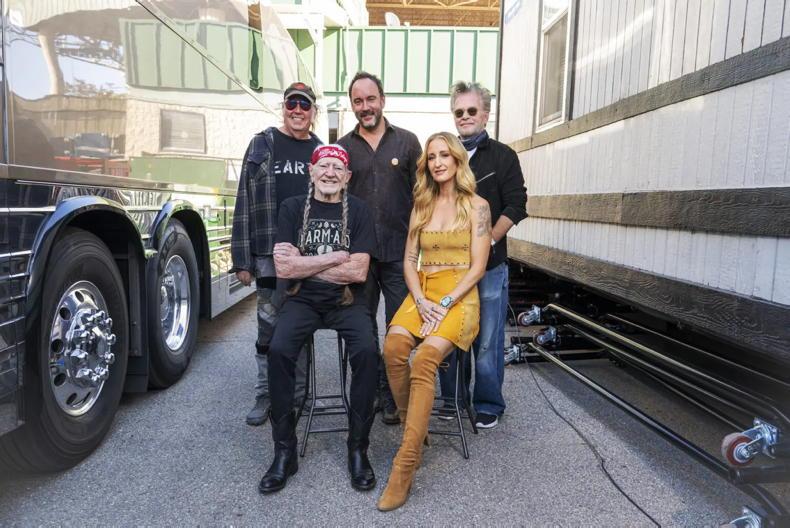
Farm Aid is much more than a concert, it has become a showcase of family farming and both commodity and artisan foods production. It highlights the deep roots of farming within rural America and focuses the need for support for farmers, both from the public as consumers and from the public purse.
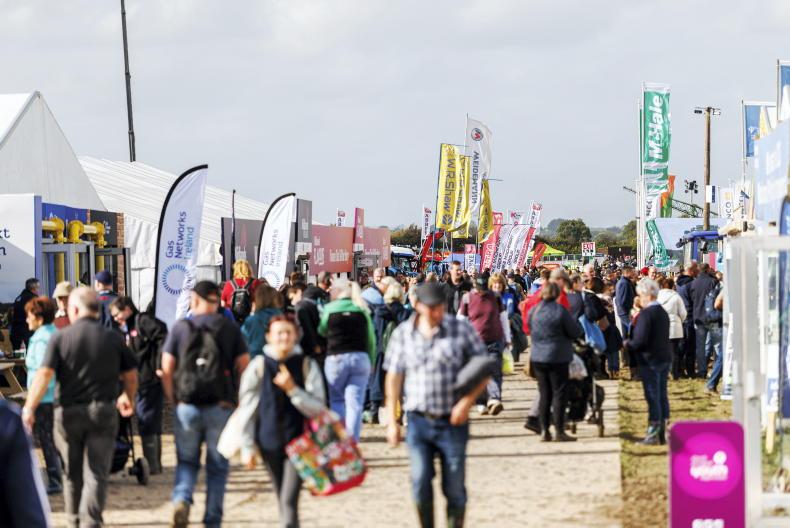
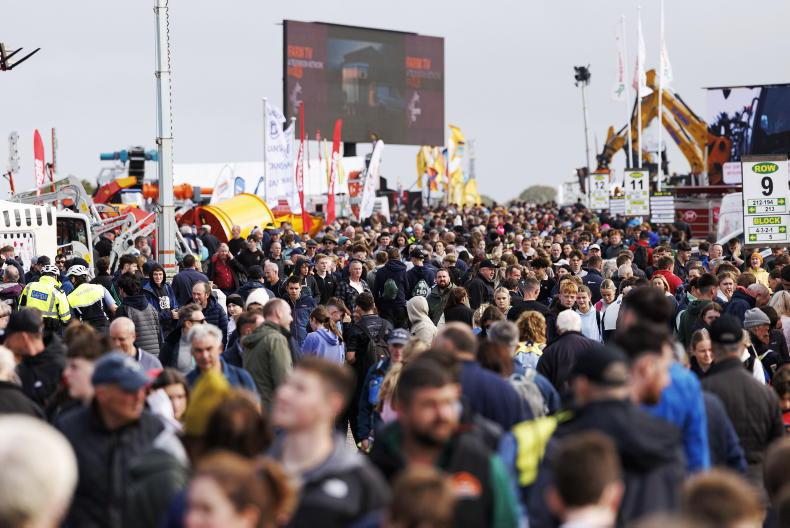
While the USA has Farm Aid, we have the National Ploughing Championships in Ireland. A rural event that attracts people from the heart of Dublin. A family day out that showcases an industry that exports €20bn worth of food every year.
Irish machinery and farm equipment manufacturers such as Dairymaster, Keenan, Abbey, McHale, Tanco and Hi-Spec, which export close to one billion euros worth all over the world, will be in Screggan next week. As will Martin Heydon and Christophe Hansen.
I’d love if Ursula von der Leyen was there – she might understand the importance of the CAP and the dangers of her current budget proposals for the sector a little better.
And I wish Alex White and the entire CCAC would wander down for a day. Even more, I wish they’d been in Johnstown Castle in June at the 'Farming for a Better Future' event, showing the hundreds of small measures being taken to reduce farming’s environmental impact. Some of which reward farmers pockets, many of which require investment.
Energy centres
And I’d like Darragh O’Brien to be along too. He said this week that data centres are so important to the Irish economy that they must be accommodated, even though they now consume 30% of all our energy production. All the solar power and all the wind energy being produced in Ireland is being hoovered up by these monolithic buildings as they emerge across the country.
Data centres employ about 20,000 people, O’Brien said. Irish family farms employ 10 times that number, before you consider all the upstream and downstream jobs depending on food production.
There’s a lot at stake. The patchwork of family farms that stretches across Ireland and right across Europe from Lativa to Greece to Portugal back up here to Ireland could disappear if we get the CAP wrong. Just like they did across the USA in the 1980s. Lose them in Ireland and we risk losing the local school, GAA team and pub.
As John Mellencamp sang – and will again in Virginia Beach – “this land fed a nation, this land made me proud, and son I’m just sorry there’s no legacy for you now, rain on the scarecrow, blood on the plough".
Have a great time at the Ploughing – we are lucky to be in the industry we are in, despite all the challenges.
Farming is a great way of life most of the time, we know that, despite the chip on our collective shoulder.
But take every opportunity you get to tell a decision-maker in Dublin or Brussels that this is a defining moment for Europe and its nine million farm families.




SHARING OPTIONS