



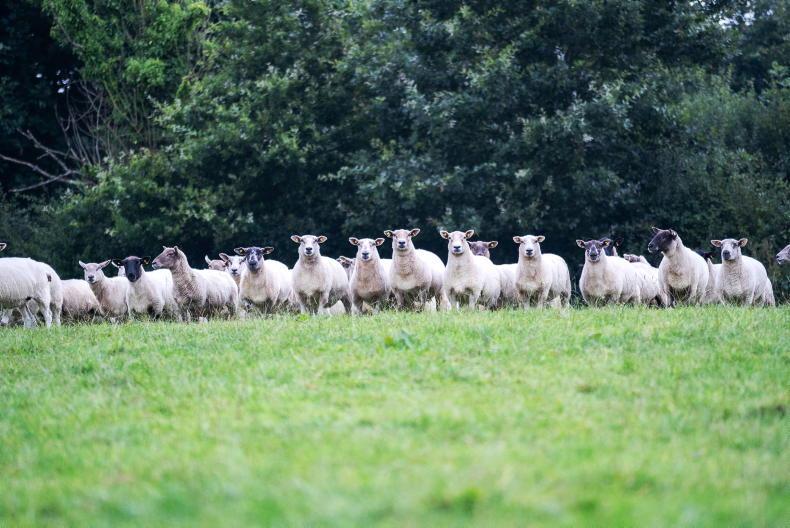
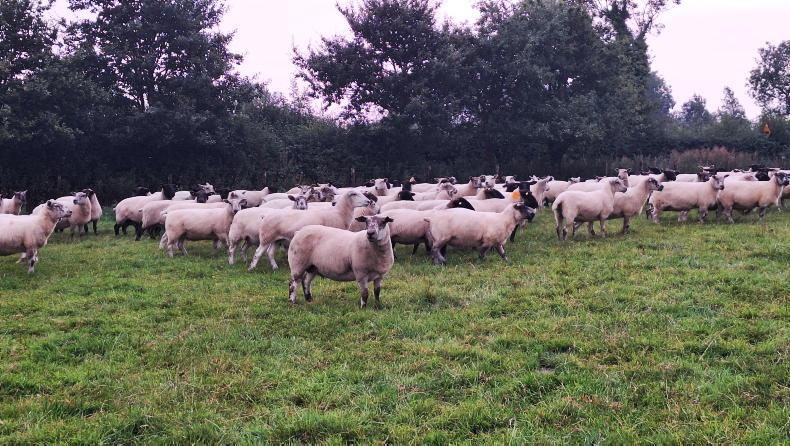
A standout feature at last Thursday’s Irish Grassland Association sheep farm walk held in Mountbellew Agricultural College in Co Galway, was the high level of lamb output produced. The flock of 155 mainly Belclare-cross and Suffolk-cross ewes recorded a scanning rate of 2.45 lambs per ewe joined in the 2025/2026 breeding season.
The early lambing flock scanned 2.18 lambs per ewe joined, while the mid-season lambing flock scanned at a high level of 2.55 lambs per ewe joined. Barry Bonar, sheep enterprise lecturer, explains that the high level of prolificacy can be traced back to a Belclare ram whose daughters are exhibiting unnaturally high levels of prolificacy.
While the breed generally produces a higher litter size, the rate seen in the ewes in question is well above the norm. An analysis of litter size in the 2026 lamb crop shows that 45 daughters of the more prolific ram had a scanned litter size of 3.02 lambs, while 21 daughters of a second Belclare ram had a scanned litter size of 1.9 lambs per ewe.
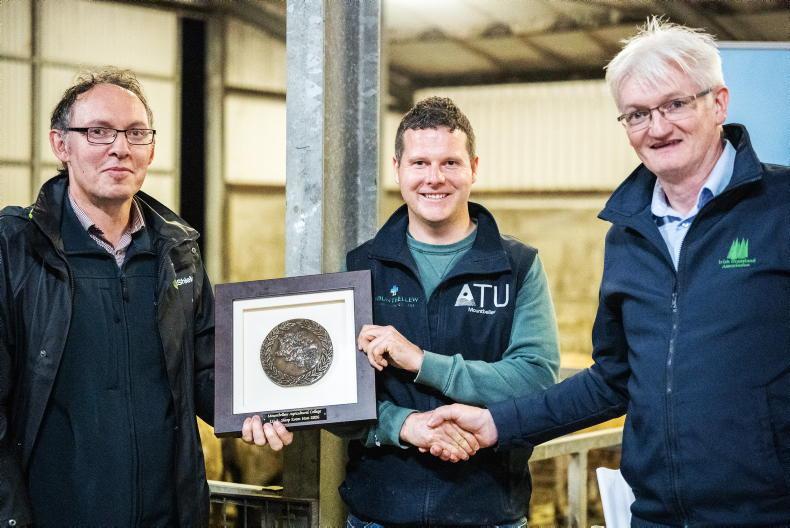
Rare occurrence
The figures are a straight calculation without any account taken of dam parity, background breeding, etc. The abnormally high litter size is due to a mutation of genes that affects a very small number of sheep driving prolificacy to such heights. Barry adds that while Belclare genetics are being used to boost prolificacy, the aim was never to drive litter size to such a level that could be counterproductive if the correct management, labour availability and facilities were not in place to deal with it.
He comments that many of the decisions taken on the farm are done so on the basis of demonstrating educational skills to students at the college which is part of the Atlantic Technical University (ATU) and giving them an experience of different systems. The desired level of output is in the region of two lambs per ewe joined, or slightly above this, to demonstrate a system capable of producing high levels of output.
There are also two lambing periods, with an early lambing flock of 50 ewes synchronised to lamb from 14 February and a mid-season lambing flock of about 105 ewes lambing from mid-March onwards. The reason for the split in lambing is to provide students with practical lambing skills, before heading out to gain more experience on other farms.
The high level of prolificacy generated a lot of discussion, with Barry explaining management practices that are being taken to try and curtail litter size to a more manageable level. The ewes bred from the ram which passed on very high prolificacy have been identified and will be used in the early lambing flock where output is typically lower.
Farm manager Ronan Grealis adds that no hormone treatment (PMSG) will be used in the synchronisation protocol to further limit the possibility of boosting litter size. Being in a position to hone in on the ewes with a high litter size is as a result of the flock being recorded on the Sheep Ireland LambPlus system, which is free for commercial flocks to use.
The high litter size will also reduce naturally over time, as daughters bred from Suffolk rams are selected. The breeding programme on the farm is a criss-cross breeding programme, with Suffolk ewes mated with Belclare-cross ewes and Belclare rams mated with Suffolk-cross ewes. Charollais rams are joined with 40 to 45 two-tooth hoggets, which are added to the flock annually.
Grassland management
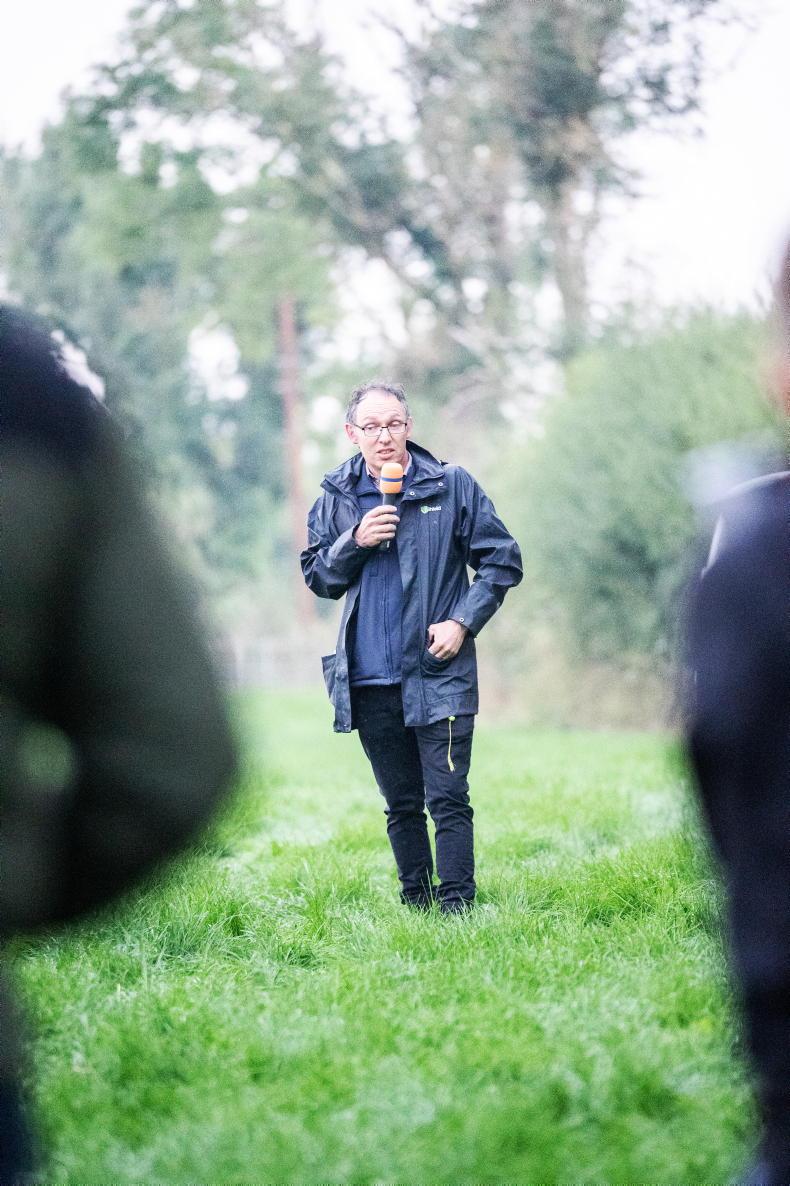
Farmers attending the event supported by Mullinahone Co-op and the Kepak Group also heard of the significant improvements made in recent years in terms of grassland management.
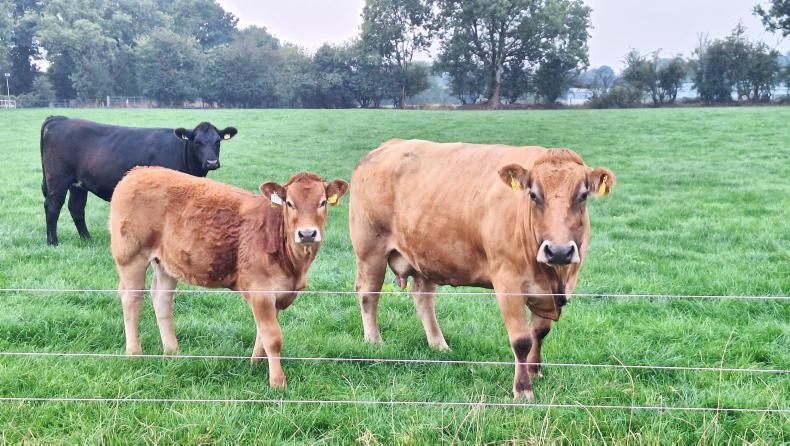
The 122ha farm is split into two separate enterprises, with a dairy enterprise run on 80ha, while the sheep flock is run alongside a 30-cow suckler-to-beef enterprise and a dairy-beef enterprise. The latter is run across 18ha of lands at the college yard and 21ha a short distance away.
The farm can be described as heavy in nature, with suckler cows often not getting to grass until late April, while grazing and grass utilisation can also at times be challenging for ewes, with soils quickly becoming saturated.
Barry says: “It is a very heavy farm, spring growth is low and ground can turn [wet] very quickly. I’m not going to say here that we have cows out on 14 February, we’re not going to get out like that, but we do what we can and have light cattle out as early as we can. If we have a bulk of grass then we just cut it and put it in the pit – Pasturebase gives you the confidence to do that and is invaluable.”
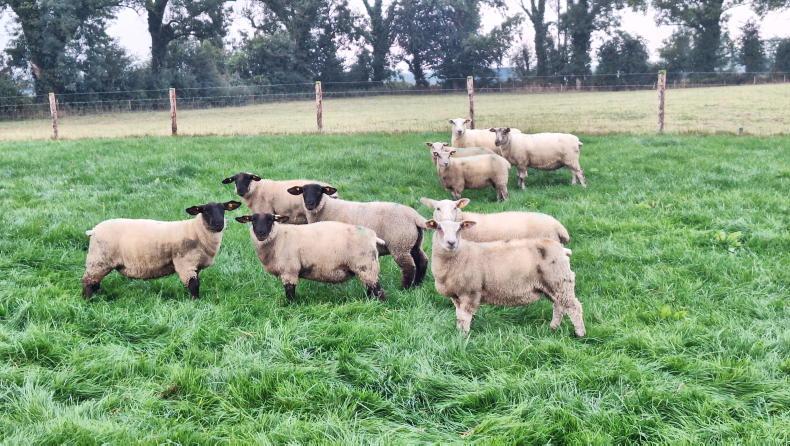
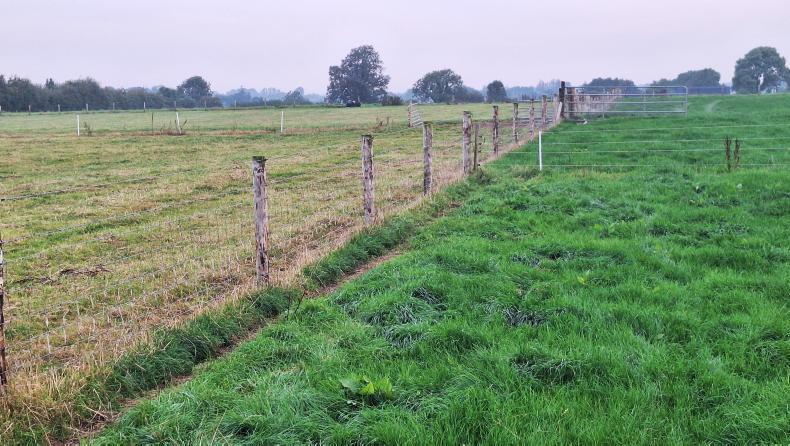
There is also a much greater focus on reaping the benefits of mixed grazing. Barry told farmers that this has been achieved through strategic use of permanent divisions and using temporary electric fencing.
“Electric fencing is great, you are not held to it and can try it for a few years and see if it’s the way to go with the divisions you have and if you decide to do so then you can fence it permanently. For us it allows us to cater for bigger groups than a 2ha paddock if we need and graze cows and calves with ewes and lambs.”
Ronan adds that the number of grazing groups has been halved over the last six years and this approach is helping the farm to grow more grass and maintain pre-grazing quality at a much higher level.
Grass measuring
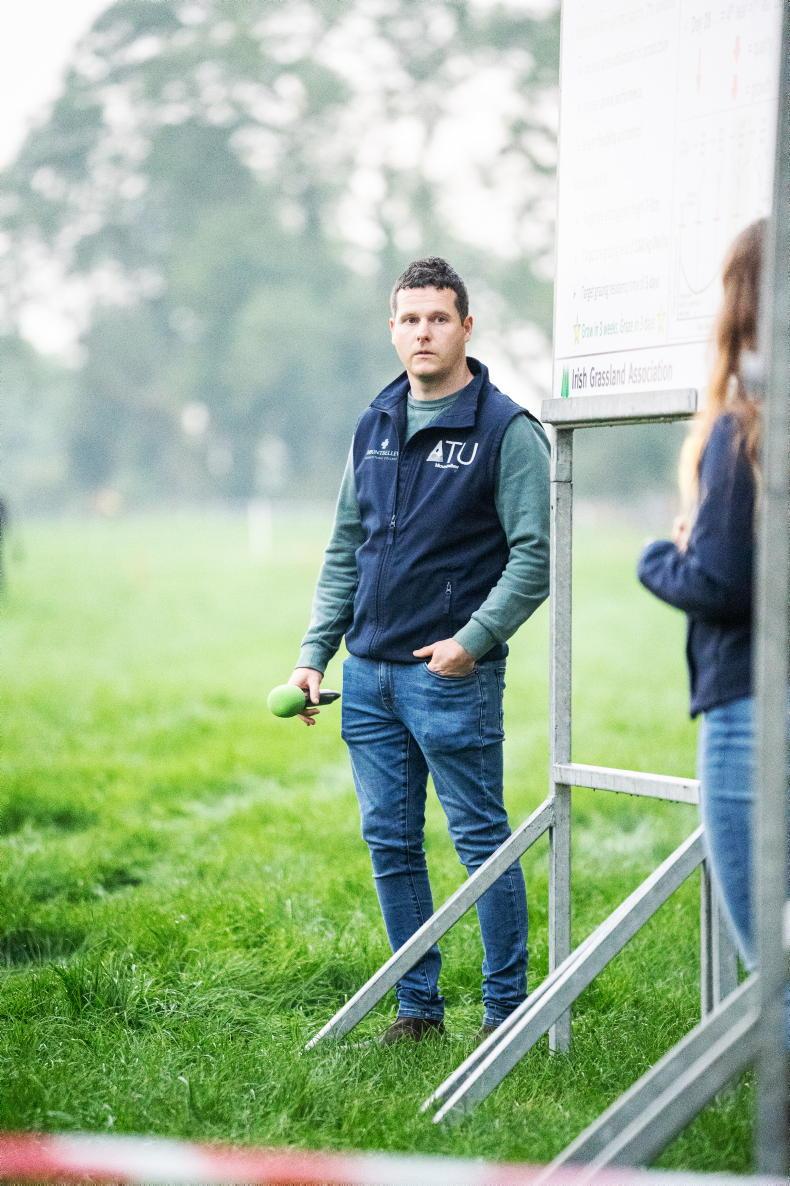
Sarah Woodmartin, Teagasc and the IGA sheep council, presented data from the Teagasc Pasturebase system concerning grass productivity. The farm grew almost 10t of grass dry matter/ha in 2025 and hope to repeat this performance in 2026, despite growth being slower in late July and early August.
This level of output ties in with the stocking rate of 10 ewes/ha and the target of producing one tonne of grass dry matter for a ewe and her two lambs. Fertiliser use on the farm is in the region of 150kg N/ha, while in 2025 there was 251kg potassium (K/ha), 36kg phosphorus and 12kg sulphur/ha.
Ronan says that measuring grass and using the Pasturebase system gives the farm the confidence to make decisions.
“I don’t see how we could plan without it. In May, June and July there might be weeks where you need to do two covers/week in times of peak growth but we can go then and take out surplus grass and keep quality in the sward.”
Performance recording
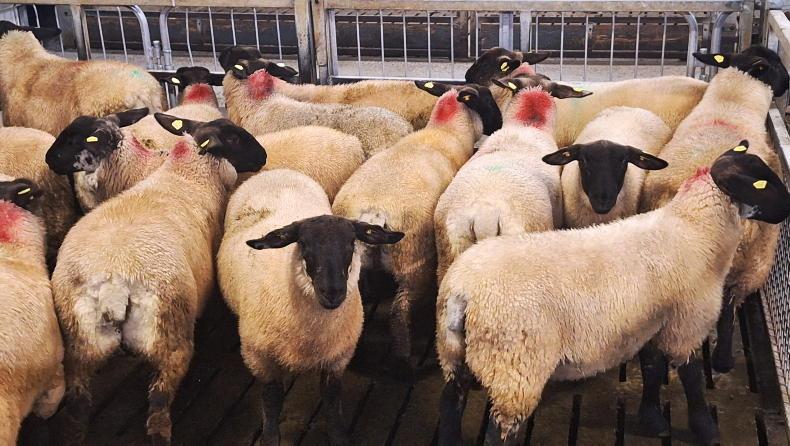
As mentioned already, performance recording provides invaluable data on which to make calculated decisions. Records collected at lambing include lamb birthweights, ewe mothering ability, milk yield, etc, while single-sire mating allows performance to be tracked back to the ewe and ram.
Lambs are also weighed at 40 days, weaning and regular thereafter, to track liveweight gain. The average daily gain of lambs up to 40 days of age was 10g/day lower at an average of 270g in 2026 compared to the last two seasons, which is not surprising given the more challenging weather and grazing conditions.
Performance up to weaning has steadily improved from 230g/day in 2024 to 250g/day in 2025 and 270g/day in 2026. Tom Coll, Teagasc and IGA sheep committee, says that the lift in performance has been underpinned by improved grassland management and grazing infrastructure.
There has also been a substantial jump in performance at 150 days, rising from 210g/day in 2024 to 240g/day in 2025 and 300g per day in 2026. The performance at 150 days is influenced by concentrates being fed post-weaning.
Triplet lambs are left with ewes capable of rearing them and such lambs are creep fed. Twin-suckling lambs and the small number of single-suckling lambs receive no meal up to weaning, but are built up to 1kg concentrates daily post-weaning.
Output and costs
This is an area under the spotlight and Ronan says the aim in future years will be to reduce concentrate input. The level of concentrates fed per ewe is costing €86/head or €46/lamb weaned. Tom Coll told farmers that “some might think this is ridiculously high, but it might shock you if you look at it on your own farm”.
He added that concentrate costs are running high on a lot of farms and there is a low level of output, which is hard to justify. He said that in the case of Mountbellew Agricultural College the level of output per ewe is likely to be in the region of €340/ewe or €3,430/ha, which he says leaves a lot of room to work with.
“If we are serious about attracting young people into sheep farming, then we want to target at last 1.6 lambs per ewe joined. This flock produced 41.5kg of carcase for every ewe in 2025, with 1.88 lambs produced – at 10 ewes/ha that is 415kg carcase/ha and an average lamb sale value of €322 at €170 per lamb.
“We need to be at this level to make sheep attractive to the next generation.” Tom also heralded the low level of mortality in the flock for significantly boosting output. Mortality in 2026 was recorded at 9%, or 28 lambs lost out of 320 produced.
The mortality is mainly seen in multiple litters with zero mortality in single litters, 2% in twin litters and 15% in multiples.
Sales pattern
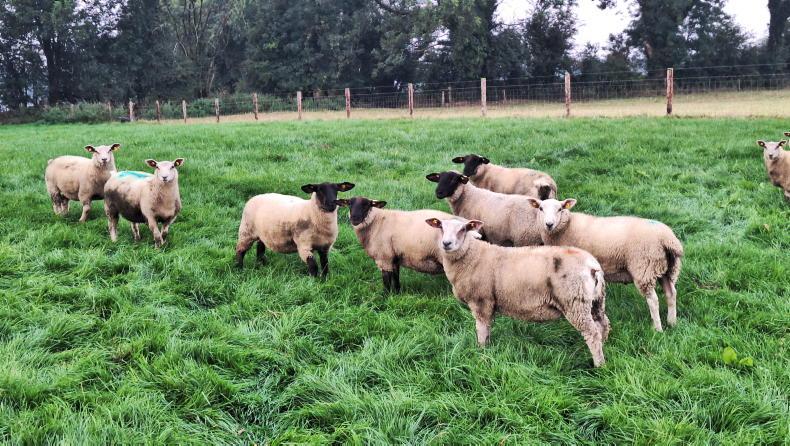
There is currently about 60 lambs left to be sold, with a significant percentage of these expected to be drafted imminently. There were 50 ewe lambs sold to Teagasc three weeks ago for trial work and with 45 lambs retained for breeding, the drafting pattern is running well on target with almost 85% sold off-farm.
Barry commented that this is a significant improvement than in recent years when lambs were frequently sold as stores or remaining on farm until late in the year.
The fact that lambs are sold allows priority to be given to the breeding ewe flock and suckler herd where grass demand is rising.
Ronan says that attention will be soon be turning to closing the first paddocks for grazing next spring. This is typically the driest paddocks with the best shelter available.
Next steps
The farm has made some big improvements and gains in recent years. Barry comments that the aim is to continue to push performance from grass and reduce the level of concentrates used, while exhibiting to students the power and benefits that can be achieved from collecting performance data to drive progress.




SHARING OPTIONS