



Liver fluke: The Agri-Food and Biosciences Institute (AFBI) in Northern Ireland is warning farmers about the likelihood of a high risk of liver fluke infestation this autumn and winter.
It stated that from May to September 2026, the average monthly rainfall was 86.56mm and while this was lower than in 2025, it is higher than rainfall levels in 2024 and represents an 8.03% increase on the average monthly rainfall for the summer months in Northern Ireland.
It added that the mean monthly temperature from May to September 2026 was 14.21°C.
This, it says, is higher than the levels recorded for each of the previous five years and represents an increase of 9% over the mean monthly temperature for the summer months in Northern Ireland.
The forecast concluded that relating to the above, the Ollerenshaw index – which forecasts the risk of liver fluke – for sites monitored in the North was greater than 400. This level prompts a forecast of high prevalence of fluke infection in stock, if appropriate measures are not taken.
It said: “A mean day/night temperature of 10°C or higher is necessary both for the intermediate host to breed and for the fluke larvae to develop within the snails. A temperature of 10°C is also the minimum at which fluke eggs will develop and hatch.
“Given the mean monthly temperature and rainfall for May to September 2026, multiplication of snails will have continued unabated on those pastures which are poorly drained and remain wet all year round.
“Thus, there is a high probability of liver fluke infection in the autumn and winter 2026-2027.”
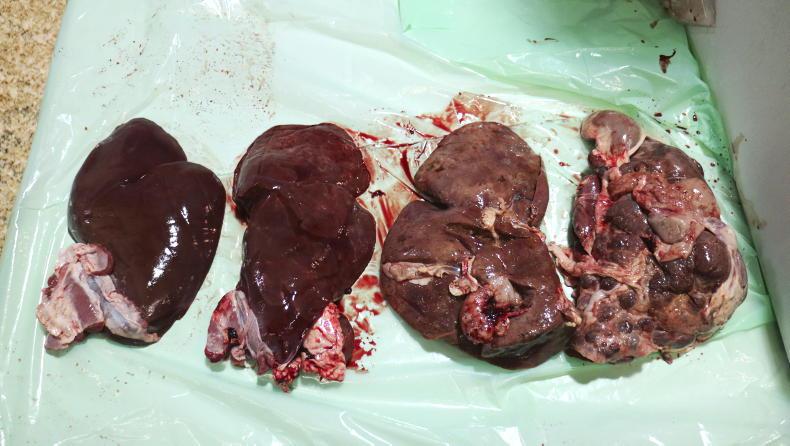
Acute liver fluke is the greatest risk at present and is often fatal. Signs of severe infections include distended painful abdomen, anaemia and sudden death. In less severe cases, poor production and growth, coupled with reduced appetite and abdominal pain are apparent.
The situation in Northern Ireland is likely to be similar in many sheep strongholds in Ireland.
Worm burdens: Some vets and farmers, in particular those based in the southeast of the country, are reporting significant issues with high worm burdens curtailing lamb performance and in the worst-affected cases leading to lamb mortality.
Some vets point to a high worm burden on pasture due to mass hatching following prolonged drought conditions while other comment that some farmers have been caught off guard later in the season.
Haemonchus contortus, or barbers pole worm, has been reported on occasion, but it is a high burden of gastrointestinal worms that seems to be doing the damage.
Farmers are being encouraged to take faecal egg samples to carry out a faecal egg count on a regular basis and to quickly investigate where lamb performance has dipped.
While scouring is often raised as a characteristic sign of a worm burden, it is not a definitive characteristic and lambs can also be scouring due to a reduced dry matter in grass.
Anthelmintic resistance has also been noted in a couple of instances whereby lambs were being treated but the product being used was failing to achieve a satisfactory kill due to resistance.
If you are facing issues then consultation with your vet to determine a solution is vital.


SHARING OPTIONS