
“We’re growing a lot of cover crops, they’re taking up a lot of nitrogen. The question is should we be reducing our fertiliser nitrogen in the following crops?”
This question was posed by Teagasc’s Richie Hackett at the recent Rooted in Health event at Oak Park.
“One of the things we don’t take into account at all is how much nitrogen might actually be coming from these cover crops,” he said.
“For non-legumes, it’s hard enough to show any benefit in terms of nitrogen, and if it does show a benefit, it’s usually very small, 10kg or 15kg N/ha,” Richie said. “When we have looked at legumes, albeit pure legume mixes, which we wouldn’t recommend, you can get substantially more [nitrogen], up to 100kg N/ha.”
Excess nitrogen
Another trial Richie told the attendees about had winter barley grown in it for harvest 2026 at different nitrogen rates, from no nitrogen to 320kg N/ha.
The idea here is to see if cover crops can soak up nitrogen where too much has been applied to a crop.
The optimum nitrogen rate for the winter barley came in around 190kg N/ha, which is about what Richie expected it to be.
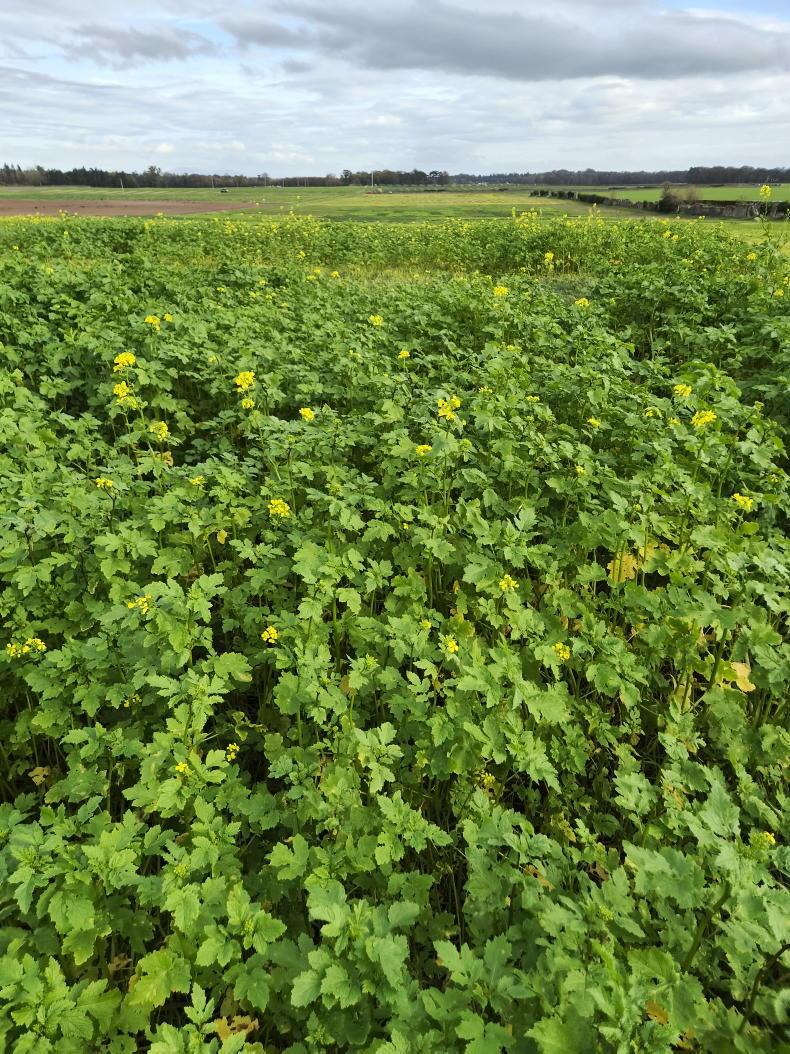
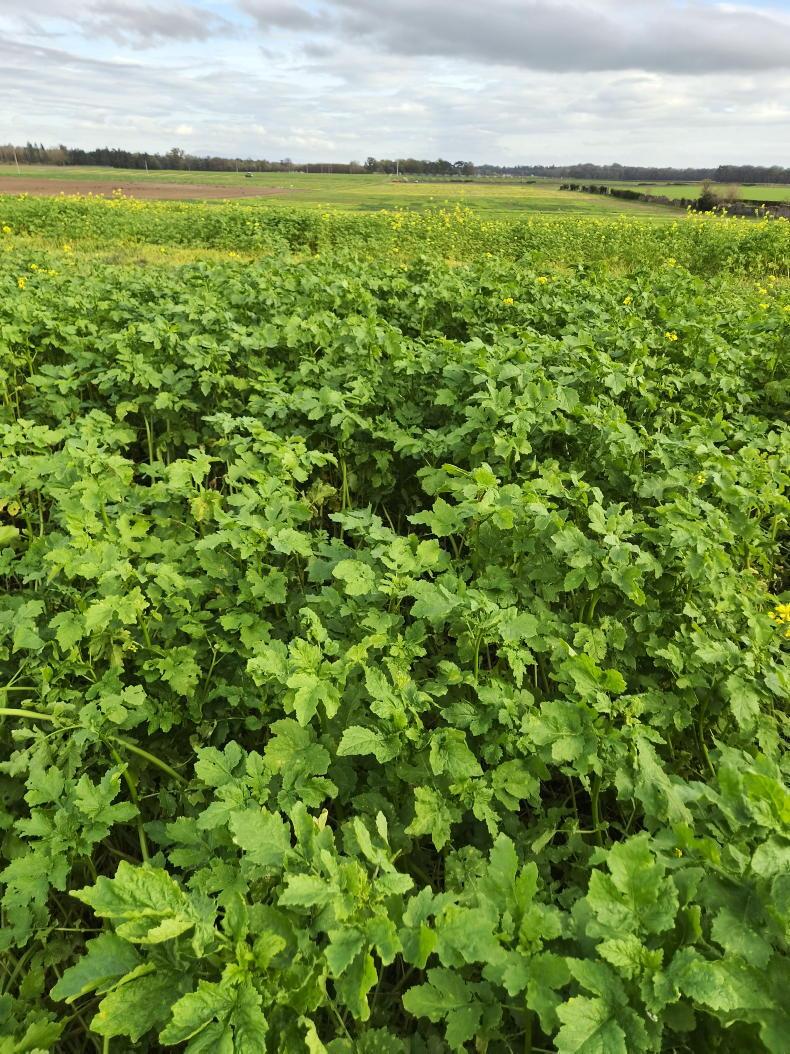
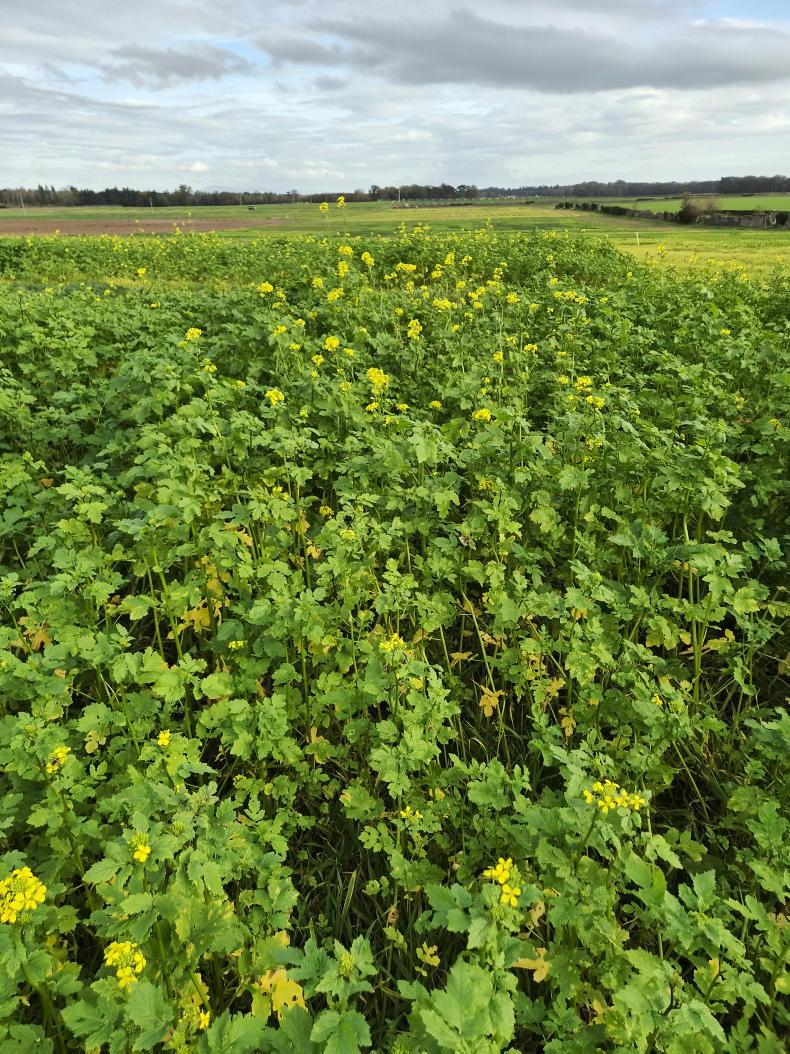
After harvest, the trial plots were planted with a cover crop of mustard to see what differences would emerge from the plots where different amounts of nitrogen fertiliser had been applied.
“The cover crop after the barley that got 320kg/ha of nitrogen is visibly greener, probably a little bit more bulk as well, which is telling me that there’s more nitrogen after getting into that crop which you would expect because the previous winter barley crop didn’t need all that nitrogen,” explained Richie.
However, when it came to the no nitrogen plot and the 190kg N/ha optimum rate, there was very little difference.
“The initial results would suggest that there wasn’t a huge difference in terms of the amount of nitrogen the cover crop was getting irrespective of whether you put the optimum nitrogen on or no nitrogen at all,” Richie highlighted.
This is likely because of the high nitrogen use efficiency of Irish cereal crops.
The winter barley used up a lot of the applied nitrogen, leaving only a small amount for the following cover crop to use.