



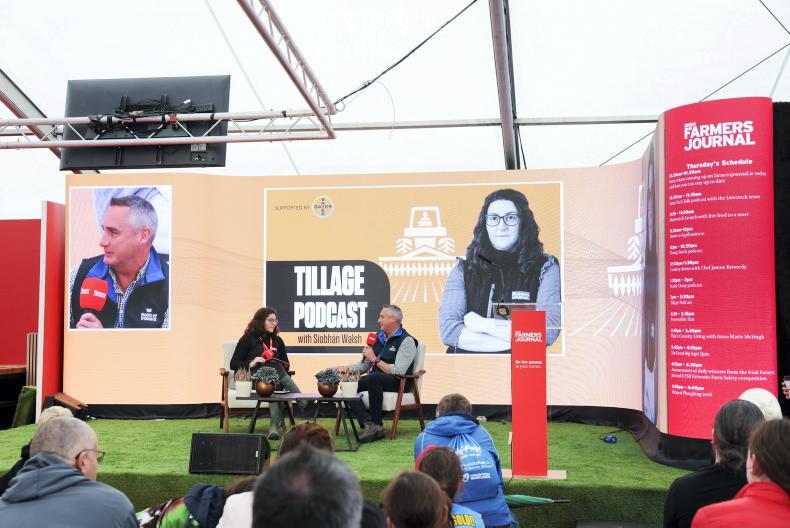
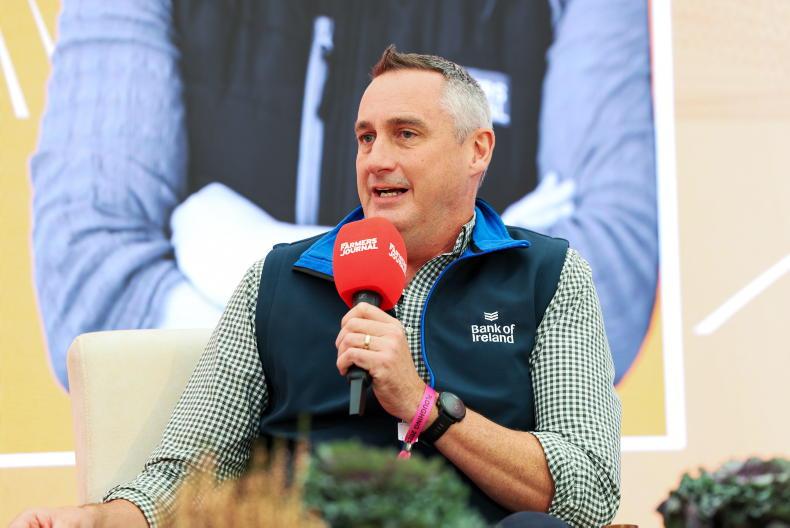
Merchant credit "can be more expensive” than stocking loans, according to head of agriculture at Bank of Ireland Eoin Lowry.
Speaking on a live recording of the Irish Farmers Journal’s Tillage Podcast at the National Ploughing Championships, he said that this year he is seeing tillage farmers with merchant bills that still have to be paid because the cost of fertiliser and fuel was much more expensive than usual.
Lowry explained that there is an increase in “people coming in looking for a little bit more cashflow support coming into the back end of the year as bills come to be paid that are sitting as merchant credit or co-op credit at the moment”.
Tillage farmers were urged by Lowry to have a discussion with their merchant as they prepare to buy inputs and plant crops for next year.
“Ask the question – what is it going to cost me to leave it on merchant credit?
Interest
“What is the cost of the merchant credit, what is the interest rate? You need to understand that rate per year,” Lowry added.
An annual stocking loan to put the crop in the ground and then paid back after harvest typically has an interest rate in and around 6% per year, according to Lowry.
If a loan is taken out in the spring and paid back after harvest, the rate is effectively halved, as the loan lasts six months. Farmers need to check for themselves to see which option will work better on their farm.
To hear more from Eoin Lowry, tune in to this week’s episode of the Tillage Podcast.


SHARING OPTIONS