



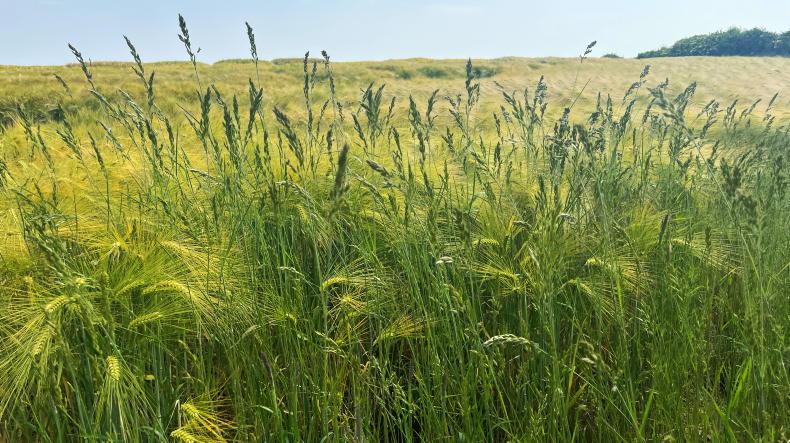
This season, many farms missed autumn pre-emergence herbicide applications, while post-emergence products such as Axial and Pacifica were often applied too late. As a result, reports of grass weed problems have increased. Some growers have already taken, or are considering drastic action, including crop destruction, whole-cropping and hand rogueing to prevent seed return.
Since 2019, 324 suspected grass weed populations have been tested, including Italian ryegrass, spring wild oats, blackgrass and meadow grasses. Of these, 206 (64%) were confirmed resistant (Table 1). Resistance has also been confirmed in a rye brome population. Since 2022, testing has expanded to suspected broadleaved weeds, with resistance confirmed in poppy, chickweed, corn marigold, common field-speedwell and pale persicaria.
Key concerns include the evolution of multiple resistance scenarios in Italian ryegrass to ACCase, ALS and glyphosate herbicides, with most cases occurring in non-inversion tillage systems; widespread resistance in wild oats to Axial, a key herbicide in barley crops; and reduced sensitivity to hormone-type herbicides (eg Pixxaro) in some ALS-resistant poppy populations.
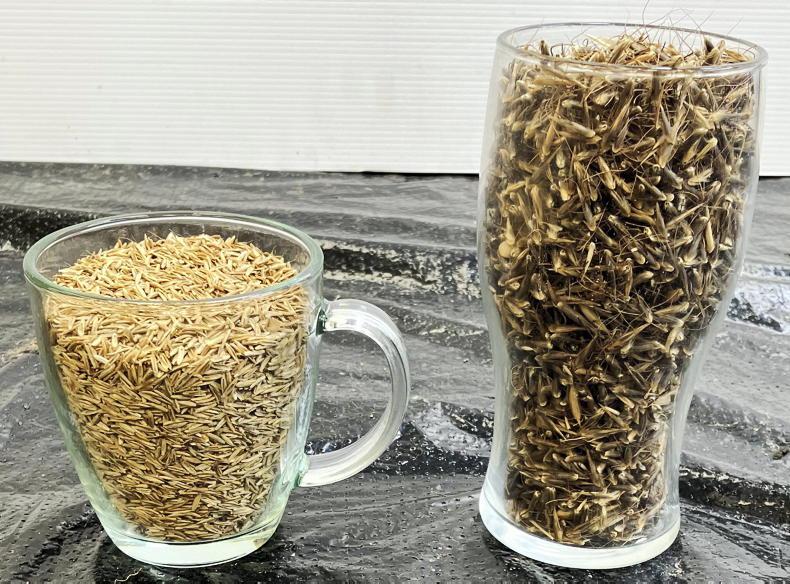
Due to increasing resistance, it is more important than ever to collect seed samples from suspect weeds before harvest to determine their sensitivity status. The results identify which herbicides remain effective and what other integrated approaches are needed, including zero-tolerance and other drastic measures where required.
Harvest 2026 will be the final year of widespread and free testing provided through the DAFM-funded EVOLVE grass weed research project at Oak Park. After this, testing will continue only on a targeted, case-by-case basis. Farmers, agronomists and advisers should make use of this free service by submitting samples from any suspect grass or broadleaved weed populations before Harvest 2026.
Taking samples
To obtain reliable and quick results, it is essential to submit good-quality seed samples:
Don’t ignore
Don’t ignore uncontrolled weeds at harvest. If resistance goes undetected, resistant populations can spread and more complex resistance patterns can develop, making weed control more difficult and costly. Resistance testing is the first step towards a zero-tolerance approach, helping to protect effective herbicides for next season and beyond.





SHARING OPTIONS