




A number of Mayo farmers have been left without answers as a “red dust” sprinkled their fields for the second year in a row.
Farmers near Shrule in the south of the county said the dust, which causes grass to brown off from the head as if sprayed with Roundup, is a “total mystery”.
Dairy farmer Michael McMahon said the dust has covered a 15- to 20-kilometre area and he has “no idea where it’s coming from”.
“It’s discolouring the grass, like it’s sprayed with Roundup, but it doesn’t kill the nettles,” he said.
McMahon described how about 10% of his farm has been affected and how cows simply won’t eat grass from the affected areas.
He is adamant that there has been no spray drift or run-off from neighbouring farmers and that the issue cannot be due to a nitrogen deficit, as fields with fertiliser spread have also been affected.
“If the ground was hungry for anything, being a dairy farmer, we’d be sorting it,” he said.
Similarly, he said the browning grass has nothing to do with dry weather over the summer, as the Shrule area had “plenty of rain”.
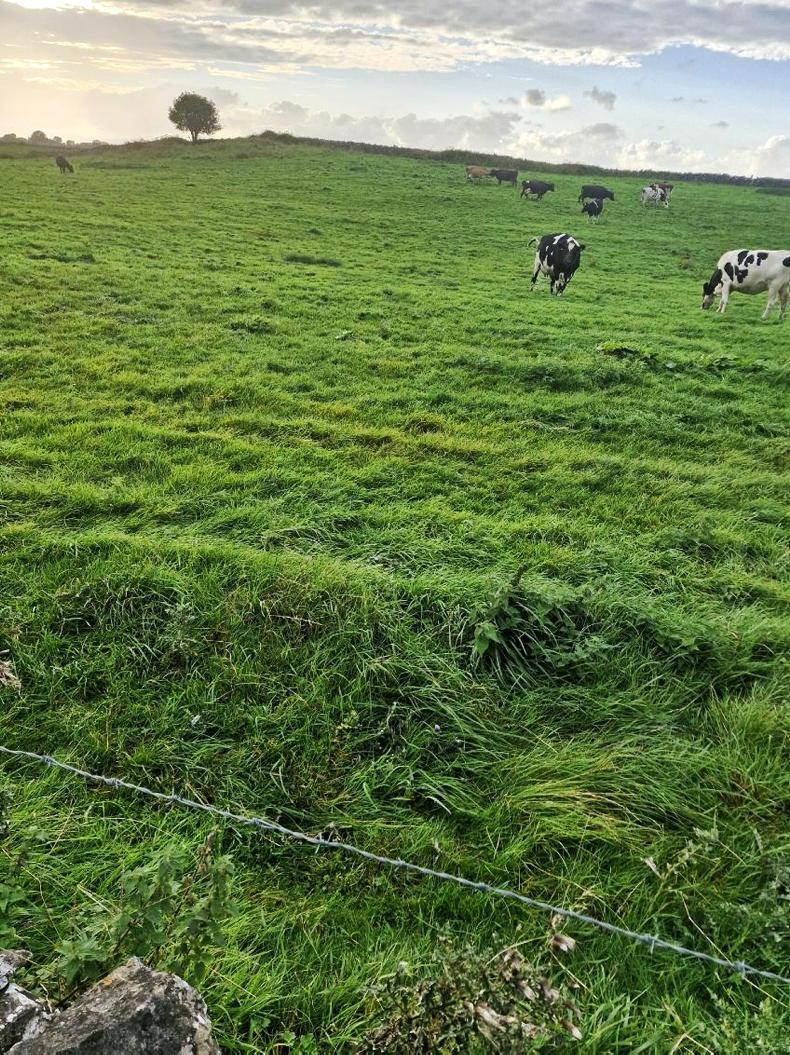
“We’d no serious dry weather,” he insisted. “Last year wasn’t a dry year and we had it as well.”
McMahon said on some days, the red dust is so bad that it is visible on his boots or the paws of his dog.
He first observed the strange material in September 2025.
“Last year, it left me short of grass, and I got more of a doing,” he explained.
“I want it identified to see what it is and what we could do about it.”
'No answer to it'
Neighbouring dairy farmers Francis and Ger Murphy were also affected in 2025 and again this year.
Francis said they spent €210 getting samples tested to try to get to the root cause of the issue, but to no avail.
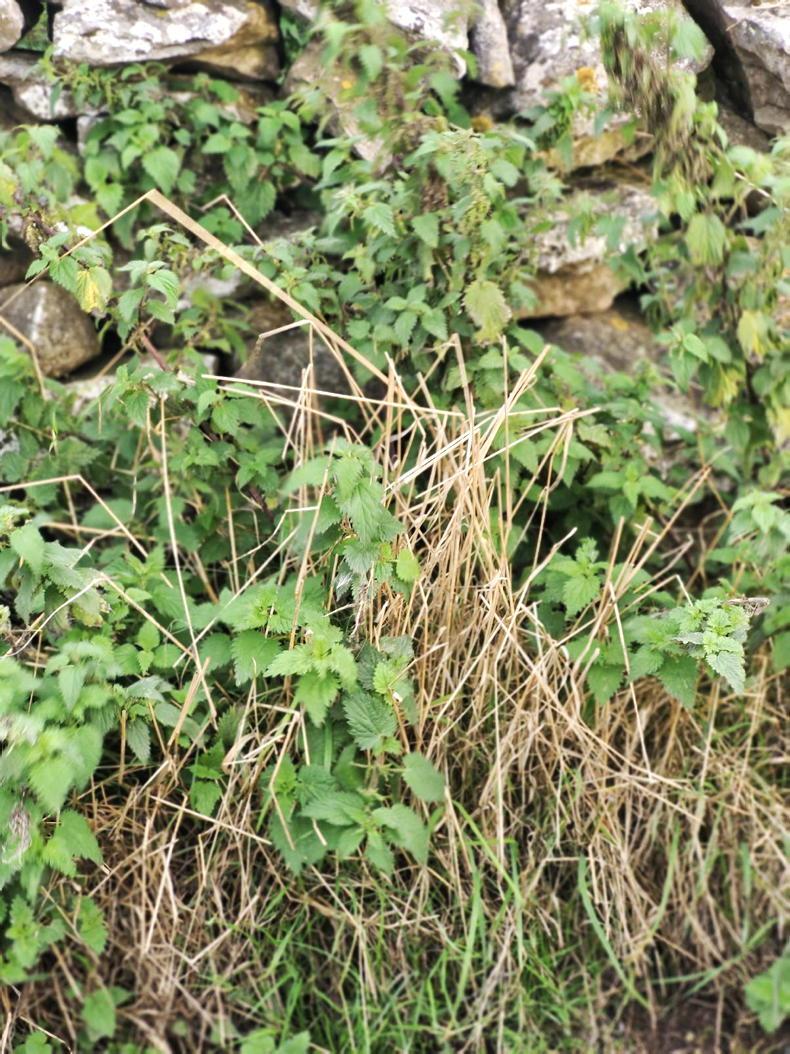
“There was no answer to it,” she said. “I don’t know what it is, but we’d love if someone could know.”
She said Teagasc suggested nitrogen deficits were causing the grass to brown off, but even with nitrogen spread, paddocks are still being affected.
Francis said while the dust doesn’t affect every paddock, once the grass starts to brown, the cows refuse to eat it.
She said as soon as they noticed a tinge of red in a field, they would move stock to get it grazed, because, if not, it would only get worse.
“Last year, it was so bad in one field that we just had to put dry stock on it,” she said.
The Mayo farmer said older swards are affected worse than fresher reseeds and not every paddock is affected.
She said she had been told it may be a bacteria causing the grass to brown off, but, as yet, she’s been given no clear answers.
McMahon said up to 10 of his neighbours had been affected and all were in the same boat.
“It’s a total mystery,” he said.
A representative from Teagasc suggested that any affected farmers should get in touch with their adviser.






SHARING OPTIONS