



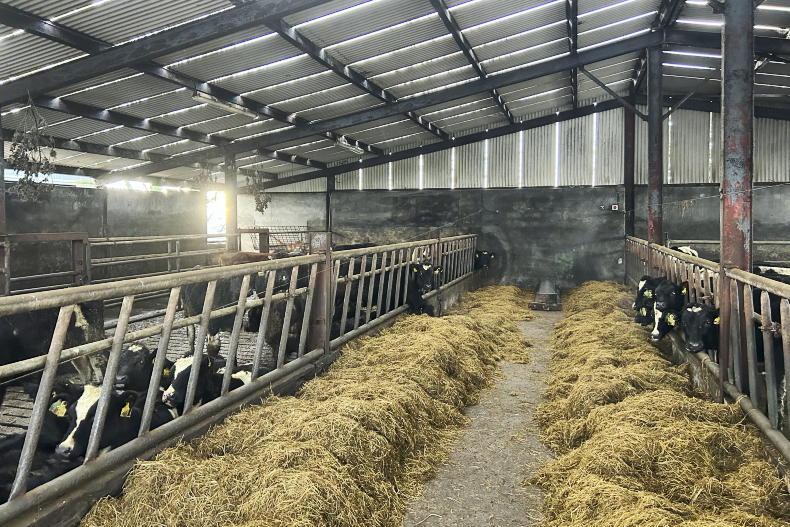
With tight winter feed supplies, some farmers are looking at contract wintering arrangements with dry stock farms to alleviate fodder shortages.
Every agreement will be different depending on the type of stock being considered, who is doing the feeding and animal care and the what type of winter accommodation is being provided.
The first thing to consider is the feed requirements. In general terms, a dry dairy cow will require 12kg to 14kg silage dry matter (DM) per day during winter, whereas an in-calf heifer needs about 10kg to 11kg.
At current silage costs, that equates to a daily feed cost of €3.30 to €3.85/cow or €2.75 to €3.00/in-calf heifer during the indoor feeding period.
If the dry stock farmer is also doing the feeding and animal care, €1/head/day extra is usually required to cover the use of facilities and provision of labour.
Share the load
This is a great opportunity for both parties to work together and share feed, workload and utilisation of facilities.
An excellent biosecurity plan is essential for both herds involved and pregnant animals should not be moved within two weeks of expected calving.
The arrangement is also dependent on stock movement requirements between farms.
In terms of movement rules, the Department of Agriculture treats B&B arrangements the same as any movement between holdings, so very specific TB movement rules apply. If either party has had a recent TB outbreak, this type of arrangement is not possible.
If the dry stock farm taking the animals has no other stock, the process is more straightforward as the facilities can be allocated under nitrates regulations exclusively to the dairy herd for the duration of the B&B arrangement.
Complicated
If, on the other hand, there are other animals in the dry stock herd, the process becomes more complicated. Both parties need to consider what happens if the B&B herd goes down with TB while someone else's cattle are on the farm.
Cattle movements into or out of a restricted holding are normally prohibited unless authorised by the RVO under the relevant procedures.
If there is a choice of what animals to take, the movement requirements for in-calf heifers are less onerous than mature cows.
Heifers going into a B&B herd must have had a TB test within 30 days before moving on to the B&B farm. Depending on the length of time on the farm, heifers returning to their herd of origin may also require an additional TB test before returning.
If you're considering setting up a winter B&B enterprise, I'd recommend getting the arrangement agreed with your district veterinary office well in advance before the cattle move so you know exactly what's required.


SHARING OPTIONS