


Ireland has the agricultural education and training pathways to introduce young people to farming but persuading them to make it a career can be a challenge. The future of the sector depends on whether farming can offer the next generation a sustainable livelihood.
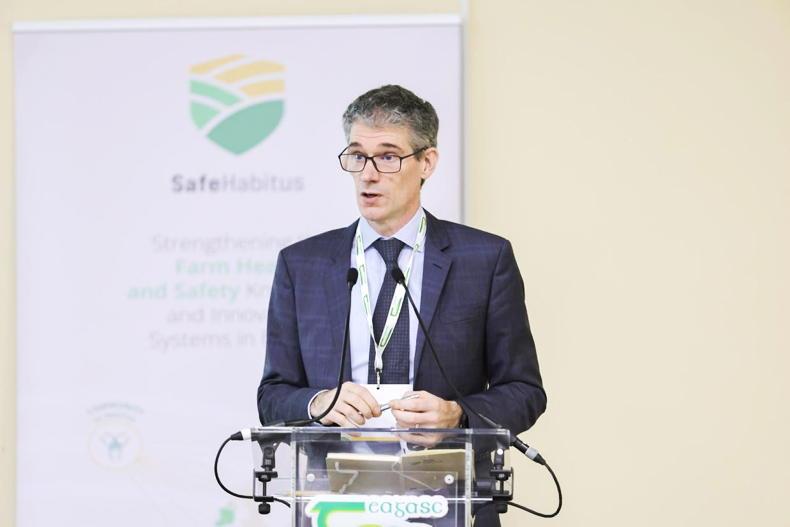
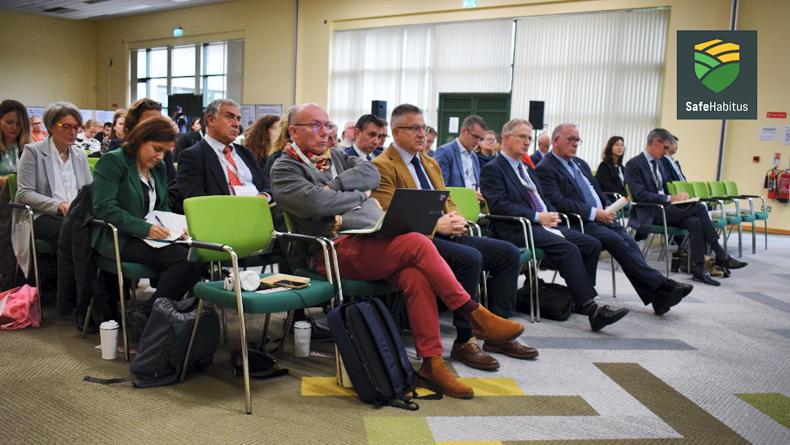
This was the consensus of Teagasc senior research officer and SafeHabitus project coordinator David Meredith. He was speaking at the SafeHabitus European Conference and Film Awards 2026, which was held at Teagasc Ashtown Food Research Centre in Dublin from November 3-5, coinciding with Ireland’s Presidency of the Council of the European Union.
“A sustainable livelihood is one in which people can see themselves having not just a job in farming, but a life,” he said.
While farming offers important connections to nature, family and community, David said these benefits cannot compensate for financial insecurity.
“You cannot eat pride. It’s not going to put bread on your own table,” he said. “You can have all the intrinsic benefits in the world, but they will not counterbalance the fact that you have insufficient income from your household.”
For younger people, the decision to enter farming is increasingly weighed against the opportunities available elsewhere in the economy.
“The younger people who are coming up now are very well educated. They can see the opportunities right across the economy, and they are weighing up the advantages of having a job that enables them to have a good life as much as a good job,” he said.
Income volatility makes that proposition more difficult. Strong beef prices can bring renewed confidence to the sector, but rising diesel and input costs can quickly erode the gains. Farm families may go without or cut back to keep the business going, and younger generations see the pressure this puts on their parents.
“They’re very aware of the potential consequences of that for their parents, but also for themselves into the future,” he said.
Strong foundation
Ireland does, however, have a strong foundation in agricultural education and training. David said that international visitors to the conference had highlighted the country’s agriculture knowledge and innovation system, which begins in schools.
“Ireland has a really strong agriculture knowledge and innovation system, and that starts with education,” he said.
Young people are introduced to agriculture in school and can study ag science before progressing to university or a Teagasc course. Training also continues throughout a farmer’s working life.
“It’s almost a unique feature to Ireland. And there aren’t many countries out there that have it,” he said, describing the country’s supports for agricultural education and training as “certainly the best in class”.
But education alone cannot overcome the barriers to entering the sector. Access to land and finance remain significant obstacles, particularly for those without a farming background. Even where a young person is interested in taking over an existing family farm, succession can be complicated by the circumstances of the older generation.
“We’ve got young people who are interested in taking on a farm, but we’ve got older farmers who will continue to farm, and sometimes they’re continuing to farm because, in effect, that is the pension. They can’t afford to retire; they have to keep working. So it’s not a pension at all. It’s a job that they do well into their 60s or 70s, and indeed older,” David said.
He argued that generational renewal must take account of farmers at every stage of their lives, rather than focusing exclusively on bringing younger people into agriculture.
Incentivise contributions
One possibility would be to incentivise pension contributions for younger farmers, helping to provide financial security in later life. This could give older farmers the opportunity to step back from the physical demands of the work while continuing to share the knowledge they have accumulated over decades.
Working conditions also have a direct bearing on whether farming is sustainable as a career, especially safety measures. “It’s very hard to be safe all the time because the pressure is on, and you need to get the job done,” he said.
He pointed to farm relief services as one practical way of easing that pressure, allowing farmers to call on a trusted, trained person to cover work on the farm and take an evening or weekend away. Investment in farm efficiency and safety facilities, including through TAMS funding, could also make daily work safer and less demanding.
The sector must also address the barriers facing women. David said farming remained male-dominated, with women sometimes experiencing isolation and difficulty being accepted.
“We’ve all heard about somebody turning up in the farmyard and saying, ‘Where’s the boss?’ And a woman saying, ‘Well, you’re talking to her,’” he said.
There are practical issues too, including machinery, equipment and protective clothing that may not be designed to accommodate women’s bodies.
Addressing these structural barriers is important if women are to enter and remain in the industry in a way that is healthy for them.
For David, the challenge is no longer simply identifying the problems. Research has already highlighted many of the changes needed; the priority now is ensuring that evidence translates into support on the ground.
“It’s not a case of we need to do more research. We’ve kind of done a lot of the research, but what we need to do is begin translating that into the practical solutions,” he said.

