
Last week, New Zealand’s Fonterra lifted its forecast milk price for the 2026/2027 season back to the original level published in May.
The processor had cut its estimate by 5% in July, saying that demand was softer then expected during a period of strong global supply.
In the announcement published on 30 October, which brought the forecast back the May level of NZ$9.75 (€4.90) per kilogram of milk solids (kgMS), the co-op said the upgrade was driven by improving demand for whole milk powder (WMP) and skimmed milk powder (SMP).
Fonterra said the updated forecast was due to increases in prices for the powders which was “driven by sustained demand from across Southeast Asia, Middle East, Africa and China”.
While demand is driving the rise in prices, there is also a significant supply issue. Iran, the country at the centre of the conflict in the Middle East, was the world’s fourth-largest exporter of SMP in 2025, behind the EU, New Zealand and the US.
There are some exports still coming from the country, but Iran’s market access has clearly been curtailed since March.
Much of the focus on disruptions to trade routes in the region have been on energy and fertiliser. However, there has also been an effect on all shipments of goods into and out of the Middle East.
This means that customers previously served by exports from there are currently seeking supplies from elsewhere.
Therefore demand for shipments from New Zealand and Europe has increased since the outbreak of hostilities.
Other drivers
Iran alone cannot explain the significant rise in SMP prices this year.
Movements in the price of other dairy products are having an effect on SMP production. While the price of SMP has performed very well, the price of butter has been poor this year (see Figure 1).
An illustration of how poor that performance has been can be seen in the fact the price difference between butter and SMP front-month futures on the Euronext exchange for November are within €100/t of each other.
If this trend were to continue, we could see the unprecedented position where SMP prices are higher than butter prices.
This matters because when processors are making decisions on how to valorise a litre of milk, they have to take into account the total value of products produced by that litre of milk.
Butter and SMP are both from the same litre of milk, which means that a rapid decline in butter production will, by extension, lead to a fall in SMP output.
One of the main alternative routes for that litre of milk is towards cheese and whey. Whey has had a very strong run over the last 18 months, while cheese prices have not seen the same drop as has occurred in butter.
When it comes to making decisions on what to do with a litre of milk, it more often than not, at current prices, makes sense to go down the cheese/whey route rather than the butter/SMP route.
Despite the overall increase in milk deliveries globally, the trend towards this valorisation route has meant lower SMP production.
If butter prices were to rise from there, there would be an accompanying increase in the supply of SMP which would, all other things being equal, put an end to the SMP rally.
Costs take their toll
While the rise in SMP prices has offered some support for milk prices, the increased costs for processors since the outbreak of the conflict in the Middle East have to be taken into account. The main increase has been seen in energy costs which affect every area of milk processing from putting diesel in the trucks used for collection through to hiring the container to move the finished product to market.
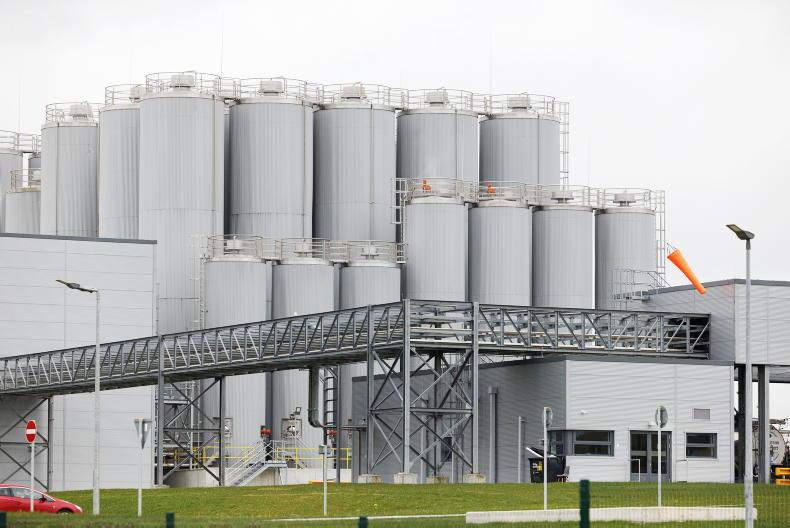
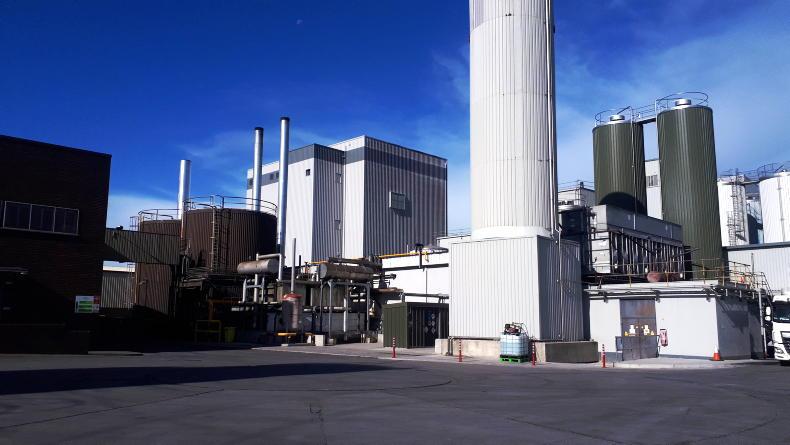
Perhaps the biggest increase for Irish processors has been the steep and sustained rise in gas prices. Spray dryers in Ireland, used to turn skimmed milk into shelf-stable SMP, almost always are gas-fired. While many co-ops have made large advances in energy efficiency over recent years, they still cannot avoid the increased prices in making the heat necessary for the process.
The processors are also hit by electricity costs. The wholesale price index published by the Central Statistics Office at the end of October showed that wholesale electricity prices have increased by 93% in the 12 months to the end of September.
Taken in isolation, the rally in SMP prices this year is good news for Irish co-ops, and by extension, Irish dairy farmers. Unfortunately, that price rise cannot be taken in isolation. The fall in global butter prices over the last 12 months means that one of the reasons for the rise in SMP prices has been the reduction is global supply of the product as processors chose other routes for milk valorisation.
A win on the price of SMP has to be weighed against the loss on the price of butter. The rise in the energy costs of processing milk also mean that any extra money earned from SMP sales will be eroded by the higher costs of production.
This is not to say that there is no good news in SMP prices. It certainly is better than the alternative where all dairy commodities are falling. But it has more of the characteristics of a “silver lining” rather than being outright good news for processors and farmers.