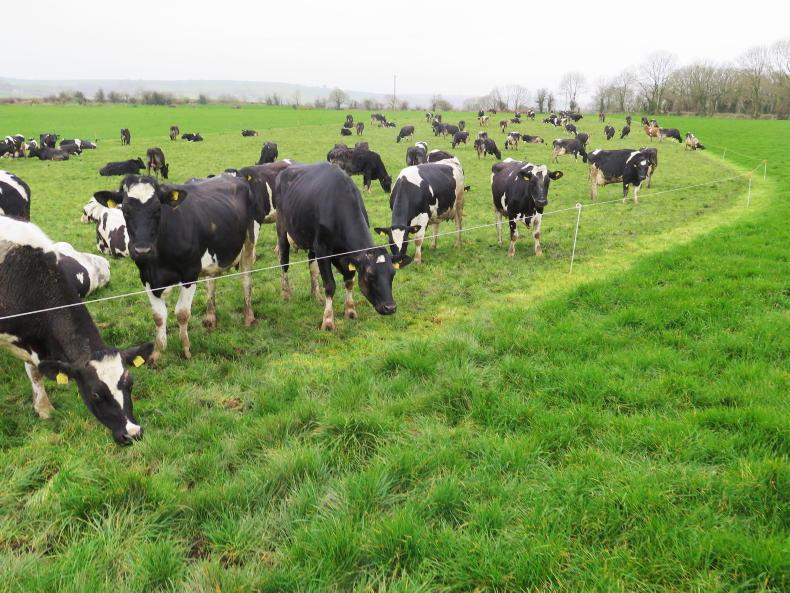

While declines in milk yield are a natural phenomenon for spring-calving cows in late lactation, rapid declines of greater than 3% to 4%/per week are usually indicative of lower dry matter (DM) and energy intake by the dairy herd.
Including 2kg to 3kg of silage in the diet is very effective to support DM intake and maintain milk production during very bad conditions.
If a lot of grass is still on the farm, this can be removed again after a few days.
Some dairy farmers are also receiving text alerts from co-ops in relation to declines in milk quality indicators with elevated somatic cell and bacterial counts and declining milk lactose usually the main issues.
Elevated somatic cell counts (SCC) occur in late lactation as herd average yields drop and subclinical mastitis infections concentrate in the bulk tank.
Similarly, total bacterial counts and thermoduric levels can increase due to wet weather and more challenging field conditions.
Low lactose content
Low lactose content is frequently used as a proxy for milk process-ability in late autumn and can be considered as a reflection of the energy intake by the herd.
When milk lactose levels drop below 4.2%, milk penalties are incurred.
The most recent research looking at actual milk quality in terms of cheese yield, stability, etc, actually show that autumn milk lactose content is a poor indicator of milk quality, so it is questionable whether it should be used in milk payment systems at all.
When milk yields decline in late lactation, milk lactose levels also decline. Some of the fall in lactose content is due to lactose leakage back into the bloodstream through the tight junctions in the udder.
Under normal conditions, milk lactose should remain above 4.3% on a predominantly grass diet during autumn.
When dairy cows reach 300 days in milk or if they have a high SCC, milk lactose declines will be greater than normal. In very wet conditions when dry matter intakes are reduced, milk lactose composition can fall below 4.2% resulting in supply penalties.
So what should dairy farmers do to maintain good milk quality in autumn?
Hygiene
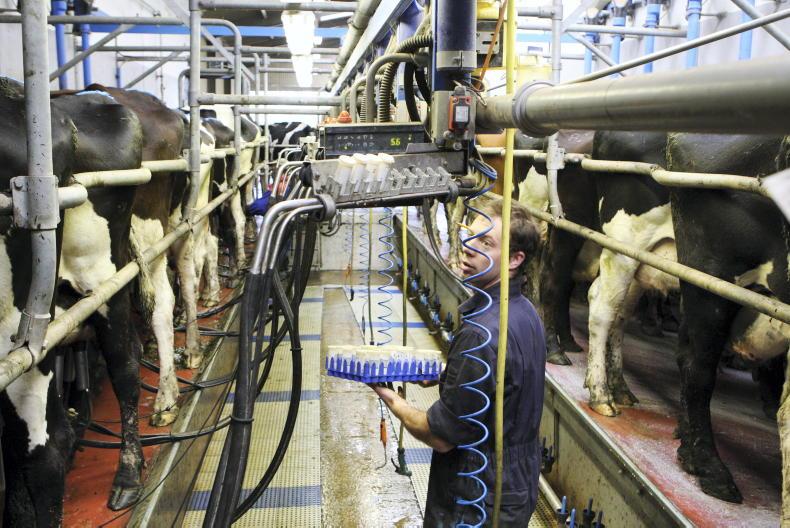
Rigorous parlour hygiene and good milking routines are essential to keep total bacterial counts (TBC), thermoduric counts and SCC low during autumn and prevent the spread of mastitis.
Keep roadways and collecting yards leading to the parlour clean to avoid dirt splashing up on to teats before milking and lime cubicles twice a day when milking cows are housed full-time to reduce infection risk.
Using disposable nitrile gloves while milking, clipping cow tails, pre-wiping of cows with dirty teats, teat spraying with the correct volume of spray (15ml per cow) post-milking and disinfecting clusters with peracetic acid solution (3ml per litre of water) after milking high-SCC cows will all help to reduce bacterial contamination during autumn while also helping to keep TBC under control.
Persistently infected high-SCC cows are a continuous source of infection and spread the infection through the herd during late lactation. These cows need to be culled to protect the long-term health of the herd.
Any other cows with high autumn SCC should be dried off early to provide the best possibility of recovery during an extended dry period.
In the specific case of low lactose levels, this is usually due to the presence of a few cows with very low milk yields in late lactation (less than 8 litres/cow/day) supplying milk to the bulk tank.
Rather than increasing concentrate feeding rates beyond 2kg to 3kg per head per day at this stage in the lactation, use milk recording to identify and dry off these low-yielding cows now.
The overall lactose content of the remaining herd during autumn can be retained above 4.3% without requiring increased concentrate feeding levels.
Follow the CellCheck dry-off countdown
To help farmers prepare for dry-off, Animal Health Ireland has developed a five-part CellCheck video series featuring veterinary, research and milk quality experts.
Each video highlights practical actions to take in the weeks leading up to drying off.
Watch the full series here.
Research trials
Teagasc is looking to recruit farmers for a study regarding heifer mastitis on dairy farms during autumn.
If any dairy farmers are experiencing high levels of mastitis in heifers and would be interested in being involved, please contact Pablo.SilvaBolona@teagasc.ie for further details.