
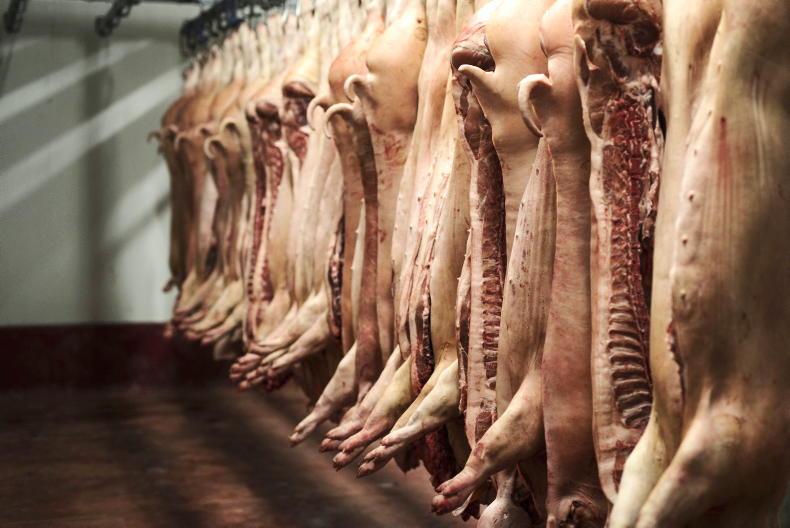

The Irish pig sector has delivered another year of strong production growth in 2026, but increased supplies across Europe and weaker international demand have put significant pressure on pig prices.
By the week ending 10 October, over 2.7 million pigs had been processed at Irish export-approved plants, more than 110,000 head ahead of the same period in 2025.
At current rates of production, total throughput is on course to comfortably exceed last year’s figure of 3.3 million pigs processed for the full year.
The increase reflects continued improvements in productivity across the industry, as well as the retention of more pigs for slaughter within the Republic of Ireland. Live exports to Northern Ireland were down 17% year-on-year, representing almost 60,000 fewer head up to the second week of October, helping to support higher throughput levels at Irish processing plants.
Prices fall as European supplies increase
While throughput has continued to rise, pig prices have come under increasing pressure. Irish pig prices have averaged €1.68/kg excluding VAT over the past five weeks, as reported by the Department of Agriculture, approximately 12% below the same period in 2025.
Earlier in the year, prices were averaging closer to €1.76/kg, highlighting the downward pressure that has developed as the year progressed.
Despite this challenging backdrop, Irish pig prices have continued to trade at a premium to the EU average. Over the latest five-week period, the EU average stood at €1.57/kg, leaving Irish prices approximately 11c/kg higher.
The weaker price conditions reflect the wider European market, where increased production, particularly among some of the major exporting countries, has resulted in greater availability of pigmeat. At the same time, weaker global demand and increased competition across key export markets have made it more difficult to place additional volumes, adding further pressure to prices.
China no longer driving global markets
One of the biggest structural shifts facing the European pig sector continues to be the decline in Chinese import demand.
Following the rebuilding of China’s domestic pig herd after African Swine Fever, its requirement for imported pork has reduced significantly from the exceptional levels seen in recent years. Irish pigmeat exports to mainland China were valued at €50 million this year up to August, down €14 million or 22% compared with the same period in 2025.
While China remains an important destination for Irish and European pigmeat, particularly for fifth-quarter products, it is no longer providing the level of support to global pork markets seen previously. This represents a significant change for the Irish and wider European sector, which had benefited considerably from strong Chinese buying during periods of reduced domestic production.
As Chinese demand has eased, exporters across Europe have been forced to compete more aggressively for business in alternative destinations. This has increased the importance of maintaining a diverse portfolio of export markets and developing opportunities across Asia and other regions, while also placing greater emphasis on maximising value across the entire pig carcase.
Mixed export performance
Export performance has varied considerably across markets during 2026, reflecting a more competitive and fragmented international trading environment.
Japan continued to offer opportunities for European suppliers earlier in the year following Spain’s ASF outbreak, while the Philippines remains an important destination for a broad range of pork cuts and edible offal products. South Korea also continues to present opportunities for export growth and remains an important market for Irish pigmeat.
Outside Asia, exports to Africa increased by 19%, while shipments to Canada rose sharply from a relatively low base. Although these markets do not fully compensate for the reduction in trade to some of the traditionally larger destinations, they demonstrate the importance of continuing to broaden the market base for Irish pigmeat.
However, exports to the EU, Great Britain and Oceania all recorded year-on-year declines. Taken together with weaker Chinese demand, this highlights the challenging trading environment facing exporters and the increased competition for available demand globally. Market diversification, maintaining access to high-value destinations and identifying the best outlet for different parts of the carcase will therefore remain increasingly important for the Irish sector.
Domestic market remains a key strength
The domestic market continues to provide strong support for the pigmeat sector, consuming 60% of total production with the remaining 40% exported.
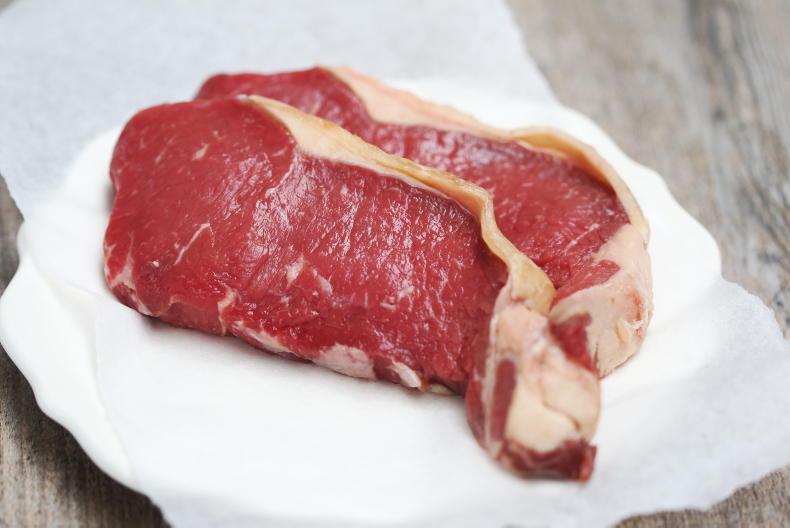
Kantar data indicates that consumer spending on pork has remained relatively resilient throughout 2026, declining by 3% year-on-year compared with a 5% decline for beef and a much steeper 30% decline for lamb. While chicken continues to outperform the wider meat category, pork has also benefited as higher beef prices encouraged consumers to seek more affordable protein options.
Pork sales have remained relatively stable, supported by strong consumer confidence in Irish pork and bacon. Importantly, recent retail data suggests that more households are buying into the category, with pork penetration increasing year-on-year.
This is a positive indication that pork continues to attract shoppers despite strong competition across the wider meat category.
Recent Bord Bia consumer research reinforces this positive picture. More than 90% of Irish consumers rate pork positively for taste, alongside strong trust in Irish provenance. The challenge is therefore less about consumer perception and more about everyday relevance. While consumers like and trust Irish pork, many still instinctively default to chicken or beef when planning weekday meals. This presents a clear opportunity for growth.
The focus now is on converting more occasional pork purchasers into frequent users, reinforcing pork’s versatility, convenience and relevance to modern meal occasions.
Bord Bia’s Quality Mark pork and bacon promotions will continue to build on these strengths, reinforcing trust in Irish provenance while highlighting pork’s versatility, convenience and relevance across everyday meal occasions.
The outlook for the remainder of 2026 remains challenging. European supplies are expected to remain ample, while global demand continues to lack the strength required to significantly improve market returns.
Nevertheless, Irish production continues to perform strongly, throughput remains on an upward trajectory and Irish pig prices continue to maintain a premium over many competing European producers. While margins are under pressure, the sector remains well positioned to compete both at home and in international markets.