



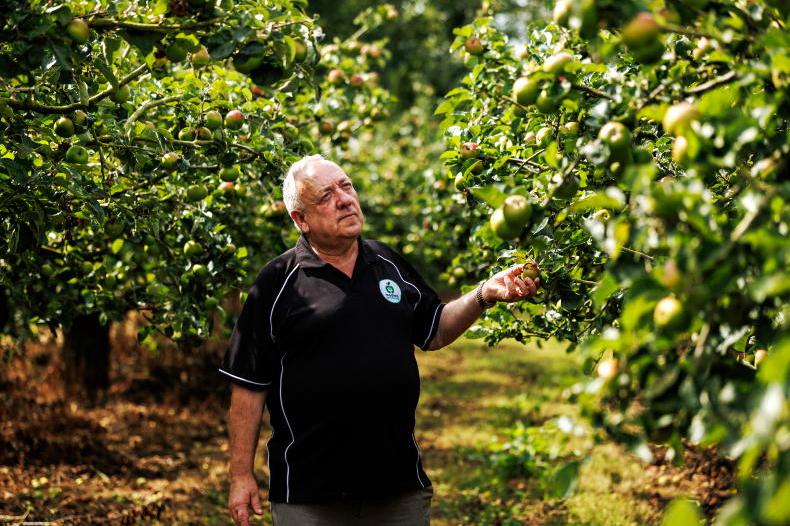
Joe Garvey grew up with Armagh Bramley apples, just like his father and his father before him. His first memories of apples are plucking them off the trees into buckets, rather than the modern-day picking bins, and his mother’s home baking.
“The smell of apples,” he recalls, smiling broadly at the thought that clearly takes him back to the kitchen of his childhood. “They weren’t just used for apple tarts; they were stewed, and you see that homemade soda bread there – it would be plastered in butter and the stewed apple put on top.
“It would have been hot,” he remembers.
“It was a small, mixed farm, as you would have found then, with plenty of animals and manure. There would have been a couple of acres of orchard which was common on many farms across the county,” he recalls.
While agriculture has changed and intensified and many smaller orchards have disappeared in the intervening years, Joe says his love for apples never left him, despite his working life taking him into the housing sector.
“The tradition is there. My grandfather, my father, me, and my children, when they did work at it. They said I didn’t pay them well,” he jokes. “And now my grandchildren, it is exactly five generations,” pointing up proudly to a photo with his granddaughter Chloe, picking apples at harvest time.
“When I was growing up, orchards were mowed with scythes; there were no big mowers because the orchards were smaller,” he says.
Rural hinterland
It’s no surprise then when Joe was searching for a way to raise some money to sustain and maintain the Richmount Community Centre; he turned to apples again for answers. Rather than take retirement easy, he has embedded himself in Richmount Rural Community Association, just outside Portadown, identifying the need for services for older people in the rural hinterland all around them.
Like many community organisations, funding is always an issue. Knowing all about the apple industry, he had his “eureka moment” driving one day, when he wondered if he could harness the power of what was seen as waste in orchards – the peel, cores and smaller apples, mostly left to rot or given as feed for cattle.
“I dried some. I thought this looked all right. People thought I was mad, but I went to Invest NI and Go Succeed and I said I have an idea here in a bid to try and develop it,” explains Joe of the roots of Macha’s Orchard, now an award-winning social enterprise focusing on the health benefits of apple-based products.
The star of the show is Armagh Bramley Apple Powder, which the group has dubbed their natural superfood, high in fibre, antioxidants and a prebiotic that promotes good gut and heart health, as well as overall wellbeing.
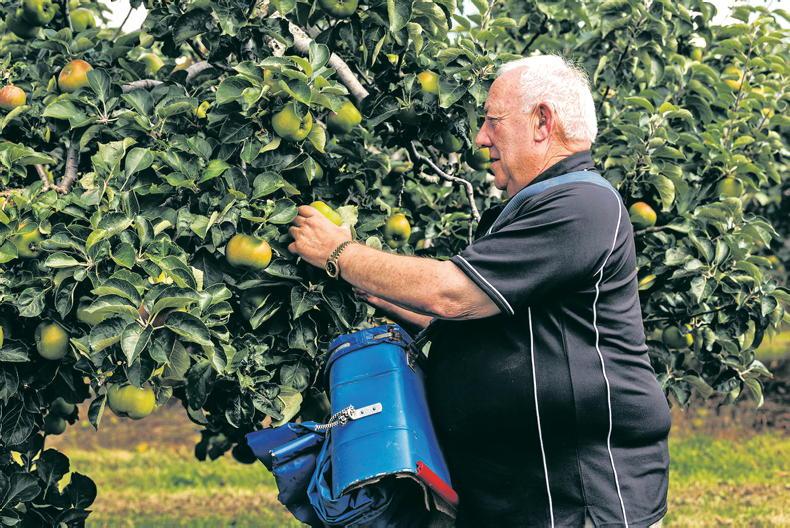
“The smaller apples have certain benefits,” explains Joe, passing an example for Irish Country Living to examine. “In fact, these are healthier because there is more skin on them and less juice, so there is more good stuff to go into the powder. Those apples were being left to rot,” he explains, because customers only wanted the bigger types. Many years ago, the smaller apples would have gone to Bulmers to make cider, but the demand for that market has fallen sharply.
“The peel is the most beneficial part, and largely it was being chucked away. There was enough flesh to give us the body for the powder.
“They are chopped up, and the juice is extracted, and what’s left is dried in dehydrators, which are basically like big oven trays, but the apples are never heated more than 56 degrees. At that heat you are retaining nearly all of your nutrients. The only additive is vitamin C to stop discolouration.”
When you’re coming in the road, you’ll see a big ball shaped like an apple. It’s a peace monument, and all the wee apples are on the tree, and there are small children and animals literally shaking the tree to get the apples down
It’s really taking the “best bits” out, according to Joe, and putting all the goodness in a concentrated form, which is very pleasant and sweet tasting.
Alongside the apple powder, which many people use in cereal, porridge or yoghurt every day, they also developed a powder called Race & Revive, after a local boxing club came to them looking for something to help them recover better.
Apple powder is combined with maca powder, associated with stamina, and the anti-inflammatory properties of turmeric, ginger and black pepper, which has proven a big hit with active consumers and those with conditions like arthritis and rheumatism.
Another local business produces two different types of apple juice for the group, which boasts nothing added but apples, and an apple cider vinegar with honey, all of which are sold at markets or shows like Virginia, Castlewellan and Castleblayney.
Unique and local
Walking through his orchard close to his home, Joe’s infectious enthusiasm for the uniqueness of Bramleys is contagious as he shows some trees, probably close to a century old, close to harvest despite the drought.
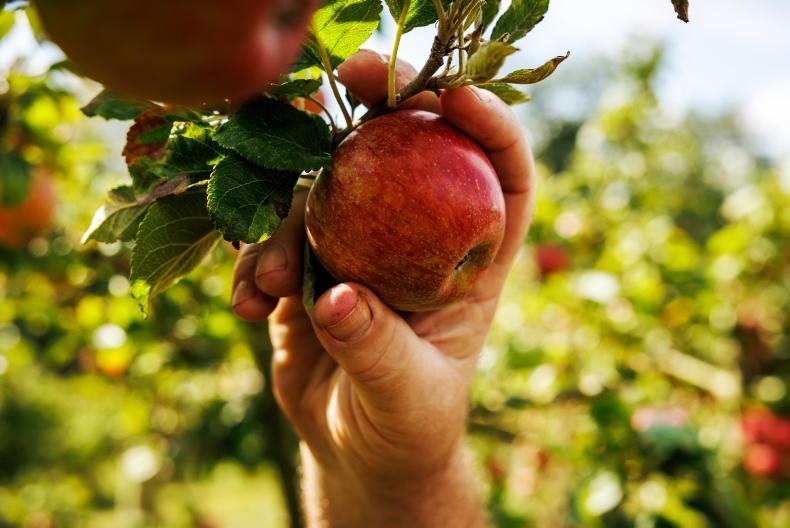
“You have to treat them like eggs,” as he demonstrates a delicate twist to take it off the tree.
But what marks the Armagh Bramley as so special that it has PGI status, one of only four products in Northern Ireland?
“The Armagh Bramley is different to those English things,” Joe replies, in jest. “It’s mainly because of the climate. Our apples are not round; they are bumpy [in shape]. They have a particular tartness, and they’re high in malic acid, and that gives the Armagh that extra bite.”
Its proximity close to Lough Neagh means there is a warming effect that apples thrive on, he says, with less chance of spring frosts, which kill them.
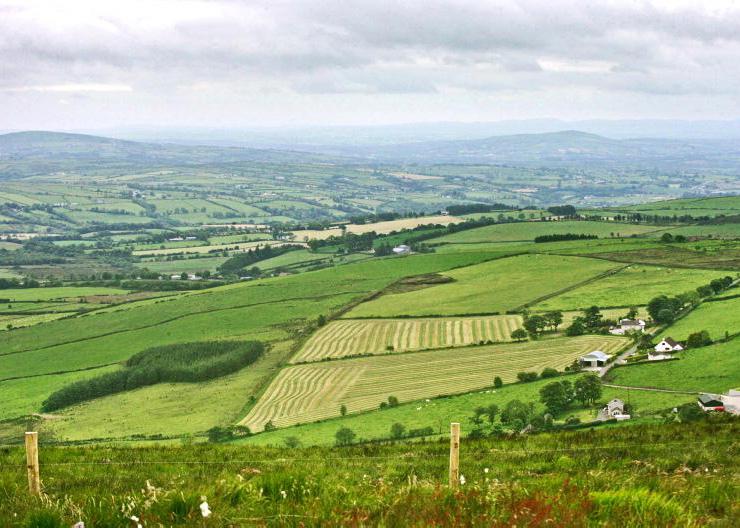
While climate change is affecting conditions, the location in Drumlin Country in between the mountains also gives sheltered sun.
“The English Bramley will have less flavour. The Armaghs also keep better, and they are a harder apple because they are grown in a more temperate climate. There is a different flavour.”
At a time when orchards are finding it difficult to survive economically, it pleases Joe hugely to showcase the Armagh Bramley in an innovative way, benefitting the community, with profits going back into their activities, and in time, hopefully creating new jobs.
“We are probably one of the bigger older persons’ groups [in the area]. We have around 40 who come in here every Thursday; they spend the whole day here,” he says, outling that they enjoy lunch and entertainment, which stems the isolation that many older people feel in rural areas.
“We’ve also done a lot of work on good relations,” adds Joe, who reckons that their membership is close to 50/50 Catholic Protestants.
“When you’re coming in the road, you’ll see a big ball shaped like an apple. It’s a peace monument, and all the wee apples are on the tree, and there are small children and animals literally shaking the tree to get the apples down. The slogan is all together now, meaning people can work together,” points out Joe, and that’s exactly what they are doing with the community groups and activities.
Showing off new machinery, Joe has big plans to “scale up” to convert an old hayshed in the future, and they hope that soon volunteers will be able to press their own juices, weigh out the powders and seal the pouches rather than hand filling at present.
“It’s part of our philosophy to save, not chuck. As someone said, there is no such thing as waste food. There simply hasn’t been a use found for it yet. Look at our small apples; there’s absolutely nothing wrong with them. They are just small.”
That’s sustainability to the core in the Orchard County.
See machasorchard.com



SHARING OPTIONS