



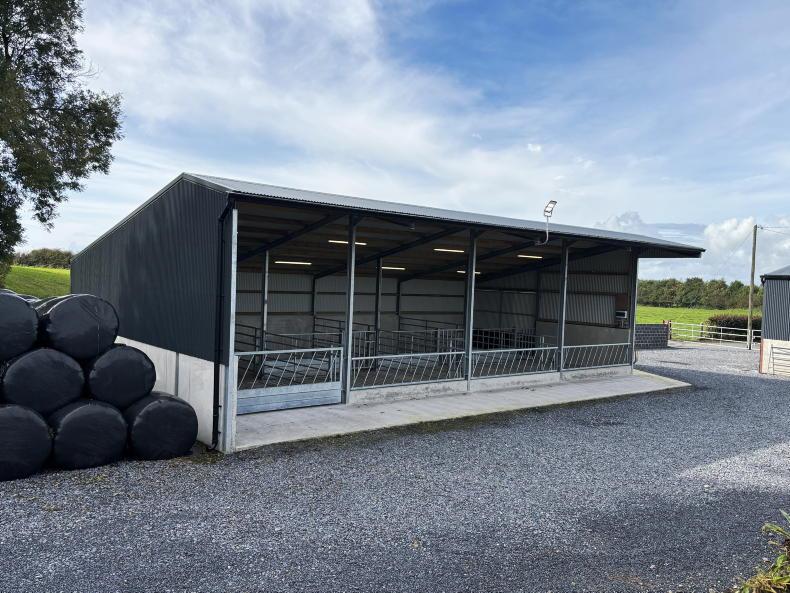
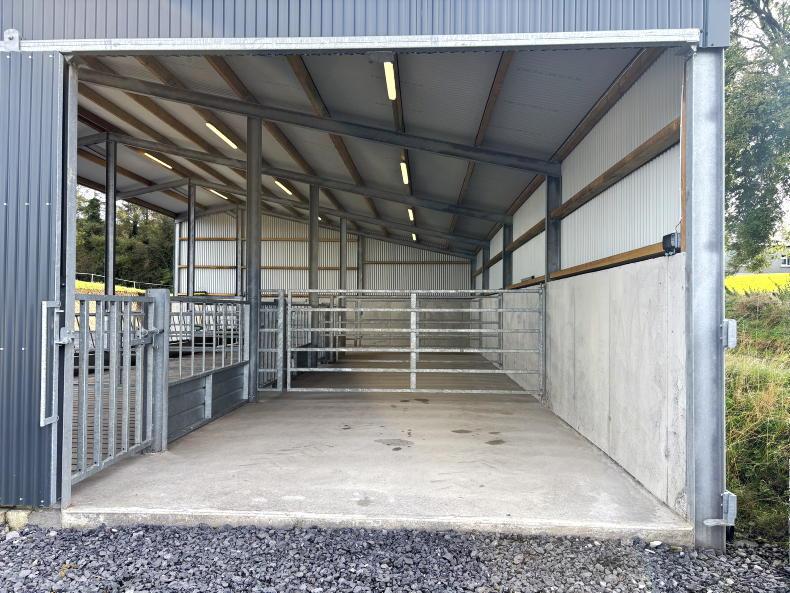
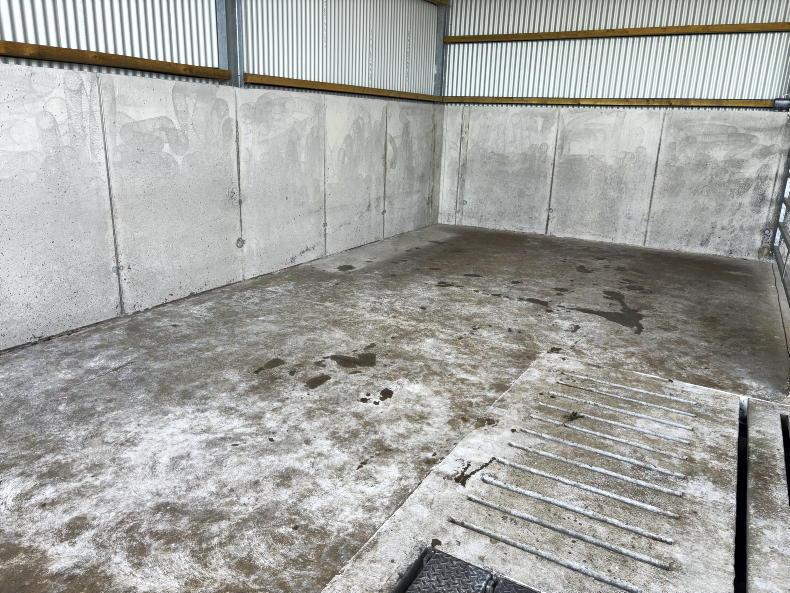
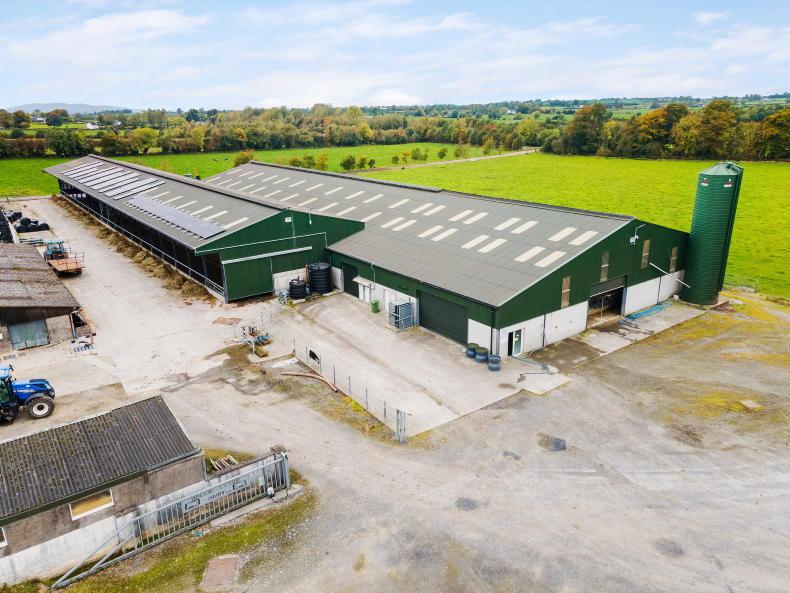
You would be forgiven for thinking that the new suckler shed in this week’s feature never had stock in it, but a thorough power washing has left it as good as new with one winter completed in the four-bay shed already. It’s the prerequisite of the standard of work carried out on the shed, much of which Michael Boyle completed himself.
Operating a 30-cow suckler to store beef enterprise, with a dairy calf to yearling enterprise tacked on in recent years, Michael works full time with McHale Engineering, servicing and setting up new Fusion balers and other machines that fall under the Mayo company’s net. A demand for more cattle accommodation prompted Michael to complete the new shed which was ready for winter 2025.
Planning out
Digging out for the tank was completed in summer 2024, while the shed itself wasn’t erected until summer 2025 – something Michael saw as a huge benefit to allow the ground to settle before standing stanchions and pouring floors.
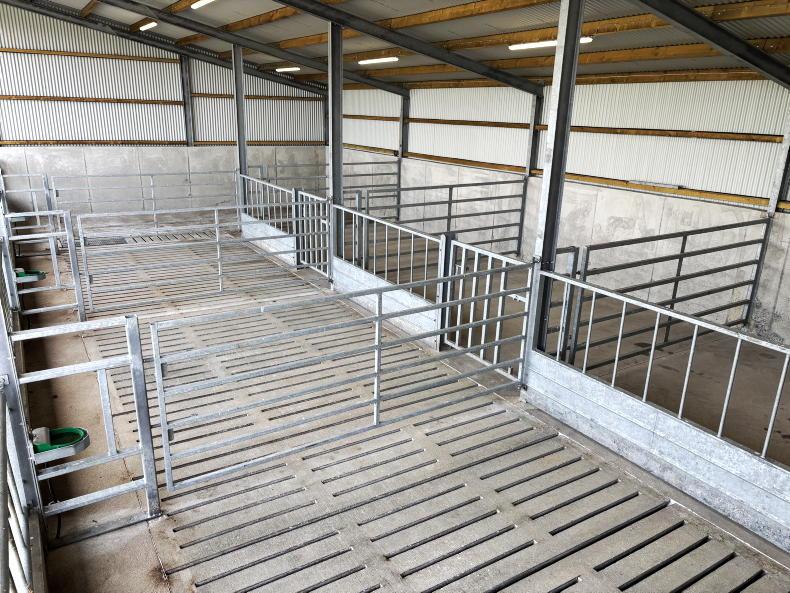
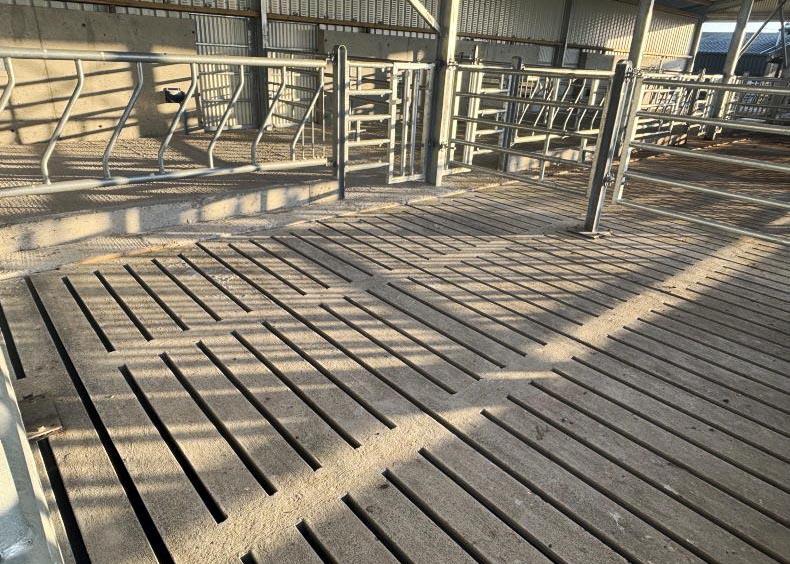
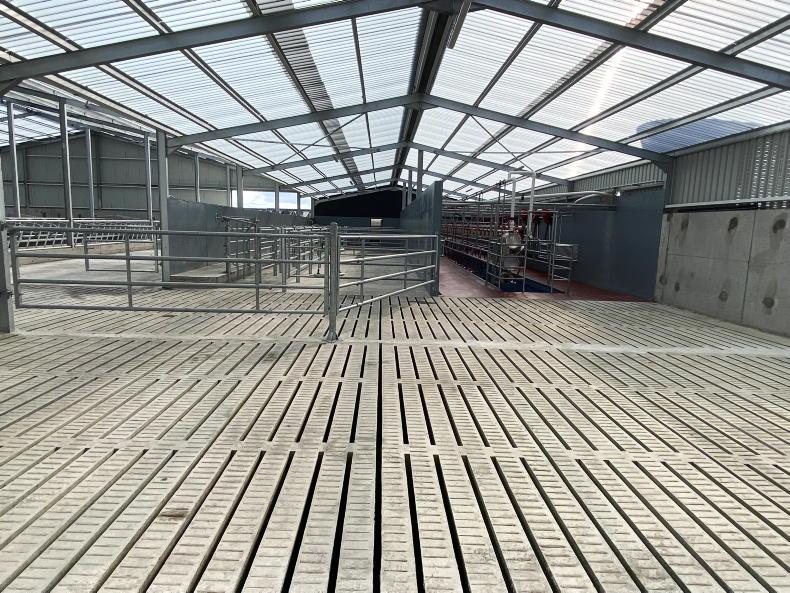
The tank is covered by a 12ft 6in slat sourced from Harrington Concrete, Kilkelly, Co Mayo with an agitation point at either end. When asked why he went with two agitation points, Michael stated that he believed all three bay tanks should have them for the additional capacity as well as the low horsepower requirement for a tractor agitating them.
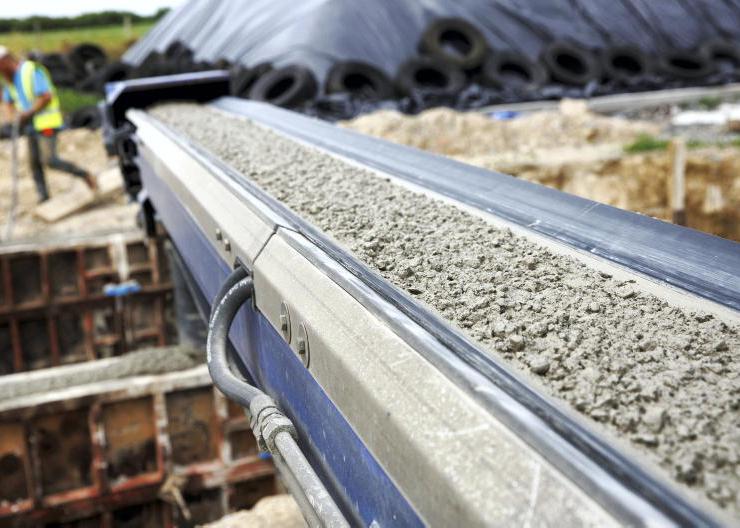
Ground was good, with no rock being hit, though Michael felt a standard 8ft (2.4m) tank depth was sufficient for his needs and did not dig further. The digging out of the tank and pouring of the walls and floor of it was completed by Damian Ryan, Cong.
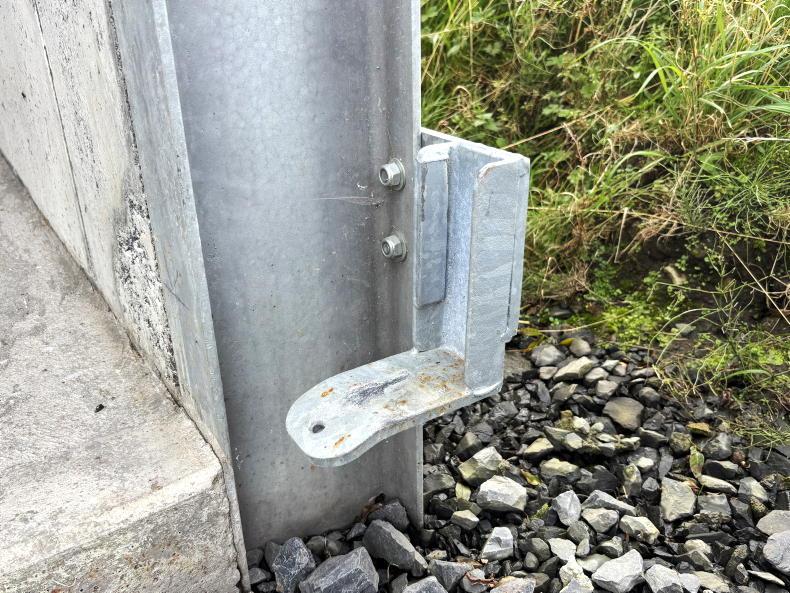
Sean Langan Engineering Ltd in Ballinrobe was then given the task of fabricating the shed, with this being the fifth shed that Michael has bought from him. All steel was hot-dip galvanised, with absolutely no welding completed on any elements of the shed after galvanising; everything is bolted to its respective bracket. “There’s little point in galvanising only to go breaking the welder out again,” Michael pointed out.
While the shed was being manufactured, Michael rang Sean to enquire to how much it would be to add a bay on, after feeling the pressure on housing that winter. Michael ended up opting for this bay, and given the choice again “I would have added a fifth bay on to it,” he said.
Home made
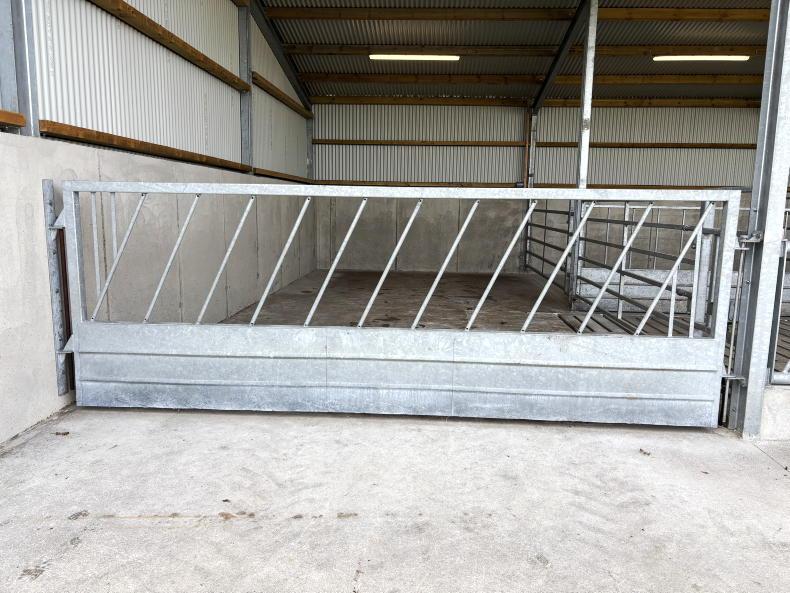
Every gate and barrier in the shed was manufactured over the winter of 2024 by Michael in his own workshop on the farm. Heavy wall box iron was used throughout with tubular used to manufacture the front feed barriers.
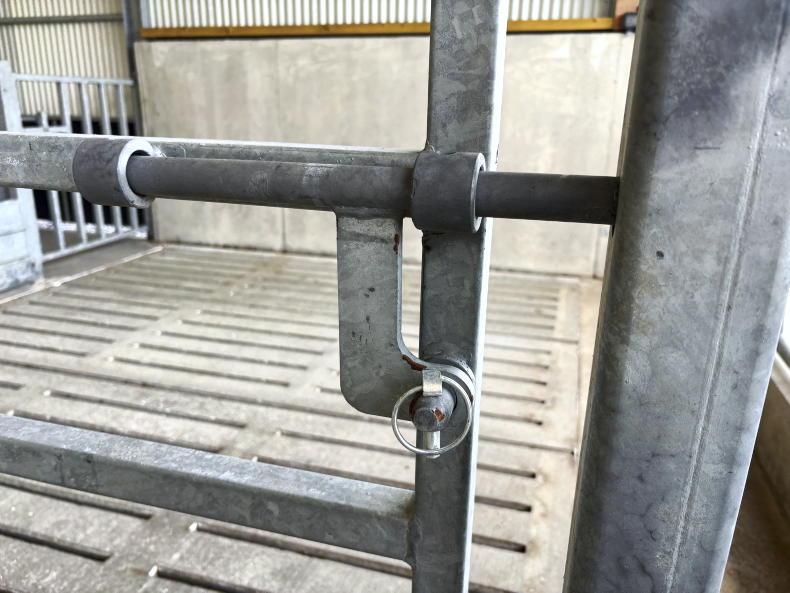
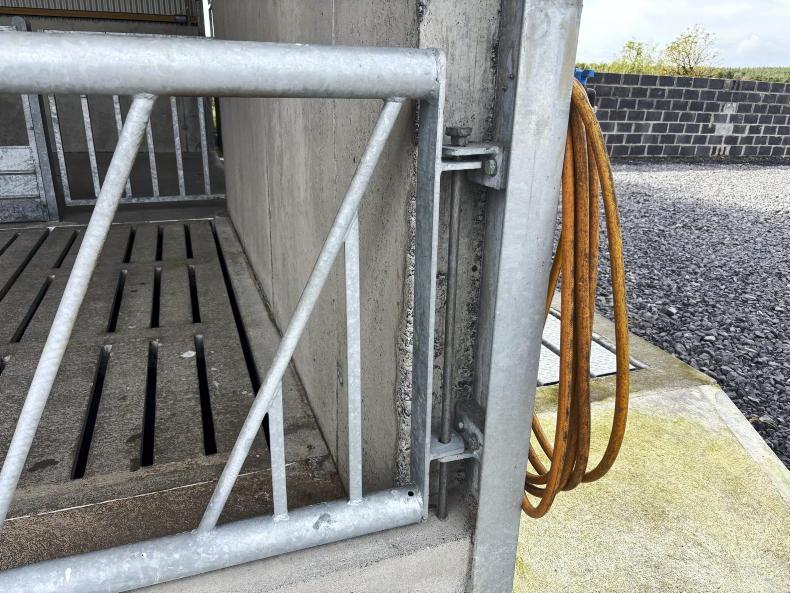
Michael hinged the barriers on one side with a drop pin bolt used on the other. With the barriers manufactured before the shed, any small discrepancies were built up using galvanised shims for the brackets, again meaning zero welding was done post-dipping.
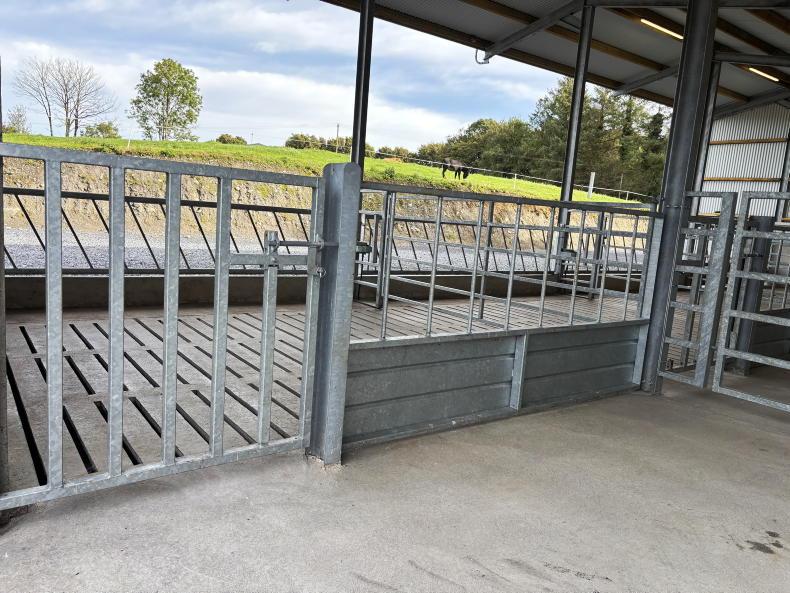
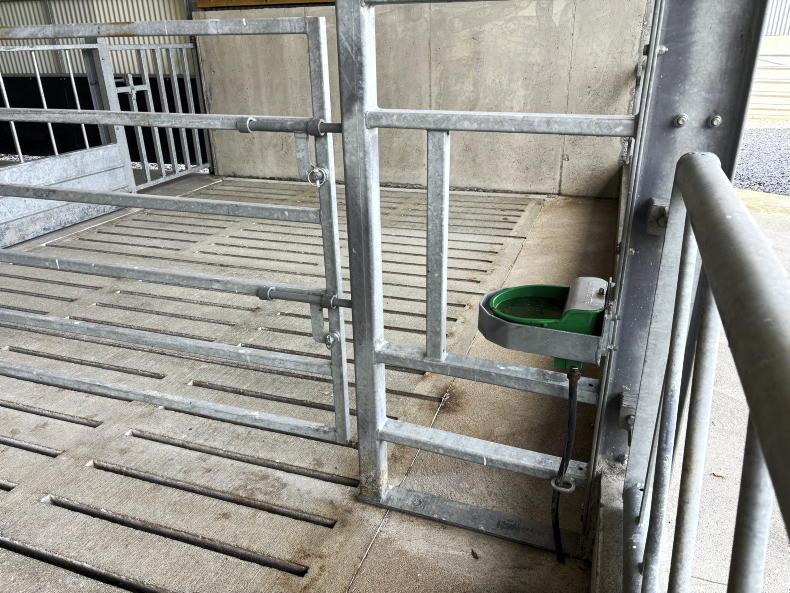
A solid panel sits off the front stanchions in the 600mm toe space for the diving gates to be latched in to, with this both bolted to the stanchion while a pin has been sunk in to the concrete at the base of the panel for additional strength. The drinking bowls are encased in this, protected by the manufacturer’s rump bar.
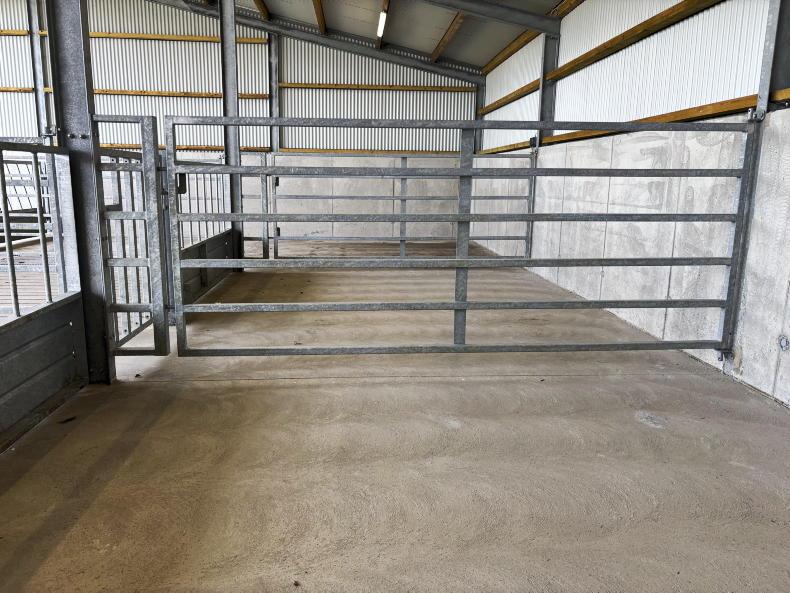
The dividing gates have been kept high with six rails of heavy-duty box iron used. A double latch has been fitted, cut out with a laser, with two simple spring clips used to secure it. To the rear of the pens is an additional feed barrier with a creep gate also servicing each pen.
Again, all was manufactured on the farm workshop before galvanising. With the herd operating a February/March mean calving date, only young calves are on farm, so a larger gap in a creep gate is not required. The steel feed barrier along the back of the pen has been kept up from the ground to allow effluent from the creep to drain on to the slats.
To the rear of the slatted area sits a 16ft (4.87m) creep, serviced by a sliding door at one end. The floor has been cambered towards the slats to keep bedding dry. Michael opted not to include a crush in the creep area as he feels it reduces access and makes cleaning out a greater challenge. A handling area is planned to the front of the shed which will become the main handling yard for the farm.
Dry bedded area
The additional bay at the end of the shed is dry bedded and can be used for a variety of uses. In its first year, Michael housed 12 weanling dairy-beef calves in it which worked very well, with the whole floor sloped down towards the agitation point. While it’s not the norm to have an internal agitation point anymore, the meticulous maintenance will see any cover replaced well before it’s needed by Michael. Steel mesh is used throughout in all the flooring; something Michael is a firm believer in. The floors and top walls were completed by contractor Colm Mullahy with Michael.
No vented sheeting was used in the shed as Michael has seen previous sheds gather cobwebs and mould from it. 0.55mm solid sheeting was used along the rear wall which faces the south west and with one winter already completed in it, Michael reported the shed to be adequately ventilated. A covered canopy extending to 8ft (2.4m) keeps feed along the front apron dry.
Attention to detail
The attention to detail by Michael is second to none. Everywhere you look, there are little features that make the entire build stronger, safer or more aesthetically pleasing. Upright girders for hanging dividing gates have been rounded at the top, dividing gates have been kept extra high and everything has been manufactured from heavy wall box for additional strength.
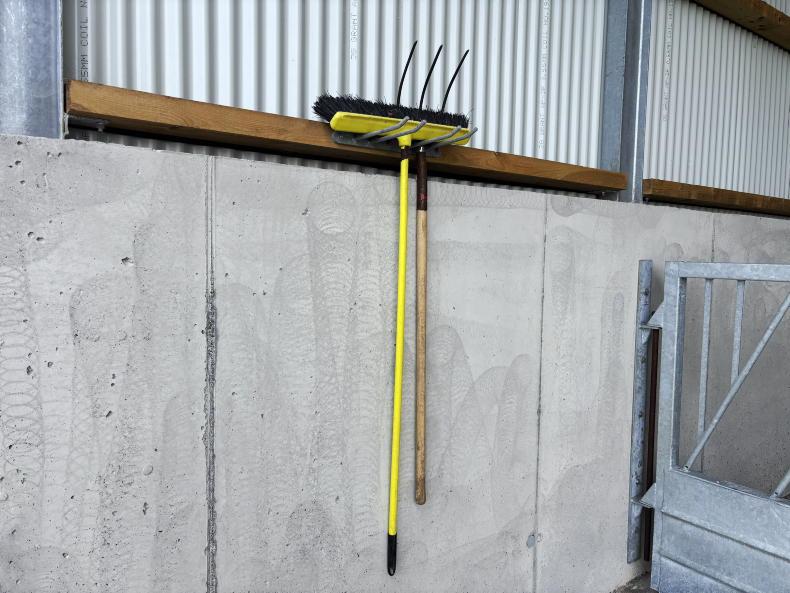
The sliding door is an example of such. Heavy wall box iron was used throughout with stock board along the base inside to protect the sheeting, and a heavy-duty rail used for the sliding mechanism. A small angled base at the end stanchion slides the door into place before it’s securely latched. A set of double gates leading in to the yard gives ample access, even to an artic truck, while even a brush and fork are stored neatly away on purpose-built hooks.
With so much of the work completed himself and with the heavy-duty and high-quality nature of the steel work he has done, it’s hard to put a price on such a shed, but Michael did highlight the cost savings from doing such a vast amount of the work himself. No TAMS aid was sought for the build, even though Michael highlighted that all the steel work, tank and concrete work was completed to TAMS specifications, bar the internal agitation point.



SHARING OPTIONS