
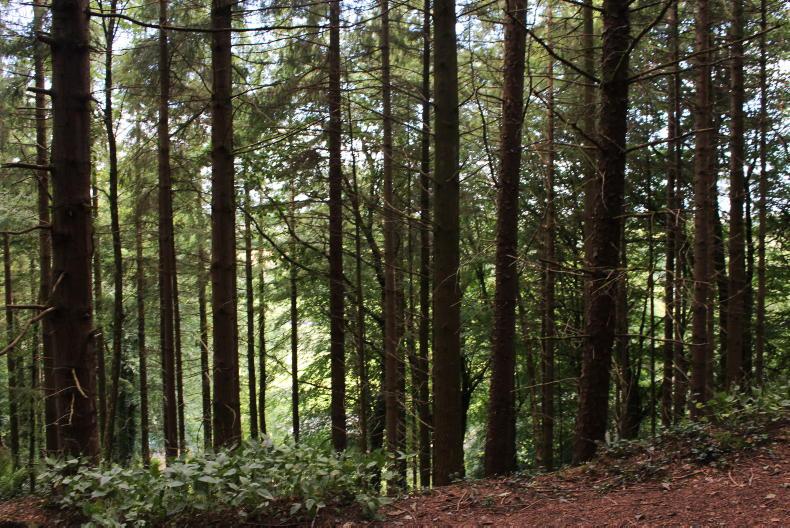
The role that forestry is expected to play in meeting the climate change challenge is now established in EU member states. The primary imperative in tackling climate change is by rapid and sustained reductions in the principal greenhouse gases.
Forests can play an important additional role in driving climate ambition and are part of the EU’s suite of measures to stabilise and ultimately reduce greenhouse gas concentrations in the atmosphere in line with the European Green Deal.
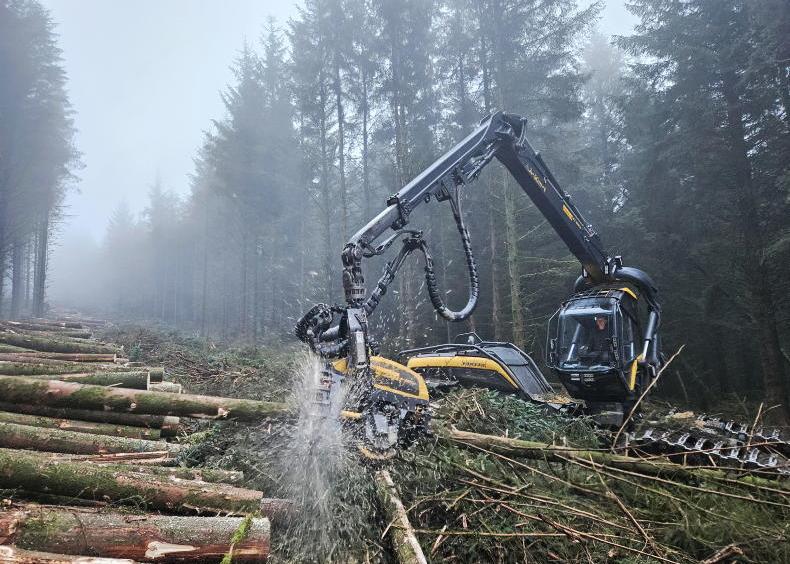
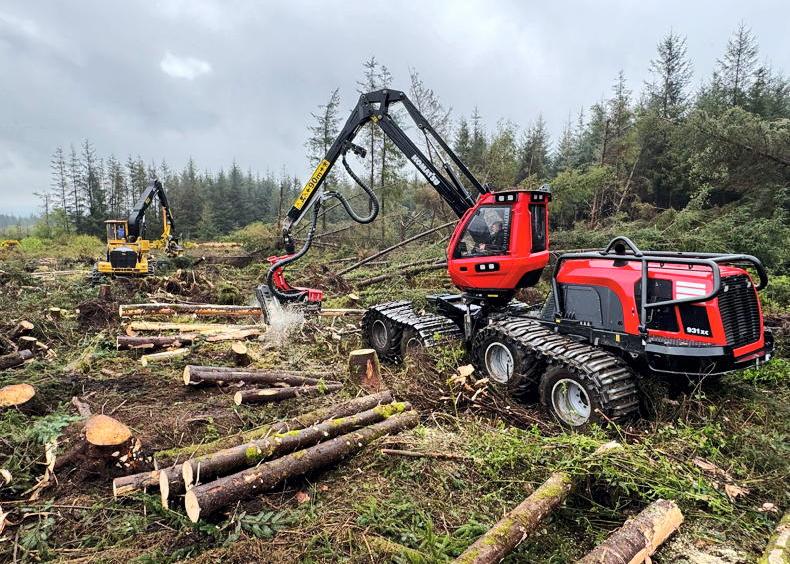
The role of forestry is twofold: sequestering carbon dioxide in the forest and storing carbon in wood while replacing high-emission fossil-based materials.
Ireland’s Climate Action Plan (ICAP) accepts this duality by outlining how afforestation is the most important land use to mitigate climate change, while timber from production forests can displace carbon intensive materials – especially steel, concrete and brick – in construction, the biggest global emitter of greenhouse gasses (GHG).
The major role forests can play in mitigating climate change is now acknowledged throughout Europe but is especially evident in countries such as Austria, Sweden and Finland, where forestry is accepted as a key element in meeting the decarbonisation challenge. But even Europe faces major challenges such as protecting its forests against natural disasters.
These are some of the issues to be discussed at next Friday’s conference ‘Meeting the climate change challenge – the role of forests and forest products’ in Avondale Forest Park, Rathdrum, Co Wicklow, home of Coillte’s Beyond the Trees.
The conference is the brainchild of Fergal Mulloy, chair of NEWLEAF (Nature’s environmental way through living, enduring and appropriate forests) an ad hoc group which includes stakeholders with expertise in forestry, economics, climate change and forest research.
The conference coincides with Ireland’s presidency of the EU. It provides an opportunity for the event’s cohosts – DAFM and the Society of Irish Foresters “to take a closer look at the link between Ireland’s EU Presidency and climate change impacts on Irish forests,” according to Mulloy.
Conference topics include:
Adapting our forests
Some member states are having to rethink their reliance on Norway spruce as bark beetle, drought, storms and fire are decimating large tracts of this predominant species. Apart from storm and more recently disease, Irish forests have largely avoided many of these threats, but for how long?
Dr Niall Farrelly, senior research officer with Teagasc will explore ways “to improve the adaptation, productivity and resilience of Irish forests through appropriate species and provenance selection and the use of mixed forests”.
“Ireland will need a more regional approach to species selection to adapt forests to climate change,” according to Farrelly.
“In eastern and southeastern Ireland, where drought may become more of a concern, species and provenances such as Douglas fir, sessile oak, Corsican pine, Monterey pine and Scots pine may be appropriate on suitable sites.
“In other regions, Norway spruce, Sitka spruce, western hemlock and pedunculate oak will continue to perform well,” Farrelly maintains, but he also calls for species mixtures “to maintain productivity while assisting diversification”.
Liam Malone director of forest planning and information technology with Coillte will continue this theme. Malone will explore the company’s climate strategy by examining its forests in “helping to mitigate the effects of climate change” as well as “building resilience to protect its estate” from climate change impacts.
Decarbonising with wood
“As Ireland faces the challenge of delivering housing and infrastructure while meeting ambitious climate targets, sustainably produced timber is emerging as a critical solution,” according to Des O’Toole, head of Timber Marketing and Promotion with Coillte Forest.
O’Toole’s presentation, titled “Unlocking the potential of Irish timber for a low-carbon future”, will examine how timber can contribute to the decarbonisation of the built environment by reducing embodied carbon, storing biogenic carbon and providing a renewable alternative to more carbon-intensive construction materials”.
European housing is now largely timber frame while apartments and office blocks – up to 80m high – are being built using mainly engineered timber.
O’Toole acknowledges that Ireland lags well behind Europe in this regard but stresses “the capabilities of the domestic forest products sector and the economic opportunities arising from greater use of homegrown timber”.
He says his presentation will demonstrate progress already made using homegrown timber, especially Sitka spruce.
“It will showcase key demonstrator projects, policy developments and education initiatives designed to build confidence in Irish timber and accelerate market adoption,” he maintains.
Learning from Europe
Dr Cormac O’Carroll, co-founder and chair of Forest Sector Advisors, an international forestry consulting firm, looks to Europe – Finland, in particular – when addressing Ireland’s forests in meeting climate change challenges. Ireland’s low afforestation rates risk “compromising ICAP as well as our rural economy and forest-based industries,” he says.
“Some forestry stakeholders consider elements of EU legislation as a barrier to achieving our national forestry targets.”
Using Finland as a case study for best practice forest sector advocacy, O’Carroll looks “at how the forest sector in Ireland can engage more effectively with the EU”.
The different EU bodies which formulate and enact legislation impacting Irish forestry are identified by O’Carroll. Analysis of these include “an overview of the relevant laws, decision making processes and committees which determine how EU forest policy and legislation is developed and implemented”.
He outlines the challenges facing a fragmented Irish forestry sector.
“Finland talks to the EU about forestry with one voice, while Ireland engages with conflicting voices,” he says. “Irish forestry stakeholders need to go to Europe with a coordinated message so we need a strong EU engagement working group, with main focus on the economic sustainability of Irish forestry.”
Additional speakers
The conference will be opened by Niall Collins, Minister of State with responsibility for forestry. In addition to the above speakers, there will be presentations by:
Conference details
Friday’s (November 6) conference fee is €80. Chaired by Prof Áine Ní Dhubháin, UCD, and Duncan Stewart, environmental architect, it includes lunch, souvenir booklet and access to third level exhibitions. Bookings through Eventbrite link (on societyofirishforesters.ie).
If you’re having difficulties registering, please contact Kevin Collins (086 8118009 / email info@soif.ie) or PRO Joe Codd (pro@soif.ie). They can arrange electronic or other payment. Advance notice to attend is required.