



So far this year, two Government reports have been issued, which will, if implemented, have implications for the future of forestry in Ireland, especially productive forestry.
In addition, the recent Public Attitudes Survey on Forestry provides a range of views on people’s perception of forests.
The reports and survey are linked because they indirectly address the issue of what kind of forests Ireland needs. The first report this year issued by the Timber in Construction Steering Group (TCSG) could be summed up as creating the climate for greater use of timber in construction. The more recent review of land use in Ireland – A Living Land – is more difficult to summarise but broadly looks at how best to use our land bank to achieve carbon neutrality by 2050.
Productive forests
Reading the review, it is difficult to pinpoint the kind of forests we need to achieve climate goals but a picture emerges.
“Productive conifer forests could deliver stronger climate mitigation out to 2050 in the land sector, compared with broadleaf forests, and longer-term climate benefits in the construction and energy sectors, but would deliver lower biodiversity benefits,” it states.
On the other hand, the TCSG report implicitly includes the need for productive forests. It highlights the importance of timber-frame construction in meeting Ireland’s housing needs, estimated at “over 50,000 homes per year, with a pathway to achieve 60,000 homes annually in 2030 and thereafter”.
We have two choices in meeting this demand: process home-grown productive conifers to scale or rely mainly on imports.
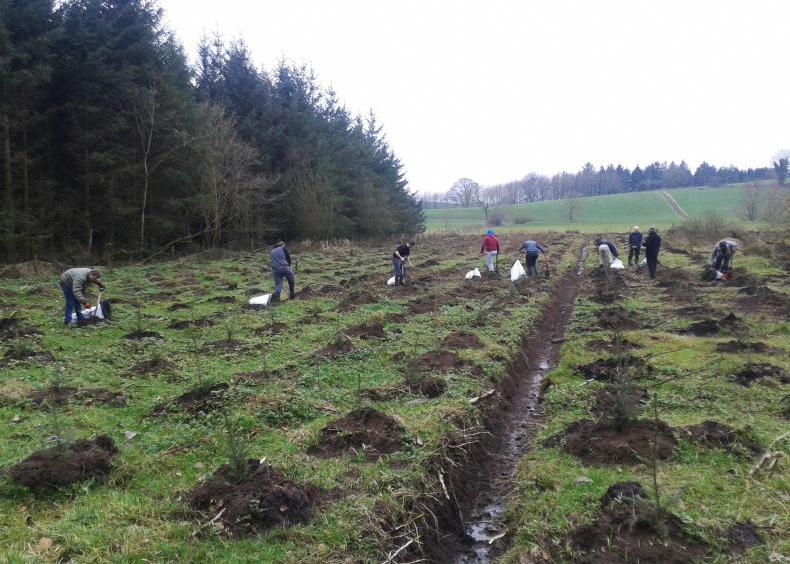
If we opt to grow our own, not just to provide construction timber and energy, but to achieve climate targets, the planting challenge is enormous as the afforestation programme has collapsed in recent years.
Afforestation
“Within the climate-neutral indicative pathways, climate targets would be achieved through accelerated afforestation rates,” A Living Land states.
“In this analysis, based on the split gas definition [distinct targets for different GHG], the minimum rate to achieve climate neutrality would be 16,000ha per annum from 2030 onwards,” it adds.
“This would be a significant challenge, given that Ireland currently achieves afforestation levels of circa 1,700 ha per annum,” it concedes without acknowledging that this figure includes little more than 800ha of productive conifers.
Based on a continuation of this performance, Ireland will require imported timber in the long-term to satisfy domestic construction needs.
In addition, the imbalance of harvesting without a viable planting programme will result in forestry becoming a carbon emitter.
“This transition is associated with a reduction in the level of afforestation over a long period of time (since the 1990s) an increase in the level of harvest from the private sector, a decline in growth rates associated with age class legacy shifts, and continued emissions from forests on organic soils,” the land review claims.
Attitude survey
Minister of State Michael Collins said he plans to use the findings of the attitudes survey “to inform future forestry policy and programme development, ensuring that public views help shape how forestry is planned and delivered in Ireland”.
The survey results are not new. Successive surveys since 2021 demonstrate there is strong support for forestry.
Between 82% and 93% believe planting more forests will help Ireland meet climate targets, support habitat biodiversity and help rural employment.
While the preference is for native species, 73% of those interviewed said they preferred a mix between conifer and broadleaf species.
Public attitude surveys are relevant as knowledge of the forest increases, which is now the case as 78% of those interviewed “visited a forest in the last year, up substantially from 51% in 2021”.
With this support and goodwill, there is no excuse not to develop a more proactive afforestation programme that includes a viable productive conifer programme, especially as 64% of those interviewed “support the Government’s goal to increase the use of home-grown timber in construction”.
Public support needs to be matched by Government support and in this regard the Government statement on the review is not encouraging.
“It is not an articulation of government policy or a new strategy in relation to land use, nor has it been adopted by government,” it states.
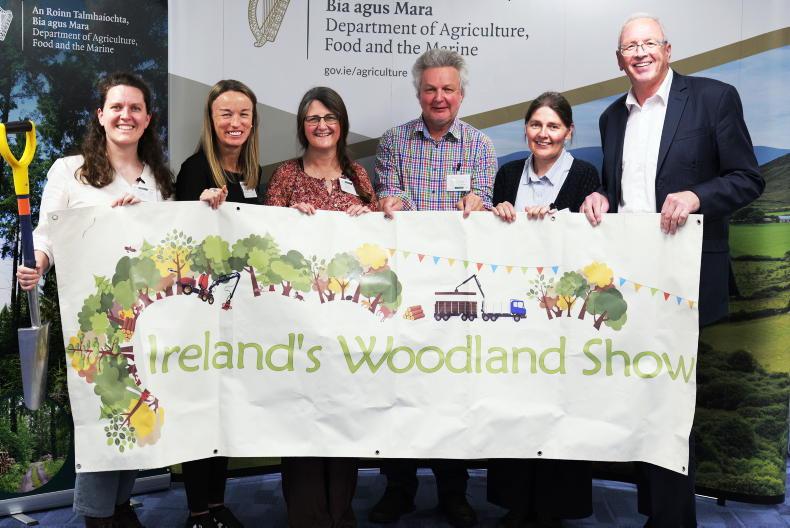
Woodstock Gardens & Arboretum, Inistioge is the location for this year’s Ireland’s Woodland Show. The Kilkenny venue will host the third annual show on the weekend of 29-30 August (10am-5pm each day).
“The format will follow previous shows, bringing opportunities to celebrate Irish trees, sustainable woodland management and forest biodiversity, while the action will be supplied during Celtic Chainsaw Carvers Competition,” says Alex Kelly, show co-ordinator and MD Irish Wood Producers.
The business side of the show will focus on providing technical forestry information, while “the car park area and woodland will include demonstrations of mobile sawmills, harvesters and forwarders, processors, smaller machinery, a range of timber products, inventory equipment, pruning tools and specialist plant nursery equipment,” maintains Kelly.
But Kelly says the show is a family event with the chainsaw carvers providing the excitement as “they raise the noise and let the wood fly to create sculptures live again this year while the carnival area in front of the terrace garden will feature a craft fair, archery, obstacle courses, games, art and craft workshops, biodiversity information and live music.
Woodstock is worth a visit in its own right, especially for tree enthusiasts. “The site includes the restored Victorian gardens, rose garden, yew walk, monkey puzzle and noble fir avenues,” says Kelly.
The show is supported by the Department of Agriculture, Food and the Marine, Kilkenny Leader Partnership and Kilkenny County Council. Further information is available on the show website (irelandswoodlandshow.com), email (admin@irelandswoodlandshow.com) or phone (085-1474000).
Teagasc’s Talking Timber event is heading for Charleville, Co Cork this year. Scheduled for Tuesday, 1 September (registration 9.30am) in the Charleville Park Hotel, the theme is ‘Sustainably Increasing the Value of Your Forest’.
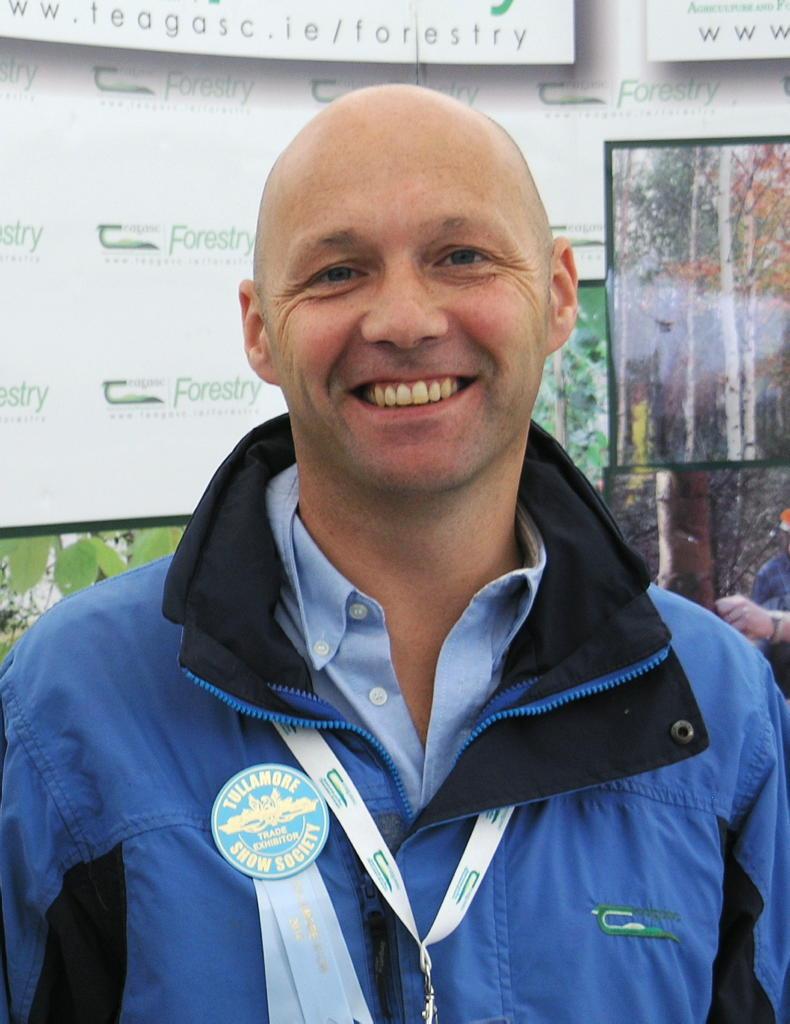
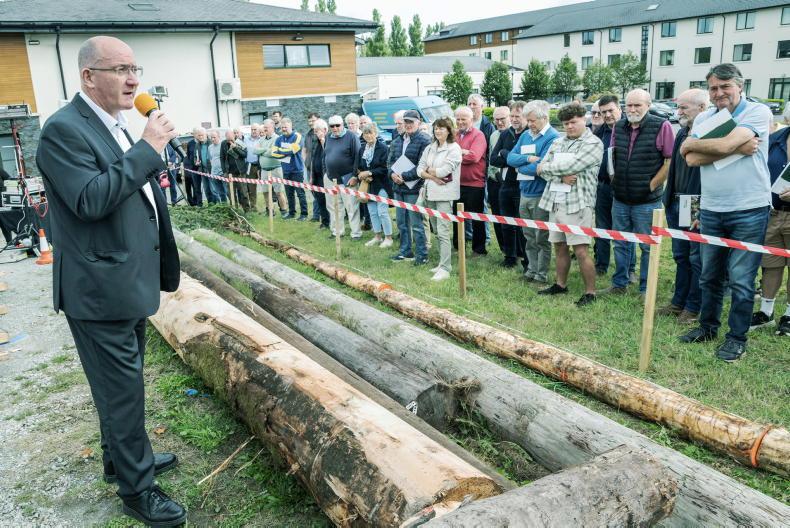
The focus is on timber marketing to include “an outdoor log and timber products display, presented by Forest Industries Ireland, says John Casey (below), forestry development officer, Teagasc and event co-ordinator.
“Talking Timber will provide excellent opportunities to promote your forestry business to forest owners who may be planning to harvest and sell timber,” he says.
There will also be a mini conference session on adding value to your forest, which will include a panel of experts and a Q&A session.
As in previous years, there will be a display of forest industry stands representing businesses and State organisations offering networking, information exchange and business opportunities with forest owners.
Companies wishing to book stand space should complete booking form and evidence of current public cover to john.casey@teagasc.ie by this Monday.
“This is a free event but registration is required and will be on on a first-come basis,” says Casey.
“Space is limited and we reserve the right to try to ensure that all elements of the timber supply chain sector are represented.”



SHARING OPTIONS