



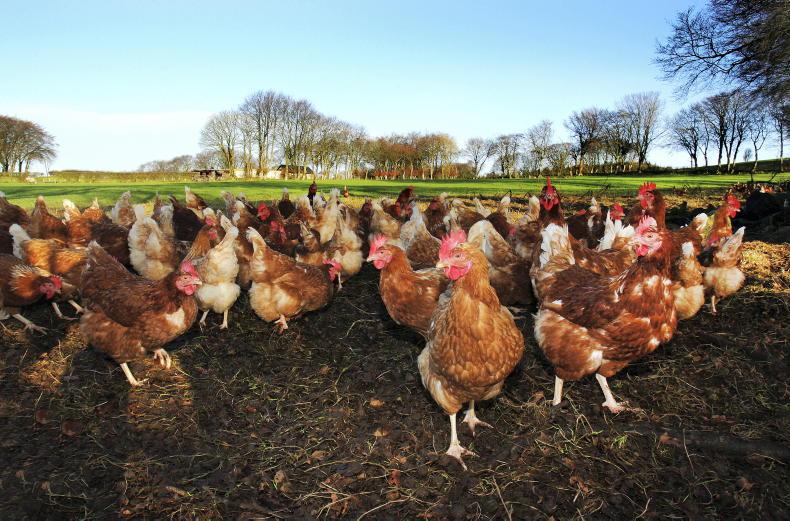
The chair of the British Free Range Egg Producers Association (BFREPA), James Baxter has advised egg producers in NI to have contingency plans ready in case their farm is hit with an outbreak of avian influenza (AI).
Speaking at a conference organised by Parklands Veterinary Group in Armagh, Baxter recounted his own experience when AI struck his free-range egg unit outside Stranraer in January 2023.
Over a couple of days, birds had gradually gone off their feed, egg production had fallen, some birds were dead, with others lethargic. The farm vet was contacted along with the Animal and Plant Health Agency (AHPA).
“When you are struck with AI, the hairs will be up on the back of your neck and you won’t know what to do because your whole business is about to fall down round about you. What got us through, and I would recommend for everyone, is to have a contingency plan available,” said Baxter.
That plan had been devised by biosecurity experts at Livetec and included farm maps and set out practical issues, such as where to put equipment, change clothes, where toilets should be located, lines of biosecurity, etc.
Only one colony of one house were infected, but in the end, nearly 200,000 hens across 12 houses on the farm were culled, with 1.5m eggs also dumped.
The outbreak happened despite having modern housing and high levels of biosecurity to include the likes of step over barriers, foot dips and dedicated house boots.
Baxter believes AI entered via an inlet chimney on the roof of the impacted shed. It was the only one across 72 on the farm where wild pigeons would regularly assemble. That same week there had been some snow, which led to a “viral soup” running over the edge of the chimney, he said.
The farm had no hens for a year, but is now fully operational again.
Renewables
As well as eggs, the Baxters have invested in various renewable energy technologies, with hen manure burned through a combined heat and power plant. There are also two wind turbines, eight heat pumps and solar panels.
“Together it has made our business much more resilient and brought in a nice annual income of about £1m per year,” said Baxter. Alongside family labour, there are eight employees on the farm.
James Baxter was brought up outside Ballyclare, before his father moved to Scotland in 1980. The first egg house was built in 2010.
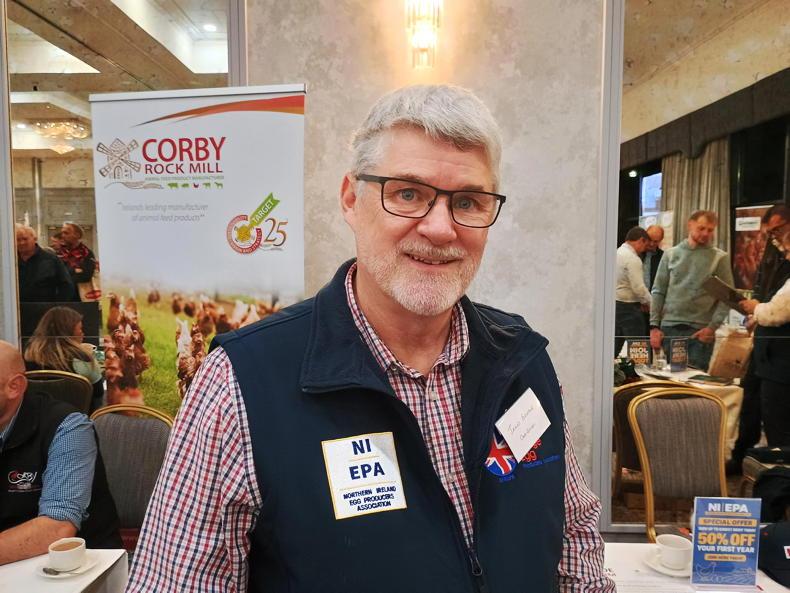
He is the current chairman of BFREPA and during his presentation in Armagh he outlined how a NI subsidiary has now been set up, known as the NI Egg Producers Association (NIEPA).
Baxter is keen for local producers to join and pointed out the positive work done, whether it is lobbying for practical assurance standards or commissioning of independent cost of production figures.
“Those costings have probably put 10p to 15p per dozen onto eggs and that is worth a lot of money to you.
“None of this works without members. The bigger our membership the more weight we carry with retailers, packers and DEFRA,” said Baxter.
Bird flu is here to stay, says virologist
Highly pathogenic avian influenza (H5N1) was first discovered in China back in 1997 and unlike other types of influenza viruses, it easily jumps across species and between animals and humans, Queen’s University virologist, Connor Bamford, told the Parklands conference.
While we have known about H5N1 for nearly 30 years, it didn’t become established in Europe until a new variant (known as 2.3.4.4b) emerged in 2021.
“This has really changed how we view avian influenza,” said Bamford, who pointed out it has since made its way around the world, getting into dairy cattle in North America, before spreading to wild animals in South America, with cases now found in Australia.
“This virus has spilled over from wild birds into poultry, people and other species. It is not going away – the virus is here to stay – a continued presence,” said Bamford.
He used the analogy of an iceberg to describe H5N1, given that a few dead wild birds might indicate it is active, while at the same time there is a huge virus load in the water environment.
“Environmental surveillance is really critical – it can tell you there is a spike in virus and that we need to take extra care,” he said.
During the COVID-19 pandemic, testing at wastewater treatment plants was used as part of a public health surveillance system, and researchers are now using the same principle to test for avian influenza. Bamford said that cross-border funding has been secured to scale up this method, potentially allowing screening for the virus at lakes etc. frequented by a lot of wild birds.
He also said that other work has highlighted H5N1 does degrade in dirty water, so work is being done in the lab to see which bacteria causes that. It offers the potential to develop “a more sustainable solution” to H5N1 control.
Salmonella protection for longer-living birds
With many flocks now achieving laying cycles of 100 weeks and beyond, there is a greater chance of environmental exposure to Salmonella, said Elanco vet, Josh Davison.
At the start of this year, Elanco received authorisation for a fourth dose of its Avipro Salmonella Duo vaccine to be administered to birds around 50 weeks of age.
The original three-dose programme protects for over 60 weeks, but with the fourth dose added, this now extends to up to 100 weeks for Salmonella Enteritidis and 94 weeks for Salmonella Typhimurium.
The fourth dose has zero egg withdrawal and it is an oral vaccine given in drinking water.
“Salmonella is a disease we have to continually think about and actively manage,” said Davison.
Laying hens see lights differently to humans
Poultry perceive light differently to humans and can see a wider spectrum to include ultra-violet, maintained Max Obers, the CEO of Dutch company, Hato Lighting.
He said the performance of birds will be improved when the spectrum of light is similar to sunlight.
“Most lights we use are LED lights and within LED lights you can have whatever spectrum you want,” he said.
Light with a full spectrum is perceived as white light and within that there are different types, with warm light similar to the early morning and cold light similar to that in the middle of the day.
He said cold light can be useful in the early stages of pullet rearing before switching to warm light, while in laying hen systems, warm light should be used.
Coloured lights can be added in to aid management. Mixing in red light with white light can help to reduce aggressive behaviour such as feather pecking, while blue light can be used to help with catching birds.
When white light is dimmed and blue light switched on, it is thought that this simulates a dark night with a full moon, when birds sit still for fear of attracting predators, said Obers.
Flickering
He maintained that flickering of light can negatively impact bird performance and it might not be visible to the human eye, but is to the birds. There are devices available to test lights for flickering or alternatively, it is possible to measure it using a smart phone – dim the lights, switch on the camera and set it to slow motion.
“If lights are going on and off it indicates that there is too much flickering,” he said.
The other potential use of lighting is to help train birds. He used the example of a multi-tier system, with four different light settings that are dimmed down in order, thereby encouraging birds into perches and helping to reduce the number of floor eggs.
“In the evening, dim down the under-system lights, then high lights, then in-system lights and then perch lights – it will help get birds into the system,” said Obers.
Risks arise from being free range
Birds in free range systems are invariably at higher risk of picking up infections and diseases, so good range management and biosecurity, alongside an effective vaccination programme, is key to maintaining a healthy flock, maintained Parklands vet Caroline Hall.
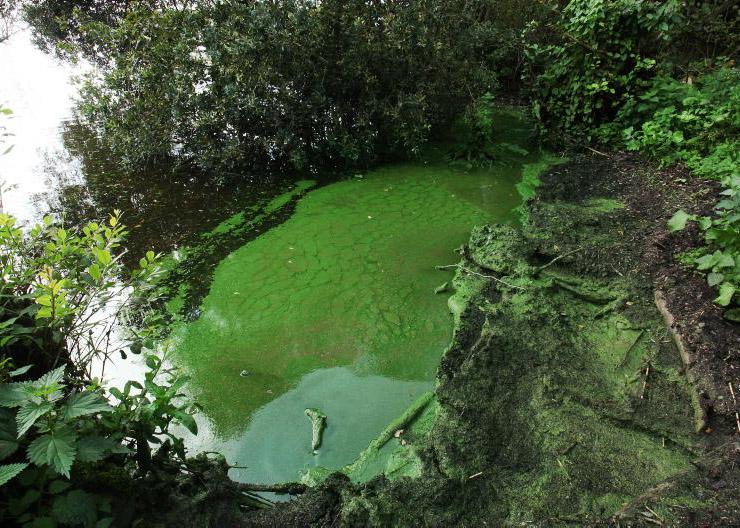
She said there “are many dangers lurking on the range” especially if there are pools of stagnant water which attract wild birds.
It is also important to keep control of rodents as they can carry salmonella and pasteurella, while inside the house it is necessary to manage fly populations as they can be “really good” at spreading disease. In addition, beetles in a shed should be controlled as they are integral to the lifecycle of the tapeworm. But above all else, it is vital to work with clean clothing, footware and equipment, given the ongoing threats posed by infectious diseases. Good biosecurity is the “frontline” in the defence, while vaccines should be viewed as the insurance policy should that defence be breached, attendees at the conference were told.




SHARING OPTIONS